
Salads
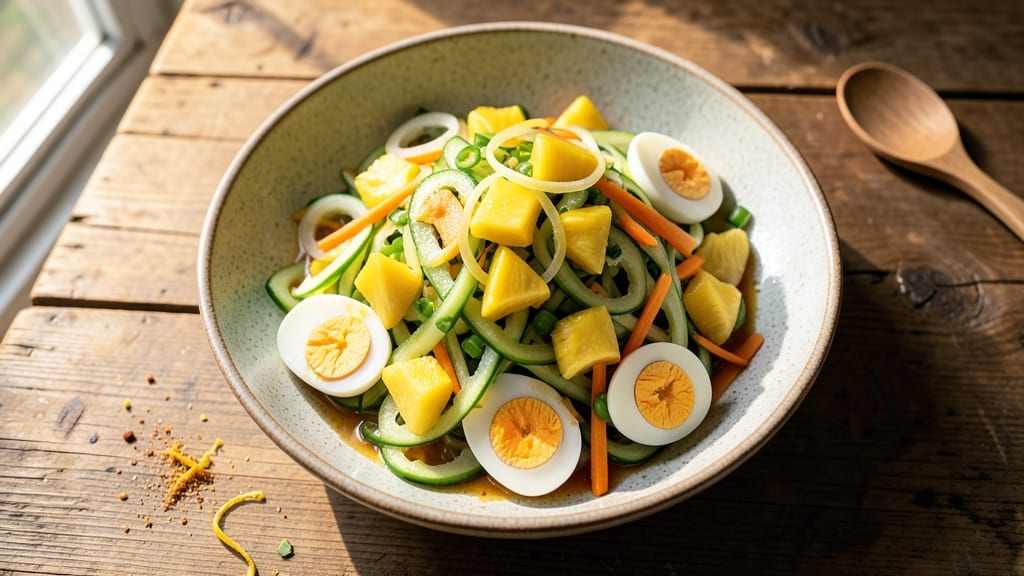
This ampalaya salad with pineapple delivers a perfect marriage of tropical sweetness and hearty Filipino flavors. The secret lies in sautéing tender ampalaya (bitter melon) until just tender, then balancing its earthy notes with the bright acidity of pineapple and a tangy dressing.
I developed this recipe after years of perfecting the texture—crisp yet yielding, with a satisfying bite that keeps every forkful exciting.
The dish starts with properly prepping the ampalaya: thinly slicing and sautéing until the bitterness softens into a subtle, almost nutty depth. Fresh pineapple adds natural sweetness that cuts through the vegetable's richness, while a simple vinegar-based dressing ties everything together with just the right tang.
This isn't just a salad—it's a complete meal with protein-rich egg slices and crunchy vegetables that hold up beautifully.
What makes this recipe special is how it transforms simple ingredients into something restaurant-worthy. The ampalaya's natural bitterness becomes an asset when balanced properly, creating a dish that's both familiar and excitingly new.
Each bite offers contrasting textures—tender melon, crisp pineapple, and the satisfying crunch of supporting vegetables—all while maintaining that essential Filipino flavor profile.
Perfect for warm weather gatherings or as a refreshing main course, this salad keeps well for up to 2 days in the refrigerator, with flavors actually improving as components meld.
The dressing can be adjusted to suit your preference—more vinegar for tang, a touch of honey for extra sweetness. Let's bring this tropical Filipino classic to your table!
Ingredients for ampalaya salad with pineapple
Simple yet transformative ingredients for a vibrant Filipino salad with tropical sweetness and satisfying textures.
| Ingredient | Amount | Notes |
|---|---|---|
| Ampalaya (Bitter Melon) 🥒 | 1 lb | Thinly sliced, seeds removed |
| Fresh Pineapple 🍍 | 1 cup | Diced, fresh preferred |
| Large Eggs 🥚 | 4 whole | Hard-boiled, sliced |
| Carrots 🥕 | 2 medium | Julienned, about 1 cup |
| Yellow Onion 🧅 | 1 whole | Thinly sliced |
| Green Bell Pepper 🌶️ | 1 whole | Thinly sliced |
| Cucumber 🥒 | 1 whole | Thinly sliced |
| Canola Oil 🫒 | 2 tbsp | For sautéing |
| White Vinegar 💧 | ¼ cup | For dressing |
| Soy Sauce 🍜 | 2 tbsp | For dressing |
| Sesame Oil 🫒 | 1 tbsp | For dressing |
| Sugar 🍯 | 1 tbsp | For dressing |
| Salt 🧂 | ½ tsp | Diamond Crystal preferred |
| Black Pepper 🌶️ | ¼ tsp | Freshly ground |
The ampalaya is the star—look for firm, vibrant green melons at Asian markets or well-stocked grocery stores. Filipino supermarkets like 99 Ranch or H Mart carry them year-round, while regular grocery stores may stock them seasonally. Never use wilted or overly soft melons, as they'll release excessive bitterness. For the pineapple, fresh is non-negotiable—canned won't provide the same bright texture and sweetness. The eggs should be large for proper protein content, and organic or free-range eggs have richer flavor when hard-boiled. All other vegetables should be crisp and firm, with no soft spots.
No fresh pineapple? Freshly frozen pineapple works, but thaw it completely and drain excess moisture. Substitute mango for half the pineapple if needed, though the flavor profile shifts slightly. The dressing can be adjusted—more vinegar for tang, less sugar for lower sweetness. For a gluten-free option, ensure your soy sauce is tamari-based. The carrots can be shredded with a peeler for faster prep, while the bell pepper and cucumber should be sliced uniformly for consistent texture. If you prefer a spicier kick, add 1 tsp of sriracha to the dressing.
Ampalaya and pineapple can be prepped up to 2 hours ahead and stored separately in airtight containers. The dressing keeps for 1 week in the fridge, though it's best used within 3 days for maximum flavor. For optimal texture, assemble the salad just before serving—this prevents the vegetables from becoming soggy. The hard-boiled eggs should be peeled and refrigerated in their shells until ready to slice. This salad reheats poorly, so it's best enjoyed fresh from the fridge for the crispest bite.
Why You'll Love This Recipe
- Sweet-Bitter Balance: The pineapple cuts through the ampalaya’s natural bitterness—trust me, it’s genius. That first bite? Crisp, tangy, and just sweet enough to make you forget how healthy it is.
- One-Pan Magic: Sauté the onions, add the veggies, toss in the dressing—no flipping pans, no mess. Honestly, my counter stays cleaner than my usual stir-fry days.
- Lunchbox Hero: Pack it cold for work or school—eggs stay firm, pineapple stays juicy, and the carrots add that satisfying crunch. My kids actually eat their veggies this way. (Yes, even on a Tuesday night.)
- Budget Brightener: Ampalaya and pineapple stretch further than you’d think, plus carrots and eggs keep costs low. I’ll be real: this salad feeds four for the price of takeout—without the guilt.
Step-by-step instructions for ampalaya salad with pineapple
This tropical salad balances bitter melon's unique texture with sweet pineapple and savory protein for a refreshing yet satisfying dish.
Prepare the Ampalaya and Vegetable Base
Begin by thoroughly washing the 1 lb ampalaya (bitter melon) under cold water, then carefully slice it into thin strips while removing all seeds. The flesh should be pale green - discard any yellow or discolored portions. Cut the 2 medium carrots into julienne strips, the 1 whole yellow onion and 1 whole green bell pepper into thin slices, and the 1 whole cucumber into half-moons. Place all vegetables in a large mixing bowl and set aside.
For the eggs, place the 4 whole large eggs in a saucepan and cover with cold water by about 1 inch. Bring to a boil over medium-high heat, then immediately remove from heat, cover, and let sit for 12 minutes. Drain, cool under running water, peel, and slice each egg into 6 wedges. Add the sliced eggs to the vegetable mixture and gently toss together.
Sauté the Ampalaya for Enhanced Texture
Heat 2 tablespoons canola oil in a large skillet over medium heat. Add the prepared ampalaya strips and sauté for 3-4 minutes until they begin to soften but still retain some bite. The ampalaya should release a slight aroma - this indicates it's ready. Remove from heat and immediately add the sautéed ampalaya to the vegetable mixture in the bowl, tossing gently to combine.
Here's the thing - sautéing the ampalaya briefly removes some of its natural bitterness while maintaining its crisp texture. Don't overcook it or it will turn mushy. The key is to just warm it through while preserving its structural integrity for the salad's crunch.
Create the Dressing and Combine
In a small bowl, whisk together the 0.25 cup white vinegar, 2 tablespoons soy sauce, 1 tablespoon sesame oil, 1 tablespoon sugar, 0.5 teaspoon salt, and 0.25 teaspoon black pepper until the sugar is completely dissolved. Add the 1 cup diced fresh pineapple to the dressing and stir well. The pineapple will begin to macerate slightly, releasing its juices.
Pour the dressing mixture over the vegetable and egg combination in the bowl. Use two large spoons to gently fold everything together until evenly coated. Let the salad sit for 10-15 minutes at room temperature to allow the flavors to meld. This resting period ensures the dressing penetrates all components evenly.
Final Adjustments and Serving
After resting, taste the salad and make any final adjustments. You may need to add a splash more dressing if the vegetables have absorbed too much, or a pinch more salt if the flavors need balancing. The ideal salad should have a harmonious blend of sweet, savory, slightly bitter, and umami notes.
Serve immediately while the components still retain their crisp textures. For best presentation, mound the salad on chilled plates and garnish with additional pineapple slices if desired. This salad keeps well in the refrigerator for up to 2 days, though the texture will soften slightly over time.
Pro Tips For Making Ampalaya Salad With Pineapple
- CUT AMPALAYA IN HALF FIRST: The bitter melon’s thick rind hides a world of uneven texture—peeling it whole is a nightmare. Split it lengthwise, then scoop out the seeds and flesh with a spoon. You’ll save 10 minutes of frustration and get cleaner, more uniform slices for your salad.
- USE GREEN PINEAPPLE FOR BALANCE: Ripe yellow pineapple turns this salad into a sugar bomb. Opt for slightly green pineapple—it’s tart enough to cut through the bitterness of the ampalaya and the richness of the eggs without overpowering. Cut it into small cubes so every bite has that bright snap.
- SOFT-BOIL EGGS TO 6 MINUTES: Overcooked eggs turn rubbery and ruin the salad’s texture. Set a timer for exactly 6 minutes in simmering water, then transfer to ice water. They’ll hold together when halved, stay creamy, and not fall apart when tossed with the other ingredients.
- SALAD THE CARROTS FIRST: Raw carrots stay stubbornly crunchy no matter how much you chew. Thinly slice them, then toss with a pinch of salt and let sit for 5 minutes before adding to the salad. The salt breaks down the fibers, making them tender enough to eat without feeling like you’re chewing bark.
Essential equipment for ampalaya salad with pineapple
Skillet Essentials
You'll need a 10-inch non-stick skillet for sautéing the ampalaya—look for Made In or T-fal brands for even heat distribution. A sharp chef's knife (like Victorinox Fibrox) is critical for cleanly slicing ampalaya and vegetables.
I also recommend a microplane for julienning carrots quickly—it creates those perfect ribbons in seconds. 🔪
Mixing Tools
Use a large mixing bowl (at least 8-quart capacity) to combine all ingredients without crowding. A wooden salad server helps toss everything gently without bruising the vegetables.
For the dressing, a small whisk bowl (like OXO Good Grips) ensures smooth emulsification of the vinegar, soy sauce, and sesame oil. I prefer glass containers for storage—they keep flavors fresh longer.
Prep Aids
Invest in a mandoline slicer if you want perfectly uniform vegetable slices—just set it to 2mm thickness for the cucumber and bell pepper. A fine-mesh strainer comes in handy for rinsing the pineapple pieces after dicing.
For the eggs, a slotted spoon makes draining them easier after boiling. These tools save time and improve consistency every time. 💡
Optional Upgrades
A small food processor (like Cuisinart Mini-Prep) can quickly chop onions and carrots if you prefer speed over precision. For presentation, chilled salad plates maintain the salad's crispness longer.
If you love garnishes, keep toasted sesame seeds and cilantro sprigs on hand—they add visual appeal and extra flavor. These extras aren't mandatory but elevate the dish significantly.
Nutrition facts
Frequently asked questions
Why does sautéing the ampalaya reduce its bitterness?
Sautéing briefly at medium heat for 3-4 minutes softens the ampalaya's cell structure, releasing some of its bitter compounds through evaporation. The heat also caramelizes natural sugars slightly, creating a subtle sweetness that balances the remaining bitterness. This technique is key to making the salad more approachable for first-time eaters!
Can I substitute canned pineapple for fresh?
Fresh pineapple is ideal for texture and flavor, but you can use 100% pineapple juice-packed canned pineapple in a pinch. Drain it well and pat dry to prevent sogginess. For extra brightness, add 1 teaspoon of lime juice to the dressing. Just know the texture will be slightly softer than fresh.
How do I store leftovers to keep the salad crisp?
Store components separately in airtight containers: vegetables in one, ampalaya in another, and dressing in a third. Reassemble only when ready to eat. For extra crunch, add 1 tablespoon of vinegar to the vegetables before refrigerating. The salad keeps well for 2 days this way, though the ampalaya will soften slightly.
What's the best way to balance the flavors if the salad tastes too bitter?
Add more pineapple (2-3 extra tablespoons) or increase the dressing ratio by 1 tablespoon. A pinch of sugar (½ teaspoon) in the dressing also helps. For a savory boost, sprinkle with toasted sesame seeds or a dash of soy sauce. The key is to build layers of flavor rather than overpowering the bitterness.
Can I make this salad ahead of time for a party?
Prep all ingredients (sautéed ampalaya, chopped vegetables, hard-boiled eggs) up to 2 hours ahead and store separately. Assemble just before serving to maintain crispness. For a crowd, double the dressing recipe—it's easy to adjust proportions at the last minute. This method saves time while keeping the salad restaurant-fresh!