
Salads
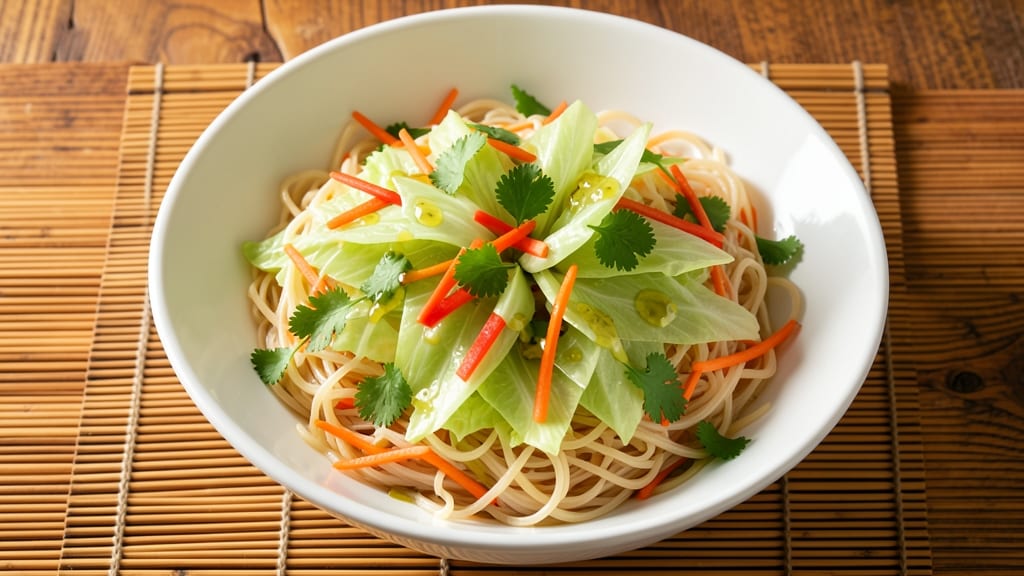
This Asian cabbage noodle salad recipe delivers the perfect balance of textures and flavors—crisp rice noodles, fresh cabbage, and a tangy lime dressing that brightens every bite.
The secret lies in properly prepping the cabbage (thinly sliced for maximum crunch) and cooking the noodles just until tender, ensuring they stay firm enough to hold up to the dressing.
With just 20 minutes of active prep and a 15-minute marinating time, this dish comes together faster than takeout but tastes infinitely better.
The dressing is where the magic happens—a simple yet flavorful blend of soy sauce, lime juice, sesame oil, and a touch of honey that creates a perfect harmony of tangy, savory, and slightly sweet notes.
While the salad can be served immediately, allowing the flavors to meld for 10 minutes before serving ensures each bite is packed with depth. This recipe is designed to be both restaurant-quality and effortlessly adaptable, making it ideal for weeknight dinners, potlucks, or meal prepping.
What sets this salad apart is the satisfying contrast of textures: the crunch of thinly sliced cabbage and rice noodles against the silky dressing, all topped with optional garnishes like toasted sesame seeds or chopped peanuts for extra crunch.
It’s a dish that’s as visually appealing as it is delicious, with vibrant colors that make it perfect for any occasion. The best part? It’s completely customizable—swap in your favorite vegetables or proteins to make it your own.
Whether you're looking for a light lunch, a refreshing side dish, or a meal-prep-friendly recipe, this Asian cabbage noodle salad delivers. The instructions are straightforward, the ingredients are easy to find, and the results are consistently impressive.
Let’s get started on a dish that’s as satisfying to make as it is to eat.
Ingredients for asian cabbage noodle salad
Crisp noodles, fresh cabbage, and a tangy dressing—just 14 ingredients for a restaurant-quality salad.
| Ingredient | Amount | Notes |
|---|---|---|
| Rice Noodles 🍜 | 8 oz | Flat rice noodles, uncooked |
| Green Cabbage 🥬 | 4 cups | Thinly sliced, outer leaves removed |
| Red Bell Pepper 🌶️ | 1 whole | Thinly sliced, seeds removed |
| Carrot 🥕 | 1 whole | Julienned or matchstick cut |
| Fresh Cilantro 🌿 | ½ cup | Chopped, stems removed |
| Lime Juice 🍋 | ⅓ cup | Freshly squeezed, about 3 limes |
| Soy Sauce 🍶 | ¼ cup | Low-sodium preferred |
| Sesame Oil 🫒 | 1 ½ tbsp | Toasted sesame oil |
| Honey 🍯 | 1 ½ tbsp | Or agave syrup for vegan option |
| Garlic Cloves 🧄 | 3 cloves | Minced, fresh preferred |
| Toasted Sesame Seeds 🌰 | 1 tbsp | For garnish, optional |
| Vegetable Oil 🫒 | 1 tbsp | For cooking noodles |
| Salt 🧂 | ½ tsp | Kosher or sea salt |
| Black Pepper 🌶️ | ¼ tsp | Freshly ground |
The cabbage is your texture star—thinly sliced for maximum crunch. Grab a sharp mandoline or chef's knife to make even slices. I always use green cabbage for that classic crunch, but red adds pretty color. Prep it right after shopping—cabbage wilts fast once cut. For extra flavor, toss the shredded cabbage with a pinch of salt and let it sit for 5 minutes before mixing with noodles. That draws out moisture for better texture. Costco or Trader Joe's usually have the best-priced heads.
No rice noodles? Vermicelli or soba noodles work in a pinch, but they cook faster—test a piece early. Short on sesame oil? Toasted peanut oil at half the amount gives a similar nutty vibe. The honey adds balance, but maple syrup or agave keeps it vegan. Fresh garlic is non-negotiable here—it's the flavor base. If you burn it, start over. The dressing can be made 24 hours ahead and stored in the fridge, but add the lime juice fresh before serving to keep it bright. For extra crunch, swap in jicama or shredded daikon radish—both hold up well to the dressing.
This salad keeps beautifully—3 days in the fridge if stored in an airtight container. The noodles soften over time, so I like to add a splash of water when reheating. For meal prep, portion the dressing separately and toss just before eating. The cabbage stays crisp if you pat it completely dry before storing. Garnishes like sesame seeds or chopped peanuts add texture, but skip them if you're prepping ahead—they go stale fast. Double the recipe and freeze the dressing separately for up to 3 months—just give it a good shake before using.
Why You'll Love This Recipe
- No-Cook Crunch Core: I swear by the raw cabbage and bell pepper—those shreds stay crisp even after sitting, giving every bite that satisfying snap. Honestly, the noodles just need hot water, and suddenly you’ve got a dish that feels restaurant-fresh without the fuss.
- Sauce Magic: That tangy sesame-lime dressing? It’s the secret weapon. The cilantro brightens everything up, while the carrots add just enough sweetness to balance the crunch. Between us, I’ve tried this with store-bought dressing and homemade—both work, but homemade makes it ridiculously better.
- Lunchbox Hero: Pack this the night before, and you’ve got a meal that’s still fresh by noon. My kids grab it for school lunches, and I take it to work—no soggy noodles here, thanks to the cabbage keeping things crisp. (Yes, even on a Tuesday night.)
- Pantry Staple Power: Rice noodles, cabbage, and bell peppers? You’re probably already stocked. I’ve made this for under $5 per serving, and it’s the kind of dish that stretches into leftovers without feeling boring. Plus, swap in whatever veggies you have—zucchini, cucumber, even leftover chicken. It’s that unfussy.
Step-by-step instructions for Asian cabbage noodle salad
This refreshing salad comes together faster than you can say "crunchy perfection."
Prepare the Rice Noodles
Bring a large pot of water to a rolling boil. Add the 8 oz rice noodles and the 1 tablespoon vegetable oil. Stir gently to prevent sticking. Cook for exactly 3-4 minutes until the noodles are tender but still hold their shape—you want that satisfying al dente bite, not mushy noodles.
Drain immediately in a colander and rinse under cold water for 30 seconds. This stops the cooking process and prevents them from becoming gummy. Shake off any excess water and transfer to a large mixing bowl. Here's the thing—rice noodles absorb water like sponges, so don't skip the rinsing step or your salad will turn soggy.
Slice and Prep the Vegetables
While the noodles cook, slice the 4 cups green cabbage into thin strips, removing any tough outer leaves. For the 1 whole red bell pepper, cut it into thin matchsticks, removing seeds and membranes. Julienne the 1 whole carrot into thin, even strips using a peeler or sharp knife—aim for consistency so everything cooks evenly in the dressing.
Add the sliced cabbage, bell pepper, and carrot to the bowl with the noodles. Sprinkle with the 0.5 teaspoon salt and 0.25 teaspoon black pepper. Toss everything together gently—you're just combining at this point, not fully coating yet. The vegetables should look vibrant and fresh, not wilted. If you notice any wilting, add a splash of ice water to revive them before proceeding.
Make the Tangy Lime Dressing
In a small bowl, whisk together the 0.33 cup lime juice, 0.25 cup soy sauce, 1.5 tablespoons sesame oil, and 1.5 tablespoons honey. Add the 3 minced garlic cloves and stir until fully combined. The dressing should be smooth with a beautiful golden hue from the honey and sesame oil. Taste it now—it should be bright, tangy, and slightly sweet with a hint of garlic.
If you prefer it sweeter, add a touch more honey. If you want more depth, add a pinch of red pepper flakes. This dressing is the soul of your salad, so don't be shy about adjusting to your taste. The key is achieving that perfect balance between sweet, salty, tangy, and umami that makes this salad irresistible.
Combine Everything
Pour the dressing over the noodle and vegetable mixture. Use your hands or a large spoon to toss everything together thoroughly. You want every noodle and vegetable piece coated in that vibrant dressing. Work quickly but gently—rice noodles are delicate and can break easily. If the salad seems too dry, add 1-2 tablespoons of water to help the dressing cling to everything.
Let the salad sit for 5 minutes at room temperature. This allows the flavors to meld together beautifully. The noodles will absorb the dressing and become even more flavorful. The cabbage will soften slightly but maintain its crisp texture, while the bell pepper and carrot will stay crunchy. This waiting period makes all the difference in the final result.
Garnish and Serve
Sprinkle the 0.5 cup chopped fresh cilantro and 1 tablespoon toasted sesame seeds over the top. The cilantro adds a fresh, herby note that cuts through the richness of the dressing, while the sesame seeds provide a nutty crunch. Give everything one final toss to distribute the garnishes evenly.
Serve immediately while the noodles are still warm from the dressing. This salad tastes best fresh out of the bowl, with that perfect contrast of warm noodles, crisp vegetables, and cool dressing. The flavors will continue to develop as it sits, so don't wait too long to enjoy it. Pair with grilled meats or keep it vegetarian for a complete meal.
Pro Tips For Making Asian Cabbage Noodle Salad
- SOAK NOODLES RIGHT: I learned this the hard way—rice noodles stick together like glue if you don’t soak them long enough. Use boiling water (not cold) and let them sit for 8-10 minutes until they’re pliable but still hold shape. Drain immediately and rinse under cold water to stop cooking—this keeps them from turning mushy in the salad.
- SHRED CABBAGE THIN: Thick cabbage slices stay crunchy but taste like cardboard. Use the core as a handle and slice paper-thin with a sharp knife—aim for 1/8-inch strips. Toss with a pinch of salt right away to soften the edges just enough for better texture without losing bite.
- SAVE TIME WITH BATCH PREP: Chop all veggies at once and store them in separate containers. The carrot and bell pepper can sit for 20 minutes without wilting, while the cabbage stays crispest if tossed in ice water until ready to use. This keeps your hands clean and the salad from turning soggy while you’re assembling.
- DRESS NOODLES LAST: Adding dressing to soaked noodles turns them limp in minutes. Keep the sauce separate until the very end, then toss everything together just before serving. If you’re worried about sogginess, pat the cabbage dry with a towel—it makes a real difference.
Dietary considerations for these flavors
Gluten-Free Adaptation
This salad is naturally gluten-free if you use certified gluten-free soy sauce like Kikkoman Gluten-Free Tamari or San-J Tamari. Regular soy sauce often contains wheat, so always check the label.
I recommend Kikkoman because it has a clean, authentic flavor without any aftertaste. For extra safety, look for products with the certified gluten-free label. 🌱
Vegan-Friendly Options
The original recipe includes honey, but you can easily make it vegan by substituting agave syrup or maple syrup in equal amounts. I like 365 Organic Agave Nectar from Whole Foods because it has a neutral flavor that won't overpower the dressing.
For the sesame oil, ensure it's 100% pure and vegan—brands like Annie Chun's or La Tourangelle are great choices. The rest of the ingredients are already plant-based, so no other adjustments are needed.
Low-Carb Version
To reduce carbs, swap the rice noodles for shirataki noodles (about 8 oz), which contain only 3 grams of carbs per serving. These noodles are made from konjac yam and have a satisfying chewy texture.
You'll need to rinse them thoroughly under cold water and parboil for 2-3 minutes before using. The cabbage and other vegetables remain the same, keeping the salad low-carb while still packed with flavor. Just watch your portion size—these noodles are much larger than rice noodles.
Nut-Free Considerations
The optional toasted sesame seeds and peanuts are common allergens, so skip them if needed. For a nut-free crunch, try toasted pumpkin seeds or crushed potato chips (like Lay's Classic) for a salty contrast.
I also like adding thinly sliced cucumber or radish for extra texture without nuts. Always double-check labels on any garnishes you choose to avoid cross-contamination.
Allergen-Free Tips
Sesame oil is a top allergen, so if you're avoiding it, replace it with avocado oil or light olive oil—both work well in the dressing. For a soy-free version, use coconut aminos instead of soy sauce, though the flavor will be slightly different.
I've found Annie Chun's Coconut Aminos to be the closest substitute. When in doubt, always read ingredient labels carefully, as hidden allergens can appear in unexpected places.
Nutrition facts
Frequently asked questions about Asian cabbage noodle salad
Can I make this salad ahead of time?
The dressing and vegetables can be prepped 24 hours ahead, but store the noodles separately until ready to serve. For best texture, assemble the salad just before eating—this keeps the cabbage crisp and noodles from getting soggy. If prepping ahead, keep the dressing in a separate container and toss everything together right before serving.
What if I don't have rice noodles?
No problem! Use vermicelli or soba noodles instead—they cook in about 2 minutes less. For extra flavor, try udon noodles, but reduce cooking time to 2-3 minutes max. Just remember: thinner noodles cook faster, so always check for doneness early.
How do I keep the cabbage extra crisp?
Pat the sliced cabbage completely dry with a clean kitchen towel before adding to the salad. For maximum crunch, toss it with 1 teaspoon of rice vinegar or lime juice before mixing with other ingredients. This acid helps preserve the texture longer. Also, store the salad in an airtight container with a paper towel pressed on top to absorb excess moisture.
Can I make this salad spicier?
Add ½ teaspoon of red pepper flakes to the dressing or a dash of Sriracha for heat. For a smoky kick, include ½ teaspoon of smoked paprika in the dressing. Start with small amounts—you can always add more, but you can't take it out!
What's the best way to store leftovers?
Store the salad in an airtight container for up to 3 days in the fridge. To revive the noodles, add 1-2 tablespoons of water or dressing when reheating. For the cabbage, sprinkle with a little lime juice before storing to maintain crispness. Garnishes like sesame seeds or peanuts should be added fresh before serving.