
Salads
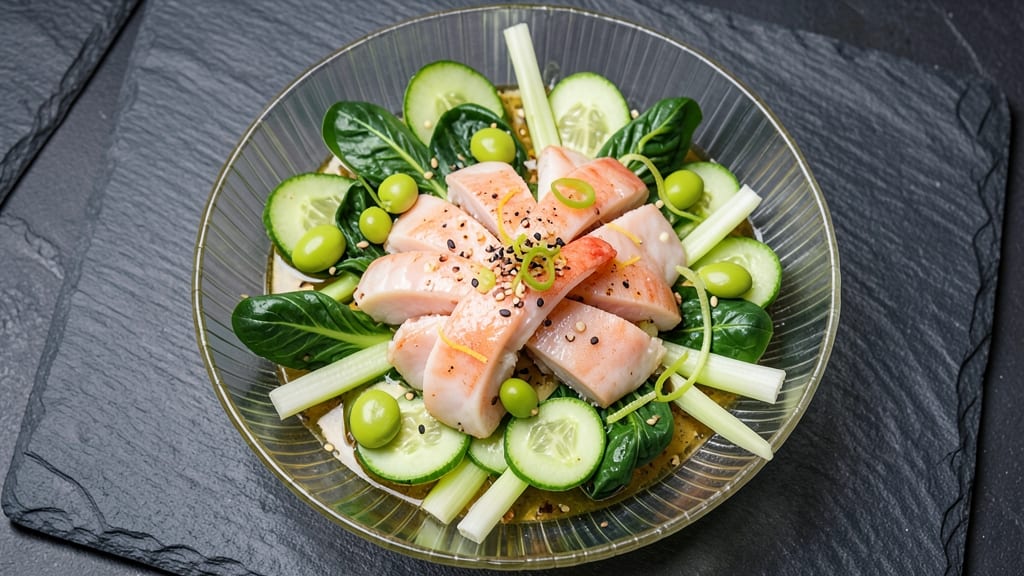
This Asian lobster salad recipe transforms luxurious seafood into a vibrant, restaurant-worthy dish with a bright yuzu dressing and crisp celery crowns. The secret lies in perfectly cooked lobster—juicy, tender, and sliced into elegant medallions—that pairs beautifully with a tangy-sweet dressing infused with sesame, ginger, and citrus.
I developed this recipe after craving a salad that balanced richness with fresh, crisp textures, and the result is a dish that feels both celebratory and effortlessly refined.
The foundation of this salad is a two-stage cooking process for the lobster: first steamed or grilled to maintain moisture, then chilled before slicing for clean, precise cuts.
A light sesame-ginger dressing ties everything together, its zesty yuzu and toasted sesame notes cutting through the lobster’s richness while enhancing the salad’s natural crunch. Fresh greens, crisp celery, and edamame add layers of texture, ensuring every bite is balanced and satisfying.
What makes this salad truly special is the plating technique: lobster medallions arranged over a bed of greens, topped with celery crowns for a pop of color and crunch, and finished with toasted sesame seeds and thinly sliced cucumber.
The dressing is drizzled just before serving to keep the greens vibrant, and the result is a dish that looks as impressive as it tastes—perfect for hosting or treating yourself to a luxurious yet simple meal.
This recipe scales beautifully for gatherings, and the dressing can be made ahead, allowing you to focus on cooking the lobster and assembling the salad at the last minute.
Whether you’re serving it as a starter or a light main course, the combination of tender lobster, crisp vegetables, and bold flavors makes it a standout dish that’s sure to impress.
Ingredients for asian lobster salad
Elegant seafood meets vibrant Asian flavors in this refined salad with premium ingredients.
| Ingredient | Amount | Notes |
|---|---|---|
| Live Lobster Tail 🦞 | 1 ½ lb | Cold-water preferred, tails 12-16 oz each |
| Baby Bok Choy 🥬 | 4 whole | Tight heads, vibrant green leaves |
| Celery Stalks 🧅 | 3 whole | Crisp, pale green, no blemishes |
| Shelled Edamame 🌱 | 1 cup | Frozen, thawed and drained |
| Persian Cucumber 🥒 | 1 whole | Thinly sliced, seeds removed |
| Yuzu Juice 🍋 | ¼ cup | Freshly squeezed, or sub lime |
| Sesame Oil 🫒 | 2 tbsp | Toasted, not flavored |
| Rice Vinegar 💧 | 2 tbsp | Seasoned preferred |
| Fresh Ginger 🌿 | 1 tbsp | Finely grated, aromatic |
| Toasted Sesame Seeds 🥜 | 1 tbsp | Lightly browned |
| Honey 🍯 | 1 tbsp | Wildflower preferred |
| Diamond Crystal Kosher Salt 🧂 | ½ tsp | For seasoning |
| Freshly Ground Black Pepper 🌶️ | ¼ tsp | Cracked peppercorns preferred |
| Mixed Baby Greens 🌿 | 4 cups | Butter lettuce, arugula blend |
| Avocado Oil 🫒 | 1 tbsp | High smoke point for cooking |
The lobster is non-negotiable for this dish—Cold-water lobster from Whole Foods seafood counter or your local fishmonger delivers superior texture. Look for tails weighing 12-16 oz each for even cooking. If using frozen, thaw overnight in the fridge and pat completely dry before cooking. The baby bok choy should have tight heads and crisp stems, indicating freshness. For the celery, select stalks with pale green centers—avoid the yellowed varieties that lose crunch. Trader Joe's often carries pre-washed baby bok choy and crisp celery bundles that save time.
No yuzu juice? Substitute lime juice at double the amount, though the citrus notes won't be identical. The sesame oil should be 100% pure toasted sesame—avoid the flavored varieties with garlic or chili. For a deeper ginger flavor, lightly toast the knob whole in a dry pan before grating. The edamame can be shelled frozen peas in a pinch, though they lack the nutty sweetness. When selecting cucumbers, opt for Persian varieties—their thin skins and minimal seeds make slicing effortless. The honey should be wildflower or clover for balanced sweetness that complements the yuzu's tartness.
Store live lobster in the fridge until ready to cook—use within 2 days for peak freshness. The dressing components keep separately for 5 days in airtight containers, though the yuzu juice should be added last. Celery and bok choy last 5-7 days wrapped in damp paper towels in the crisper. For make-ahead convenience, cook the lobster and slice it up to 3 days ahead, storing in an airtight container with plastic wrap pressed directly on the surface. Assemble the salad just before serving to maintain crisp textures—dressing should be added tableside for optimal freshness.
Why You'll Love This Recipe
- No-Cook Crunch: I swear by the Persian cucumber—its cool, crisp bite cuts through the richness of the lobster like a breath of fresh air. Honestly, I often skip cooking the edamame and celery entirely, just slice them raw for that fresh, satisfying snap.
- Lobster Luxury Lightened: Between us, lobster salad isn’t usually this bright. The bok choy’s peppery punch and the edamame’s nuttiness balance the sweetness of the lobster meat so well—it’s like a party in your mouth, but one that won’t leave you stuffed (or guilty).
- Weeknight Date Night: This is my go-to when I want to impress without slaving away. Serve it over greens for a light lunch, or pile it into lettuce cups for a fancy-but-effortless appetizer. (Yes, even on a Tuesday night.)
- Leftovers That Don’t Suck: Most lobster dishes turn sad the next day, but not this one. The dressing clings to the meat, and the veggies stay crisp—perfect for a quick lunch or a midnight snack. I’ve had it cold, room temp, and even reheated (briefly), and it’s still solid.
Step-by-step instructions for Asian lobster salad
Here's how to craft a sophisticated lobster salad with vibrant citrus dressing and delicate textures.
Prepare the Lobster Tail
Thaw the 1.5 lb live lobster tail in the refrigerator overnight if frozen. Using kitchen shears, carefully cut along the top shell to open it lengthwise, then twist to separate the meat from the shell. Remove the vein running along the underside with a small spoon, being careful not to pierce the meat. Pat the lobster meat dry with paper towels to ensure proper searing.
Heat a skillet over medium-high heat and add 1 tablespoon avocado oil. Sear the lobster tail shell-side down for 2-3 minutes until golden brown. Flip and cook for another 1-2 minutes until just cooked through—it should reach an internal temperature of 140°F. Remove from heat and let rest for 5 minutes before slicing into ¼-inch thick pieces. Keep warm until ready to assemble.
Create the Yuzu Dressing
In a small bowl, whisk together 0.25 cup yuzu juice, 2 tablespoons rice vinegar, 1 tablespoon honey, 1 tablespoon finely grated fresh ginger, 0.5 teaspoon Diamond Crystal kosher salt, and 0.25 teaspoon freshly ground black pepper. The dressing should be smooth with a bright, citrusy aroma. Taste and adjust the balance of sweetness and acidity—add a touch more honey if needed or a splash of water if too thick.
Slowly drizzle in 2 tablespoons sesame oil while whisking continuously to emulsify. Set aside for 10 minutes to allow flavors to meld. The dressing should have a glossy sheen and a delicate balance of sweet, tangy, and umami notes. This is the foundation of your salad's vibrant flavor profile.
Prepare the Celery Crowns and Vegetables
Trim the 3 whole celery stalks by cutting off the leafy tops and bottoms. Using a sharp knife, make a ¼-inch deep horizontal cut around the stalk, just above the base. Then make ¼-inch deep vertical cuts from top to bottom, being careful not to cut all the way through. Gently spread the celery into a star shape, creating crisp "crowns." Set aside on a plate.
Separate the 4 whole baby bok choy into individual leaves. Thinly slice the 1 whole Persian cucumber lengthwise into ¼-inch thick half-moons, removing seeds if present. Blanch the 1 cup shelled edamame in boiling water for 30 seconds, then plunge into ice water to stop cooking. Drain well and pat dry. Arrange all vegetables on a serving platter, keeping components separate for assembly.
Assemble the Salad
Spread 4 cups mixed baby greens evenly across a large platter. Arrange the sliced lobster tail pieces artfully over the greens, followed by the celery crowns and edamame. Scatter the cucumber slices around the perimeter for color contrast. Sprinkle 1 tablespoon toasted sesame seeds evenly over the top for texture and visual appeal.
Drizzle the yuzu dressing lightly over the salad, reserving about 1 tablespoon for serving on the side. Gently toss the salad just before serving to maintain the crispness of the vegetables and celery crowns. The final presentation should showcase the vibrant colors of the ingredients while highlighting the lobster as the star component.
Pro Tips For Making Asian Lobster Salad
- Chill the Lobster Tail: Pop that lobster tail in the freezer for 20-30 minutes before slicing—it’ll stay together better when you cut it. I learned this the hard way when my first batch turned into a sad pile of flaky strips mid-plating.
- Trim Bok Choy Like a Pro: Cut the baby bok choy lengthwise first, then slice into thin ribbons—this keeps the texture crisp and makes it easier to toss with dressing. Skipping this step means you’ll end up with a bowl of mushy greens.
- Don’t Overcrowd the Edamame: Blanch shelled edamame in batches, or they’ll turn into a sad, gray mush instead of bright green bites. A crowded pot steams them instead of boiling—trust me, your salad will thank you.
- Slice Persian Cucumber Last: Thinly slice the Persian cucumber right before assembling to keep it crisp. I used to cut it ahead, and by the time I plated, it was limp—now I just do it in the bowl, and it stays fresh.
Common mistakes when making this dish
Overcooking Lobster
Lobster turns rubbery and dry when overcooked, ruining the delicate texture we want in this salad. The key is stopping at 140°F internal temperature—any hotter and the meat tightens. I've learned to use a thermometer for precision, especially since visual cues like color can be misleading.
For this recipe, 2-3 minutes per side on medium-high heat is perfect for 1.5 lb tails. 🦞
Skipping the Rest
Letting cooked lobster rest for 5 minutes before slicing is crucial—it allows juices to redistribute, keeping each slice moist. I once sliced lobster immediately and ended up with dry, chewy pieces.
Place the lobster on a wire rack over a plate to prevent sogginess during resting. This small step makes a huge difference in texture.
Using Wrong Celery
Yellowed or tough celery stalks will ruin the crisp "crowns" that add texture to this salad. Always select pale green celery with firm, crisp stalks. I keep a small container of ice water nearby to refresh celery if I notice any wilting during prep.
For the crowns, make cuts no deeper than ¼-inch—deeper cuts cause the celery to lose its shape when spreading.
Overmixing Dressing
The yuzu dressing needs gentle whisking to emulsify properly. I've seen people aggressively stir in the sesame oil, which can break the emulsion and create a separated dressing. Add the oil drop by drop while whisking continuously, then let it sit for 10 minutes before using.
This patience ensures a silky, cohesive dressing that coats each ingredient beautifully.
Prepping Too Early
Assembling this salad more than 15 minutes before serving can cause the greens to wilt and celery to soften. The dressing should always be added tableside to maintain crispness.
I keep all components separate until the last moment—greens, lobster, vegetables, and dressing in individual containers. This approach keeps everything vibrant and fresh-tasting. ❄️
Ignoring Lobster Quality
Using frozen lobster without proper thawing or lower-quality tails affects both flavor and texture. Always opt for cold-water lobster from reputable sources like Whole Foods seafood counter. The tails should be 12-16 oz each for even cooking.
I've noticed that smaller tails cook unevenly, leading to some pieces being overdone while others remain undercooked. Freshness is non-negotiable for this luxurious dish.
Nutrition facts
Frequently asked questions
Can I substitute lobster with another seafood in this recipe?
Yes, but texture and flavor will differ. For best results, use 12-16 oz king crab legs or firm white fish like halibut (cut into similar medallions). Shrimp works too, but toss it with 1 teaspoon soy sauce before adding to the salad to mimic lobster's umami depth. Avoid delicate fish like sole—they'll fall apart when sliced.
How do I make the yuzu dressing ahead of time?
Prepare all dressing components except the sesame oil up to 3 days ahead and store in airtight containers. When ready to use, whisk in the oil drop by drop while whisking continuously. The dressing will separate slightly after refrigeration—just give it a quick shake before using. For maximum freshness, add yuzu juice last to prevent bitterness.
What's the best way to store leftover lobster salad?
Store components separately: lobster and vegetables in one container, dressing in another. Keep everything refrigerated for up to 2 days. Reassemble just before serving—add dressing tableside to maintain crispness. For longer storage, freeze the cooked lobster separately (up to 1 month) and thaw overnight before reassembling with fresh vegetables.
Can I make this salad gluten-free?
This recipe is naturally gluten-free as written. Just verify your sesame oil and soy sauce (if substituting) are certified gluten-free. For extra safety, use tamari instead of regular soy sauce. All other ingredients—fresh vegetables, lobster, and rice vinegar—are typically gluten-free, but always check labels.
Why does my celery crown technique fail?
Too-deep cuts or using wilted celery are the usual culprits. Make horizontal and vertical cuts only ¼-inch deep—deeper cuts cause the celery to lose its shape. For extra crispness, soak celery in ice water for 10 minutes before cutting. Also ensure your knife is sharp—dull blades crush the celery instead of cleanly slicing through.