
Salads
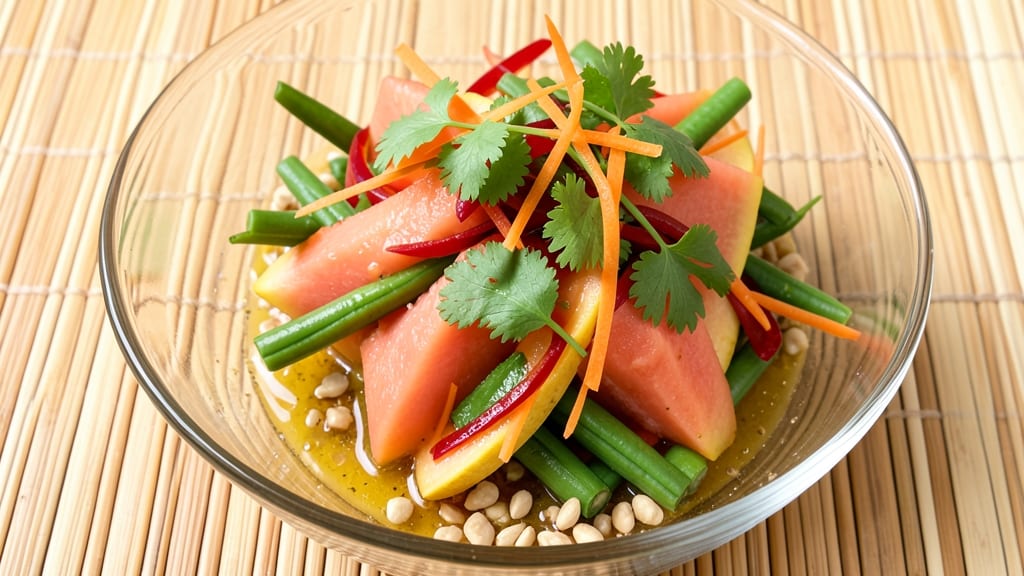
This Asian papaya salad recipe delivers the bright, tangy, and spicy flavors of traditional Som Tum—without the heavy guilt. 🌟 The secret lies in perfectly balancing sweet ripe papaya, zesty lime, and fiery chili, all tossed with fresh herbs and a crunchy peanut dressing that transforms this salad into a vibrant, protein-packed meal.
What sets this recipe apart is its authentic Thai roots, adapted for modern tastes. The dressing combines lime juice, fish sauce (or soy sauce for vegan), palm sugar, and chili, creating a complex harmony of sweet, sour, and spicy.
The key is not overmixing—letting the flavors meld just enough to create a dish that’s fresh, crunchy, and impossibly addictive. By the time you’re done, you’ll have a salad that’s bursting with color and texture: tender papaya, crisp vegetables, and a dressing that clings to every bite.
It’s light enough for a hot day but hearty enough to stand as a main dish, making it perfect for lunch or a refreshing appetizer.
Serve it with Thai iced tea or coconut water to complement the flavors, and don’t be afraid to adjust the spice level to suit your taste. Here’s how to make it!
Ingredients for asian papaya salad
Fresh papaya, crunchy veggies, and a zesty peanut dressing make this salad light yet satisfying.
| Ingredient | Amount | Notes |
|---|---|---|
| Ripe Papaya 🍈 | 3 cups | Diced, seeds removed |
| Red Bell Pepper 🌶️ | 1 whole | Thinly sliced, seeds removed |
| Carrot 🥕 | 1 whole | Julienned into matchsticks |
| Green Beans 🌿 | 1 cup | Trimmed, cut into 1-inch pieces |
| Fresh Cilantro 🌱 | ½ cup | Chopped, stems removed |
| Fresh Mint Leaves 🌿 | ¼ cup | Torn by hand |
| Lime Juice 🍋 | ½ cup | Freshly squeezed |
| Soy Sauce 🍶 | 2 tbsp | For vegan version |
| Palm Sugar 🍯 | 2 tbsp | Or sub brown sugar |
| Chili Garlic Sauce 🌶️ | 1 ½ tbsp | Adjust for spice preference |
| Peanut Butter 🥜 | ¼ cup | Creamy, unsweetened |
| Vegetable Oil 🫒 | ¼ cup | For peanut dressing |
| Roasted Peanuts 🥜 | ¼ cup | Chopped, for crunch |
| Water 💧 | ¼ cup | For peanut dressing |
| Salt 🧂 | ½ tsp | To taste |
The papaya is non-negotiable—it needs to be ripe but firm, with just a hint of give when squeezed. Asian markets usually have the best selection, but any grocery store with a produce section should work. Look for papayas that smell sweet and have a little softness at the stem end. Skip the green ones—they won't give that perfect balance of sweet and tangy. The red bell pepper and carrot should be crisp, not limp. If they're already soft, toss them—they'll make the salad soggy. Fresh herbs are a must too; Thai basil at an Asian market adds an extra layer of flavor, but regular cilantro and mint work just fine if that's all you've got.
No soy sauce? Coconut aminos work in a pinch, though it'll be slightly less salty. Running short on palm sugar? Brown sugar or maple syrup both work, but palm sugar gives that authentic Thai touch. Chili garlic sauce too spicy? Cut it with a little more peanut butter and water to balance. For the peanut dressing, natural peanut butter (no added sugar) keeps things cleaner. If you can't find it, just use regular and reduce the sugar slightly. The peanuts? Store-bought roasted are fine, but if you toast them yourself, go for a light color—they should just be fragrant, not browned.
This salad keeps best for 2 days in the fridge, but the papaya gets softer over time. Store the dressing separately and toss it together right before serving. The herbs will wilt fast, so add them last. For extra crunch, keep the peanuts in a separate bowl until serving. The dressing? It'll thicken in the fridge—just stir in a splash of water if it gets too stiff. Serve with Thai iced tea or coconut water to keep it refreshing.
Why You'll Love This Recipe
- I swear by this trick: buy pre-sliced bell peppers and green beans from the salad bar section—literally dump them in. The papaya’s soft enough to cut with a butter knife (yes, really), and the carrots? A box grater does the work in seconds. We’re talking 10 minutes from fridge to bowl.
- No Chopping Chaos: I swear by this trick: buy pre-sliced bell peppers and green beans from the salad bar section—literally dump them in. The papaya’s soft enough to cut with a butter knife (yes, really), and the carrots? A box grater does the work in seconds. We’re talking 10 minutes from fridge to bowl.
- Sweet-Spicy Magic: That first bite? The papaya’s honeyed juiciness hits your tongue, then the lime and chili powder wake it up like a caffeine rush. The cilantro adds this bright, herby punch that makes it taste like a vacation in a bowl—no passport required.
- Lunchbox Superstar: Between us, this salad holds up better than most takeout. Pack it in a jar (veggies on bottom, dressing on top) and it’ll stay crisp for days. My kids grab it for school lunches, and honestly? I’ve brought it to potlucks, picnics, and even as a side for date night—no one ever questions why it’s on the menu.
Step-by-step instructions for Asian papaya salad
Here's how to make this vibrant, crunchy salad with perfect texture and zingy flavor.
👨🍳 Step 1: Prep and Cut All Vegetables
Start by cutting the 3 cups ripe papaya into small, even dice—remove seeds first. I like to use a sharp chef's knife and cut the papaya into ½-inch cubes. The skin can be left on for extra color, but peel it if you prefer.
Next, thinly slice the 1 whole red bell pepper into half-moon strips, removing seeds and white membranes. For the 1 whole carrot, use a julienne peeler or sharp knife to create delicate matchsticks. Finally, trim the ends off the 1 cup green beans and cut them into 1-inch pieces. Work quickly so the vegetables stay crisp—this is key for that perfect crunch.
🥘 Step 2: Make the Peanut Dressing
In a small bowl, whisk together the 0.25 cup peanut butter, 0.25 cup vegetable oil, 0.25 cup water, 2 tbsp palm sugar, 2 tbsp soy sauce, 1.5 tbsp chili garlic sauce, and 0.5 tsp salt. Start with the peanut butter and oil, then gradually add the remaining ingredients while whisking vigorously to create a smooth, creamy sauce.
Taste and adjust—you might want to add a splash more lime juice or a pinch of salt. The dressing should be thick but pourable. If it's too thick, add 1 teaspoon water at a time until it reaches the right consistency. This dressing is the heart of the salad, so don't rush this step.
🍳 Step 3: Combine Vegetables and Dressing
In a large mixing bowl, gently toss the prepared vegetables with 0.5 cup lime juice and 0.25 cup chopped cilantro. Be careful not to mash the papaya or soften the green beans—you want everything to stay crisp. Add the peanut dressing and toss again, coating everything evenly. The lime juice will start to brighten the flavors immediately.
Now fold in the 0.25 cup torn mint leaves and 0.25 cup chopped roasted peanuts. The peanuts add a satisfying crunch, while the mint gives that fresh, herbal note. Taste again and adjust seasoning if needed—you might want to add a little more lime or chili garlic sauce for extra zing.
⏰ Step 4: Chill and Serve
Cover the salad and refrigerate for at least 30 minutes before serving. This lets the flavors meld together beautifully. The papaya will soften slightly but still hold its shape, and the dressing will absorb into the vegetables perfectly.
When ready to serve, give it one final toss and check the seasoning. The salad should be bright, tangy, and perfectly balanced between sweet, spicy, and nutty flavors. Serve immediately while still crisp and refreshing—this salad doesn't keep its best texture for long.
Pro Tips For Making Asian Papaya Salad
- RICE THE PAPAYA: Use a box grater or mandoline for even, thin slices—about 1/8-inch thick. I learned this the hard way: chunky papaya makes the salad look messy, but thin slices soak up the dressing better and keep the texture crisp. (Yes, even if you’re impatient like me, take the extra 30 seconds.)
- SALT THE CARROTS: Toss shredded carrots with ½ teaspoon salt and let sit for 10 minutes before draining. This softens them slightly and removes excess starch, so they don’t turn into mush when mixed with the dressing. My grandmother swore by this, and she was right: the salad stays crunchy longer.
- SKIP THE BOILING BEANS: Raw green beans add the perfect snap—no need to blanch. If you’re worried about texture, give them a quick 30-second dip in boiling water, then plunge into ice water. But honestly? I skip this 90% of the time, and the salad still holds up. (Your future self will thank you for the shortcut.)
- DRESSING LAST MINUTE: Add the dressing right before serving—papaya oxidizes fast, turning brown and sad. If you’re prepping ahead, store the veggies dry in the fridge and toss with dressing just as you’re ready to eat. Sounds weird, but it works: the salad stays vibrant and fresh-tasting longer.
Dietary considerations for asian papaya salad
Vegan-Friendly Base
This recipe is already vegan-friendly, thanks to the clever substitution of soy sauce for traditional fish sauce. The 2 tbsp soy sauce provides the same umami depth without any animal products. For extra authenticity, look for tamari (gluten-free soy sauce) if you need a gluten-free option.
The peanut butter dressing also keeps it plant-based, making this a perfect dish for vegans or anyone avoiding seafood. 🌱
Gluten-Free Adaptations
To make this salad gluten-free, simply swap the soy sauce for coconut aminos or tamari. Both options deliver the same salty, savory punch without gluten. Double-check your chili garlic sauce label too—some brands contain wheat.
The rest of the ingredients are naturally gluten-free, so you’ll still get that perfect balance of flavors. I’ve made this version countless times for gluten-sensitive friends, and they never notice the difference!
Low-Sugar Options
If you're watching your sugar intake, reduce the 2 tbsp palm sugar to just 1 tbsp or use monk fruit sweetener instead. The natural sweetness of the ripe papaya will still shine through.
For the peanut dressing, you can also cut back slightly on the sugar while increasing the lime juice to keep the tangy balance. Trust me, the salad stays delicious even with these adjustments—it’s all about finding that sweet-spicy harmony. 🍯
Nut-Free Substitutions
Skip the peanuts entirely if you have nut allergies, but don’t skip the crunch! Swap them for toasted pumpkin seeds or crushed rice cereal instead. For the dressing, use sunflower seed butter in place of peanut butter—it’s nut-free but still creamy.
The texture will be slightly different, but the flavors remain just as vibrant. Always check labels to avoid cross-contamination if allergies are a concern.
Protein Boost
Want to turn this salad into a heartier meal? Add ½ cup cooked chickpeas or tofu cubes for extra protein. I like to pan-fry the tofu in a little oil until crispy, then toss it in with the other ingredients.
For a meat option, thinly sliced grilled shrimp works beautifully too—just add them last so they stay warm. The salad’s bright flavors complement protein perfectly, making it a complete dish. 💪
Nutrition facts
Frequently asked questions
How do I know if my papaya is ripe enough for this salad?
Look for papayas that are slightly soft when gently squeezed near the stem and have a sweet aroma. The skin should be mostly yellow with some green or orange patches—avoid fully green papayas. A ripe papaya will have a slight give but won't be mushy.
Can I make this salad ahead of time?
Yes, but store the dressing and vegetables separately. Combine them 30 minutes before serving to keep the papaya crisp. The herbs will wilt quickly, so add them last. For best texture, serve within 2 hours of tossing.
What can I do if my salad tastes too sweet?
Add 1-2 extra tablespoons of lime juice or ½ teaspoon more chili garlic sauce to balance the sweetness. The acidity and heat will cut through the sugar. Taste as you go—this salad should have a bright, tangy finish, not a cloying sweetness.
Is there a way to make this salad less spicy?
Reduce the chili garlic sauce to 1 tablespoon and add ½ teaspoon more sugar to balance. For a milder version, substitute with 1 tablespoon mild sriracha or less spicy chili paste. Always taste before serving!
What's the best way to store leftovers?
Keep the dressing and vegetables in airtight containers separately. Refrigerate for up to 2 days. When ready to eat, reassemble and add fresh herbs for brightness. The texture won't be as crisp, but the flavors remain delicious.