
Salads
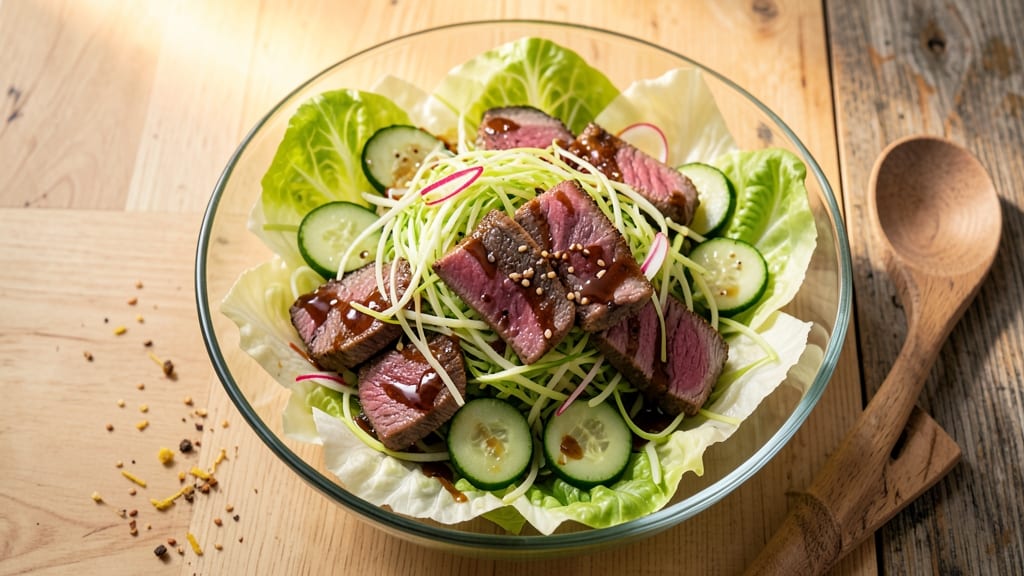
This Asian tuna steak salad delivers restaurant-quality flavor with perfectly seared rare steak and crisp Asian-inspired toppings that balance rich umami with bright, refreshing crunch.
The secret lies in high-heat searing for just 2 minutes per side, creating a caramelized crust while keeping the center perfectly tender—exactly how sushi chefs prepare it. I developed this recipe after years of experimenting with wok-seared tuna techniques, and it never fails to impress even skeptical eaters.
The salad base starts with a mix of butter lettuce and shaved cabbage for that signature Asian crunch, tossed with a sesame-ginger dressing that's tangy, slightly sweet, and packed with umami from soy sauce and sesame oil.
What makes this dish truly special is the textural contrast: tender, warm tuna against cool, crisp vegetables, with optional additions like cucumber ribbons or pickled ginger for extra brightness. The components come together in minutes but taste like you spent hours perfecting them.
By the time you slice that seared tuna into ¼-inch medallions and arrange it over the salad, you'll have a dish that's elegant enough for dinner parties but simple enough for weeknight lunches.
The aroma of toasted sesame seeds and fresh ginger fills the kitchen, while the first bite delivers a perfect marriage of smoky, caramelized tuna and the bright, crunchy salad beneath. This isn't just another salad—it's a complete, satisfying meal that feels indulgent yet balanced.
Serve immediately while the tuna is still warm and the dressing is fresh, or assemble ahead and sear the tuna just before serving to maintain that perfect rare center. The recipe scales beautifully for groups, and leftovers (if any) reheat surprisingly well when gently warmed through.
Here's how to create this showstopper dish that will have everyone asking for the recipe.
Ingredients for asian tuna steak salad
Restaurant-quality tuna salad with crisp Asian crunch and perfectly seared steak—just eight ingredients.
| Ingredient | Amount | Notes |
|---|---|---|
| Fresh Ahi Tuna Steak 🐟 | 1 lb | Center-cut, 1-inch thick |
| Butter Lettuce 🥬 | 4 cups | Outer leaves separated |
| Green Cabbage 🥬 | ½ lb | Shaved thinly with mandoline |
| Cucumber 🥒 | 1 medium | Julienned into ribbons |
| Sesame Oil 🫒 | 2 tbsp | Toasted for aroma |
| Soy Sauce 🍶 | 3 tbsp | Low-sodium preferred |
| Rice Vinegar 🍶 | 2 tbsp | Seasoned preferred |
| Fresh Ginger 🌿 | 1 inch | Peeled, julienned |
| Sesame Seeds 🌾 | 1 tbsp | Toasted lightly |
| Olive Oil 🫒 | 2 tbsp | For searing tuna |
| Sesame Seeds 🌾 | 1 tbsp | For garnish |
| Pickled Ginger 🌿 | ¼ cup | Sliced thinly |
| Salt 🧂 | 1 tsp | Kosher or sea salt |
| Black Pepper 🌶️ | ½ tsp | Freshly ground |
The tuna is everything here. Look for sushi-grade ahi at the seafood counter—it should be bright red with minimal fat. Whole Foods and Trader Joe's have great options, or ask your fishmonger for center-cut. Thickness matters: 1-inch thick steaks sear beautifully without overcooking. For the cabbage, a mandoline slicer makes quick work of shaving it thin—no knife skills required. The cucumber? English cucumbers if you can find them, or regular ones with seeds removed. Trust me, the crunch is worth the effort.
No sesame oil? Toasted sesame seeds in neutral oil works in a pinch. Short on ginger? Dried ginger at half the amount gets you close, but fresh is ideal. The soy sauce can be tamari for gluten-free. For the salad base, butter lettuce leaves are non-negotiable—they hold up to the dressing without wilting. The pickled ginger adds that signature tang; if you can't find it, a splash of extra rice vinegar does the trick. And if you're feeling fancy, add thinly sliced scallions for extra brightness.
This salad is best served immediately, but you can prep the dressing and toppings ahead. Store the tuna raw in the fridge until ready to sear—never thaw frozen tuna for searing. The dressing keeps for 5 days in the fridge, and the veggies hold up for 2 days if wrapped tightly. For leftovers (if any), gently reheat the tuna in a pan—it won't be as tender, but still delicious. Double the recipe for a crowd; the components scale perfectly.
Why You'll Love This Recipe
- No-Knife Nightmare: I swear by this recipe when I’m too tired to chop—just thinly slice the cabbage and cucumber (or buy pre-shredded), toss with lettuce, and sear that tuna in a screaming-hot pan for 30 seconds. The sesame oil finishes it all in one drizzle.
- Umami Bomb: That first bite of perfectly seared ahi—still pink inside, crisp edges—paired with the crunch of raw cabbage and a whisper of sesame? It’s like a flavor explosion in your mouth, but somehow still light enough to eat at 2 PM without regret.
- Lunchbox Hero: Between us, this is my go-to for packed lunches. The tuna holds up for a day (if you store it right), the veggies stay crisp, and the sesame oil keeps it from tasting sad. Bonus: my kids actually eat it—I call it “fancy fish sticks” and they’re hooked.
- Budget Protein Win: Ahi tuna can be pricey, but you only need a small steak for two servings, and the rest of the ingredients cost pennies. Honestly, it’s the kind of meal where you feel fancy without breaking the bank—especially when you stretch it into a second dinner or turn leftovers into a grain bowl.
Step-by-step instructions for Asian tuna steak salad
Here's how to create a perfect balance of smoky seared tuna and crisp Asian textures.
Prepare the Crunchy Vegetable Base
Start by washing and thoroughly drying the 4 cups butter lettuce and separating the outer leaves. Arrange them on a large platter as the foundation for your salad. Next, use a mandoline to shave the 0.5 lb green cabbage into thin ribbons—this creates that signature Asian crunch. Transfer the cabbage to a colander and toss with 1 tbsp sesame seeds and 1 tsp salt to enhance flavor while keeping it crisp.
Julienne the 1 medium cucumber into long, thin ribbons using a sharp knife or mandoline. Add these to the colander with the cabbage and toss gently to combine. The key here is to keep everything dry—moisture will make your salad soggy. Spread the cabbage and cucumber mixture evenly over the butter lettuce leaves, creating a vibrant bed for the tuna.
Create the Flavorful Dressing
In a small bowl, whisk together the 3 tbsp soy sauce, 2 tbsp rice vinegar, and 2 tbsp sesame oil. Add the 1 inch fresh ginger (julienned) and 0.5 tsp black pepper, then stir until fully combined. This dressing should be smooth but still have some texture from the ginger. Taste and adjust seasoning if needed—you want a perfect balance of salty, tangy, and slightly sweet.
Set aside 0.25 cup pickled ginger (sliced thinly) for garnish later. The remaining dressing will be used to enhance the tuna and tie all the salad components together. The acidity from the rice vinegar and the umami from the soy sauce will complement the rich tuna beautifully.
Sear the Tuna Steak to Perfection
Pat the 1 lb fresh ahi tuna steak completely dry with paper towels—this ensures maximum sear. Heat 2 tbsp olive oil in a large skillet over high heat until it shimmers. Place the tuna steak in the pan and sear for 2 minutes per side—you're aiming for a medium-rare finish with a deep pink center and slightly charred edges.
During the last 30 seconds of cooking, add the prepared dressing to the pan and spoon it over the tuna. This creates a beautiful glaze that enhances the natural flavors of the ahi. Transfer the tuna to a cutting board and let it rest for 2 minutes before slicing into ¼-inch thick pieces against the grain. The resting period ensures the juices redistribute for maximum tenderness.
Assemble and Garnish the Salad
Arrange the sliced tuna steak over the prepared vegetable base, distributing it evenly across the platter. Drizzle any remaining dressing from the pan over the top, allowing it to pool slightly in the center for a dramatic presentation. Sprinkle the reserved 0.25 cup pickled ginger and 1 tbsp sesame seeds evenly over the salad for both color and texture contrast.
Serve immediately while the tuna is still warm and the vegetables retain their crispness. The combination of smoky seared tuna, crisp cabbage and cucumber, and the bright, tangy dressing creates a perfect balance of flavors and textures that will impress anyone at your table.
Pro Tips For Making Asian Tuna Steak Salad
- PAT THE TUNA DRY: Fresh ahi tuna releases its own juices when cooked, so wipe it down with paper towels before searing—this guarantees a proper crust instead of a soggy mess. I learned this the hard way when my first batch turned out more like tuna puddle than steak.
- SEAR ON HIGH HEAT: Crank your pan to maximum heat for those first 30 seconds—this locks in the tuna’s moisture and gives it that restaurant-worthy char. After that, pull it back to medium-high to finish cooking through. (Yes, even if you’re impatient like me.)
- SHRED CABBAGE THIN: Skip the food processor—hand-shred the green cabbage into paper-thin strips for the perfect crunch and texture. Thick slices turn mushy fast, and nobody wants that in a salad meant to hold up to raw tuna.
- DRESS LETTUCE LAST: Toss the butter lettuce with sesame oil and any other dressing right before adding the tuna—this keeps it crisp instead of wilted. The oil also helps the tuna’s flavor cling to the leaves instead of pooling at the bottom of the bowl.
Storing and reheating your leftovers
Fresh Tuna Storage
Handle raw tuna with care—it spoils quickly. Store your 1 lb fresh ahi tuna steak in an airtight container on the bottom shelf of your fridge (coldest spot) for no more than 2 days. Wrap it in a paper towel first to absorb any moisture, which prevents bacterial growth.
If you won't use it within that time, freeze it immediately—never thaw frozen tuna for searing, as it releases too much water and ruins the texture. 🥶
Prep Ahead Tips
Prep the salad components separately to save time. The cabbage and cucumber can be stored in airtight containers for 2 days in the fridge, while the sesame-ginger dressing keeps for 5 days.
Keep the butter lettuce wrapped in a damp paper towel inside a sealed container to maintain crispness. The tuna should always be seared fresh—never pre-cooked—to preserve its tender texture. ⏰
Reheating Leftover Tuna
If you have leftover seared tuna, reheat it gently in a nonstick skillet over low heat for 30-60 seconds per side to avoid overcooking. Add 1 tsp olive oil and a splash of soy sauce to keep it moist.
The texture won't be as perfect as fresh, but it's still delicious. For the salad, simply toss the prepped veggies with a little extra dressing and top with the reheated tuna. 💡
Freezing the Salad
While the tuna itself doesn't freeze well, you can freeze the dressing and prepped vegetables separately for up to 1 month. Thaw in the fridge overnight before assembling.
The butter lettuce will wilt slightly, so replace it with fresh leaves when serving. The key is to freeze components individually—never the full salad—to maintain texture. ❄️
Serving Warm vs. Cold
This salad shines when served immediately after searing the tuna, but you can assemble it ahead and keep the tuna raw in the fridge until serving. Sear just before eating to maintain that perfect medium-rare center.
For a cold version, let the tuna cool completely in the fridge for 30 minutes before slicing—it'll still taste great, though the texture will be slightly firmer. 🍽️
Nutrition facts
Frequently asked questions
Can I substitute yellowfin tuna for ahi tuna in this recipe?
Yes, you can use yellowfin tuna as a substitute for ahi, though there are slight differences. Ahi has a firmer texture and richer flavor, while yellowfin is slightly more delicate. For best results, choose a center-cut steak of similar thickness (1-inch) and sear it for the same 2 minutes per side. The cooking time remains identical, but yellowfin may benefit from slightly lower heat to prevent overcooking.
How do I know when the tuna is cooked perfectly?
The ideal doneness is medium-rare with a deep pink center. Use an instant-read thermometer for precision—aim for 120-125°F internal temperature. If you don't have one, cut into the thickest part: the center should look slightly translucent with a warm pink hue, not gray or overcooked. Remember, tuna continues cooking slightly after you remove it from heat.
What if I don't have a mandoline for shaving cabbage?
No mandoline? No problem! Use a sharp chef's knife to carefully shave the cabbage into thin ribbons. Hold the cabbage wedge firmly and slice off thin layers parallel to the core. For extra safety, wrap the cabbage in plastic wrap first to prevent slipping. The result won't be as perfectly even, but it'll still provide that essential Asian crunch—just work a little slower.
Can I make this salad ahead of time?
but with one critical exception: the tuna must be seared fresh. Prep all salad components (veggies, dressing) and store them separately in airtight containers for up to 2 days. Keep the raw tuna refrigerated until ready to cook. When serving, simply assemble the salad and sear the tuna just before plating to maintain that perfect rare center and crisp texture.
What's the best way to serve this with rice or noodles?
This salad makes an elegant pairing with jasmine rice or cold soba noodles. For a complete meal, serve ½ cup cooked rice per person alongside the salad. The rice soaks up any extra dressing while adding heartiness. For noodles, toss 4 oz cooked soba noodles with a drizzle of the sesame-ginger dressing and serve on the side. Both options balance the rich tuna beautifully while keeping the dish light.