
Salads
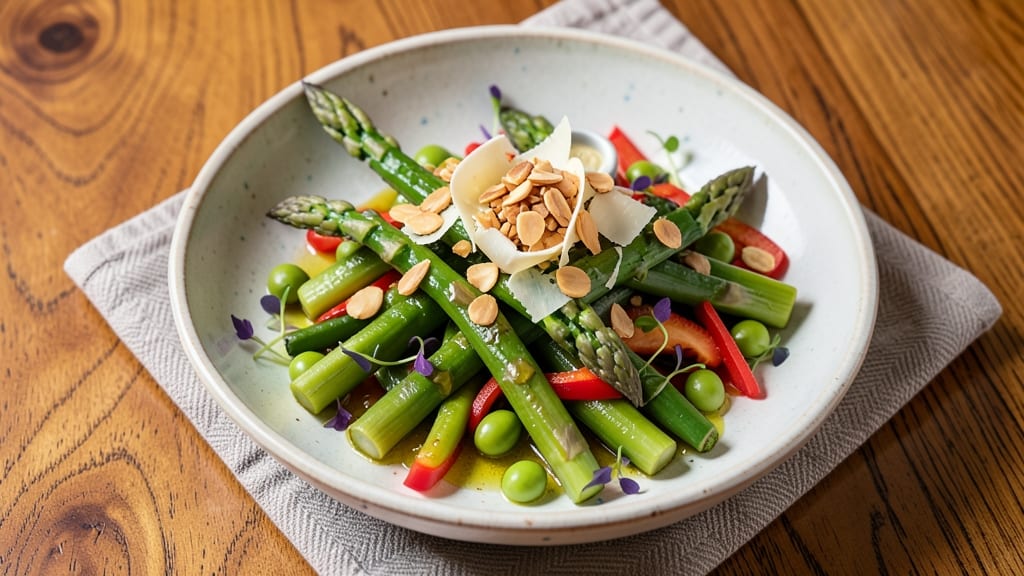
This asparagus and snow pea salad recipe delivers crisp-tender greens and vibrant textures in just 15 minutes—perfect for spring and summer gatherings. The secret lies in blanching the asparagus to preserve its snap while keeping the snow peas raw for their signature crunch.
I’ve perfected this balance to create a salad that’s light yet satisfying, with a bright citrus vinaigrette that enhances every bite.
What makes this salad stand out is the textural contrast—crisp asparagus spears, tender snow peas, and optional toasted almonds for crunch. The dressing, a zesty blend of lemon and olive oil, ties everything together without overpowering the fresh vegetables.
This dish is vegetarian-friendly but easily elevated with grilled chicken, tofu, or feta cheese for added protein.
By the time you’re done, you’ll have a visually stunning salad that’s ready in minutes. The bright green colors pop against the creamy dressing, making it as beautiful as it is delicious. Serve it as a light lunch, side dish, or even a refreshing appetizer—it’s that versatile.
The best part? This salad stays fresh for up to 2 days in the fridge, so you can prep ahead and enjoy it all week. Whether you’re hosting a brunch or just craving something fresh, this recipe is your go-to for effortless, restaurant-quality greens.
Ingredients for asparagus and snow pea salad
Bright, crisp ingredients that come together in minutes for a salad bursting with spring flavors.
| Ingredient | Amount | Notes |
|---|---|---|
| Fresh Asparagus Spears 🌱 | 1 lb | Trimmed, tough ends removed |
| Snow Peas 🌿 | 1 ½ cups | Fresh or frozen, thawed |
| Red Bell Pepper 🍅 | 1 whole | Thinly sliced, seeds removed |
| Toasted Almonds 🌰 | ¼ cup | Sliced, lightly toasted |
| Extra-Virgin Olive Oil 🫒 | ½ cup | High-quality, fruity |
| Fresh Lemon Juice 🍋 | 3 tbsp | Freshly squeezed |
| Honey 🍯 | 1 tbsp | Raw or pure |
| Dijon Mustard 🌶️ | 1 tsp | Mild or strong preference |
| Diamond Crystal Kosher Salt 🧂 | ½ tsp | Fine grain preferred |
| Freshly Ground Black Pepper 🌶️ | ¼ tsp | Freshly cracked |
| Fresh Mint Leaves 🍃 | ¼ cup | Chopped, optional garnish |
| Crumbled Feta Cheese 🧀 | ¼ cup | Optional for protein boost |
The asparagus is the star here—look for bright green, firm stalks with tightly closed tips. Trader Joe's or Whole Foods usually carry the freshest cuts, but any grocery store’s produce section works. Snow peas should be crisp and vibrant, not wilted or yellowing. I always buy extra because they’re so versatile. For the almonds, raw, unblanched almonds toast best—just spread them on a baking sheet at 350°F for 8-10 minutes until golden. If you’re short on time, store-bought toasted almonds work too, but they lack that fresh-from-the-oven crunch.
No fresh mint? Substitute with basil or cilantro—just halve the amount since they’re milder. Swap red bell pepper for yellow or orange bell pepper if that’s what’s on hand. For the dressing, if you’re avoiding honey, agave nectar or maple syrup works in a 1:1 ratio. The Dijon mustard adds depth—if you don’t have it, yellow mustard in a pinch, but it’ll be less complex. For extra protein, grilled chicken or chickpeas make fantastic additions. The feta is optional but adds a nice tangy contrast—skip it if you’re keeping it strictly vegetarian without dairy, and use vegan feta instead.
This salad stays crispest when prepped last-minute, but if you’re prepping ahead, blanch the asparagus first (2 minutes in boiling water, then ice bath) and store everything separately. Keeps in the fridge for 2 days if stored in an airtight container. The dressing can be made 1 day ahead—just shake it up before using. For extra crunch, toast the almonds fresh before serving. If you’re making this for a crowd, double the dressing and keep it in a separate jar so everyone can adjust to taste.
Why You'll Love This Recipe
- I’ll be real: asparagus and bell peppers aren’t cheap, but this recipe stretches them like magic. A single bunch of asparagus and a handful of peas feed two for days, and the almonds add luxury without breaking the bank. Plus, it’s one of those salads that makes seasonal produce feel special—even when you’re on a tight budget.
- No-Fuss Freshness: I swear by this salad when I’m too tired to fuss—just snap the asparagus, trim the pea pods, and toss everything raw with a drizzle of olive oil. The bell pepper adds a sweet crunch without needing any cooking, and the almonds? Just toast them in the same pan while you prep.
- Crunchy-Creamy Magic: That contrast—crisp snow peas snapping between your teeth, tender asparagus with a slight char, and the buttery crunch of almonds—it’s like a party in your mouth. Honestly, the olive oil dressing ties it all together with a brightness that makes it feel lighter than it tastes.
- Lunchbox Hero: Between us, this is my go-to for work lunches or kids’ school meals. It holds up for days in the fridge, stays crisp (no sad wilted greens here), and the almonds keep it from getting boring. Pack it in jars, and it’s ready to grab—no reheating, no complaints.
Step-by-step instructions for asparagus and snow pea salad
This vibrant salad comes together faster than you can say "spring in a bowl."
👨🍳 Step 1: Blanch and Shock the Asparagus
Fill a medium pot with 2 inches of water and bring to a rolling boil. Trim the tough ends from the 1 lb fresh asparagus spears and cut them into 2-inch pieces. Add them to the boiling water and cook for exactly 2 minutes—they should be bright green but still crisp with a slight bite.
Immediately transfer the asparagus to a large bowl filled with ice water to stop the cooking process. Let them sit for 5 minutes to cool completely. This blanching technique preserves their vibrant color and crisp texture while making them easier to eat. Drain well before proceeding.
👨🍳 Step 2: Prepare the Vegetable Base
In the same bowl, add the blanched asparagus to the 1.5 cups snow peas and 1 whole red bell pepper that you've thinly sliced and seeded. Give everything a gentle toss with your hands to combine. You want the vegetables to be evenly distributed but still retain their individual textures.
Here's the thing—don't overmix. The snow peas should remain whole and the bell pepper slices should stay distinct. This creates that beautiful crunch contrast that makes the salad so satisfying. Set the vegetable mixture aside while you prepare the dressing.
🍳 Step 3: Whisk Together the Dressing
In a small bowl, combine the 0.5 cup extra-virgin olive oil, 3 tbsp fresh lemon juice, 1 tbsp honey, and 1 tsp Dijon mustard. Whisk vigorously for 30 seconds until the mixture begins to emulsify and thicken slightly. The honey helps balance the acidity of the lemon while adding a subtle sweetness that complements the vegetables.
Season the dressing with 0.5 tsp Diamond Crystal kosher salt and 0.25 tsp freshly ground black pepper. Taste it before adding to the salad—you want it bright and tangy, with just a hint of mustard's sharpness. If it needs more acid, add a splash of additional lemon juice; if it needs more sweetness, add a tiny bit more honey.
🥘 Step 4: Assemble and Toss the Salad
Pour the dressing over the vegetable mixture and toss gently but thoroughly with your hands. The vegetables should be evenly coated but still retain their individual shapes. Add the 0.25 cup toasted almonds and 0.25 cup crumbled feta cheese to the bowl and toss again just to distribute them evenly.
This is where the magic happens—the toasted almonds add crunch while the feta provides a salty contrast that makes every bite more satisfying. I like to add the feta last so it doesn't get soggy from the dressing. Taste the salad now—it should be bright, slightly sweet, with a perfect balance of tangy and savory flavors.
🍽️ Step 5: Garnish and Serve Immediately
Transfer the salad to a serving platter and sprinkle with the 0.25 cup chopped fresh mint leaves. The mint adds a fresh, herbal note that brightens the entire dish. Serve immediately while the vegetables are still crisp and the dressing is properly coating everything.
For the best experience, serve this salad while it's fresh. The flavors meld beautifully when eaten right away, and the texture contrast between the crisp vegetables, crunchy almonds, and creamy feta is at its peak. Pair it with grilled chicken or fish for a complete spring meal that's as healthy as it is delicious.
Pro Tips For Making Asparagus And Snow Pea Salad
- Trim Asparagus at the Right Angle: I learned this the hard way—cutting asparagus spears at a sharp 45-degree angle makes them look prettier and lie flatter in the salad. Use a sharp knife and angle it like you’re slicing a loaf of bread: the wider the base, the more stable they’ll sit when tossed.
- Blanch Asparagus for Crisp-Tender Perfection: Skip the raw bite—briefly blanch asparagus in boiling water for 30 seconds, then plunge into ice water. This keeps the spears crisp but tender enough to eat, and it stops them from turning mushy when tossed with the other ingredients. (Yes, even if you’re impatient like me.)
- Toast Almonds Until Golden, Not Burnt: The difference between nutty flavor and bitter disappointment is watching the almonds closely. Start them in a dry pan over medium heat, shaking often, until they’re golden—not dark brown. If they smell like toasted perfection, you’ve nailed it. If they smell like campfire, start over.
- Slice Bell Pepper Thin and Even: Use a mandoline or sharp knife to cut the red bell pepper into paper-thin strips—this ensures even cooking and a more elegant presentation. If you’re eyeballing it, aim for slices no thicker than a credit card. Uneven pieces mean some will stay crunchy while others soften too much.
Troubleshooting this recipe
Asparagus Too Soft
If your blanched asparagus turns out mushy instead of crisp, you likely overcooked it. Stick to exactly 2 minutes in boiling water—any longer and the fibers break down.
For extra firmness, shock the asparagus in ice water for 5 minutes before draining. Also, use younger, thinner spears—they hold their texture better than thick, woody stalks. 🌱
Snow Peas Losing Crunch
Raw snow peas should stay crisp, but if they feel limp after mixing, they were likely overhandled. Toss them gently with the asparagus and dressing—no vigorous stirring. For extra crunch, add them to the salad bowl right before serving.
If using frozen snow peas, thaw them in cold water for 10 minutes instead of room temperature to preserve texture. 🥬
Dressing Too Thin
A dressing that separates or feels watery usually means the emulsification failed. Whisk the olive oil and lemon juice more vigorously for 30-45 seconds to create a stable emulsion. If it still separates, add ½ tsp Dijon mustard or 1 tsp honey to help bind it.
For extra thickness, let the dressing sit for 10 minutes before tossing with the salad. 🍋
Almonds Too Dry
Store-bought toasted almonds often lose their crunch after sitting. For maximum freshness, toast your own: spread ¼ cup raw almonds on a baking sheet at 350°F for 8-10 minutes until golden.
Let them cool completely before adding to the salad. If they’re already dry, pulse them lightly in a food processor for 5 seconds to restore texture. 🌰
Feta Getting Soggy
Adding feta too early lets it absorb the dressing and turn rubbery. Toss it in just before serving, or sprinkle it on top as a garnish. For extra stability, use crumbled feta with a higher fat content (like Greek feta) which holds up better.
If you prefer vegan feta, add it last and serve immediately. 🧀
Salad Too Bland
If your salad lacks flavor, the dressing might need more acid or salt. Boost the lemon juice by 1 tbsp or add ¼ tsp salt. For depth, stir in 1 tsp minced shallot or ½ tsp garlic powder to the dressing.
If the vegetables are fresh but taste dull, try adding 1 tbsp apple cider vinegar to the dressing for brightness. 💡
Nutrition facts
Frequently asked questions
Why do you blanch the asparagus instead of eating it raw?
Blanching asparagus for just 2 minutes softens it slightly while preserving its vibrant green color and crisp texture. Raw asparagus can be tough and bitter—this method makes it tender yet still holds its shape beautifully in the salad. The ice bath after blanching locks in freshness and prevents overcooking.
Can I use frozen snow peas instead of fresh?
Yes, but thaw them properly first! Transfer frozen snow peas to a bowl of cold water for 10 minutes to maintain their crispness. Drain well before adding to the salad—never use them straight from the freezer. For best results, use fresh snow peas if available, as they have a brighter flavor and crunch.
How do I make this salad ahead of time?
Prep the dressing and store it separately for up to 2 days. Blanch the asparagus ahead (store in ice water, then drain and refrigerate), and keep the snow peas and bell pepper raw until serving. Assemble everything just before eating to preserve the crunch. The feta and almonds should be added last for maximum freshness.
What if I don't have feta cheese?
No problem! Skip it for a dairy-free version, or substitute with crumbled goat cheese, vegan feta, or even toasted pine nuts for extra crunch. The salad will still be delicious—just add the topping right before serving to keep it fresh.
Can I adjust the dressing to be sweeter or tangier?
For more sweetness, add ½ tsp extra honey or 1 tsp maple syrup. For extra tang, increase the lemon juice by 1 tbsp or add ½ tsp apple cider vinegar. Taste as you go—this dressing is highly customizable!