
Salads
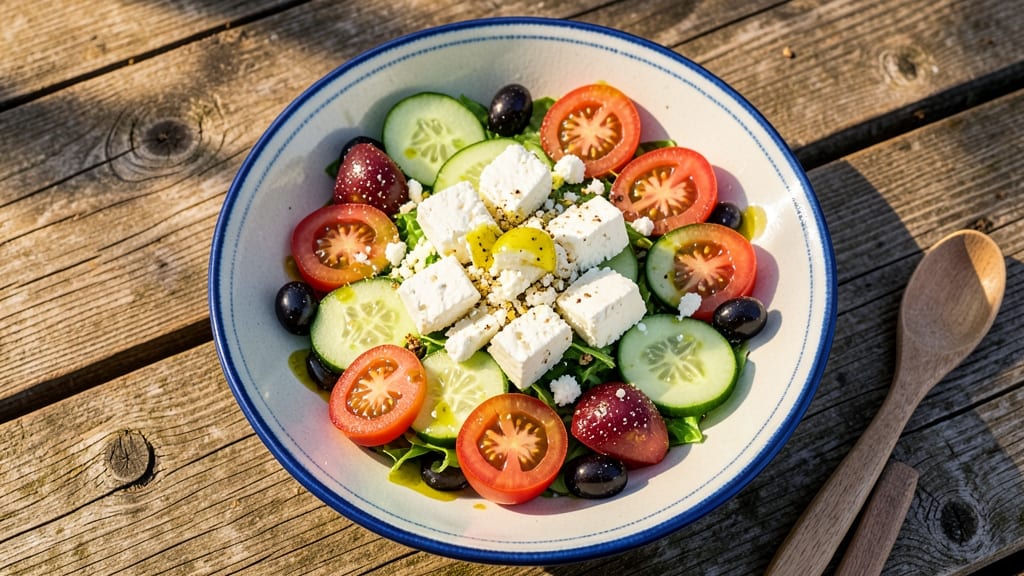
This Athenian salad recipe delivers the vibrant, crisp flavors of Greece straight to your table, where every bite balances refreshing cucumbers, briny olives, and salty feta in perfect harmony. The secret lies in fresh, high-quality ingredients arranged just before serving—no soggy lettuce or wilted tomatoes here.
This dish isn't just a salad; it's a celebration of Mediterranean simplicity that transforms any meal into a taste of the Aegean.
The foundation of an authentic Athenian salad is its crisp, juicy components: thickly sliced cucumbers, ripe tomatoes, and tangy red onions that maintain their crunch. Quality feta cheese, preferably aged and crumbled, adds that signature salty richness, while Kalamata olives bring deep, briny notes.
The dressing—extra virgin olive oil and a whisper of red wine vinegar—ties everything together without overpowering the natural flavors.
What makes this salad truly special is its assembly technique: ingredients are layered and dressed at the last moment to preserve texture and brightness. The result is a dish that's as visually stunning as it is delicious—golden feta against emerald cucumbers, deep purple olives, and the vibrant red of tomatoes.
This is the kind of salad that makes you want to linger over every bite, savoring the authentic taste of Greece.
Perfect as a light lunch, refreshing side dish, or even a hearty meal when paired with grilled meats or crusty bread, this Athenian salad proves that sometimes the simplest dishes create the most memorable meals. Let's get started on recreating this classic at home.
Ingredients for athenian salad
Twelve ingredients transform into Greece's most iconic salad—crisp, salty, and vibrantly fresh.
| Ingredient | Amount | Notes |
|---|---|---|
| Persian Cucumbers 🥒 | 2 whole | Thickly sliced lengthwise, seeds removed |
| Ripe Tomatoes 🍅 | 3 medium | Firm, vine-ripened, sliced into wedges |
| Red Onion 🧅 | 1 whole | Thinly sliced, soaking in cold water |
| Kalamata Olives 🫒 | ½ cup | Pitted, preferably Greek brand |
| Feta Cheese 🧀 | 6 oz | Aged, crumbled, preferably Greek |
| Extra-Virgin Olive Oil 🫒 | ½ cup | High quality, fruity variety |
| Red Wine Vinegar 🍷 | 2 tbsp | Dry, preferably Greek |
| Fresh Oregano 🌿 | ¼ cup | Finely chopped, stems removed |
| Diamond Crystal Kosher Salt 🧂 | ½ tsp | For seasoning |
| Freshly Ground Black Pepper 🌶️ | ¼ tsp | Freshly cracked |
| Capers 🍈 | 1 tbsp | Rinsed, optional for briny touch |
| Red Bell Pepper 🌶️ | ½ whole | Thinly sliced, seeds removed |
The cucumbers and tomatoes demand the freshest quality—look for vibrant, firm produce with no bruising. Local farmers markets often carry the best Persian cucumbers, while Whole Foods or specialty Greek markets excel for ripe tomatoes and Kalamata olives. For feta, aged blocks from Greek brands like Feta Village deliver that signature tang. The red onion should be crisp; soak slices in cold water for 10 minutes before draining to mellow their bite. Don't skip the capers—they add that authentic briny punch that elevates this salad from good to extraordinary.
No Kalamata olives? Green olives or even sun-dried tomatoes work in a pinch, though they lack that signature briny depth. Substituting regular feta for the aged version? Add an extra 1/2 teaspoon of red wine vinegar to compensate for the milder flavor. Fresh oregano unavailable? Dried oregano at half the amount suffices, though fresh delivers that superior aroma. The red bell pepper adds color and crunch—skip it if you prefer the classic version. For the dressing, use a fruity extra-virgin olive oil like Colavita or Bertolli to complement the vinegar's acidity without overpowering.
Assemble this salad right before serving to preserve crispness—no soggy lettuce here. Store components separately in airtight containers for up to 3 days in the fridge, but dress only when ready to eat. The feta keeps best wrapped in parchment paper, while olives and capers can be stored in their brine for up to 6 months. For meal prep, portion the dressing separately and toss just before serving. This salad reheats beautifully as a warm dish too—perfect for pairing with grilled meats or crusty bread.
Why You'll Love This Recipe
- No Knife Skills Needed: I swear, the Persian cucumbers and tomatoes practically chop themselves—just slice them thick, no dice required. Between us, I’ve watched my kids do it faster than me, and it still tastes like a Greek taverna.
- Salty-Sweet Magic: That first bite? The briny Kalamata olives against the creamy feta, the sharp red onion cutting through the ripe tomatoes—it’s the kind of balance that makes you pause mid-bite. Honestly, I’ve had salads that cost twice as much taste half as good.
- Picnic to Potluck: Pack it in a jar for lunch or bring it to a BBQ—this salad holds up like a champ. I’ve served it at backyard parties, office potlucks, and even as a side for takeout, and no one’s ever questioned why it’s there.
- Cheap & Lasts Forever: Feta and olives stretch this salad into leftovers that still taste fresh for days. I’ll be real: I’ve had this sitting in my fridge for five days, and it’s still my go-to when I’m too tired to cook. Plus, the ingredients won’t break the bank.
Step-by-step instructions for Athenian salad assembly
This classic Greek salad balances crisp textures and bold flavors through precise preparation.
Prepare the Vegetable Base
Begin by cutting the 2 whole Persian cucumbers lengthwise into thick slices, removing seeds with a spoon to prevent bitterness. Arrange them on a large platter, slightly overlapping for visual appeal. Next, slice the 3 medium ripe tomatoes into wedges and distribute them evenly among the cucumber slices. Thinly slice the 1 whole red onion and immediately soak in cold water for 5 minutes to mellow its sharpness.
Drain the onion well before arranging it in concentric circles around the cucumbers and tomatoes. Thinly slice the 0.5 whole red bell pepper lengthwise and place it at the outer edges of the platter. This layered approach creates both visual harmony and balanced flavor distribution throughout each serving.
Assemble the Feta and Briny Components
Crumble the 6 oz feta cheese over the vegetables, using your fingers to create irregular chunks rather than uniform pieces. This textural contrast is essential to authentic Athenian salad. Scatter the 0.5 cup Kalamata olives evenly across the platter, ensuring each serving contains several pieces. Add the 1 tbsp rinsed capers in small clusters to enhance the briny depth without overwhelming the dish.
Sprinkle the 0.25 cup finely chopped fresh oregano lightly over the top, using a fine-mesh strainer if needed to avoid clumping. The oregano should be visible but not dominant, allowing the vegetables to remain the visual focal point. This step should take no more than 2 minutes to complete, as the fresh herbs lose their potency quickly when exposed to air.
Create the Signature Dressing
In a small bowl, whisk together the 0.5 cup extra-virgin olive oil and 2 tbsp red wine vinegar until completely emulsified. Add the 0.5 tsp Diamond Crystal kosher salt and 0.25 tsp freshly ground black pepper, whisking continuously for 30 seconds to fully incorporate. The dressing should be smooth with no visible separation.
This simple yet precise dressing ratio creates the perfect balance of fruity olive oil richness and vinegar brightness. Pour the dressing over the salad just before serving to prevent the vegetables from becoming soggy. The dressing should glisten on the vegetables but not pool at the bottom of the platter.
Final Presentation and Serving
Gently rearrange the vegetables if needed to create an even distribution of colors. The salad should showcase the vibrant green of the cucumbers, red of the tomatoes and bell pepper, and the white of the feta and olives. Allow the salad to rest for 5 minutes before serving to let the flavors meld slightly.
Serve immediately with crusty bread on the side. Each serving should contain approximately equal portions of all components, with the dressing lightly coating the vegetables. The ideal Athenian salad delivers crisp cucumbers, juicy tomatoes, salty feta, and briny olives in perfect harmony, with each bite offering a complex interplay of textures and flavors.
Pro Tips For Making Athenian Salad
- CHILL THE CUCUMBERS: Toss Persian cucumbers in ice water for 10 minutes before chopping—this firms them up and stops them from turning to mush in the bowl. I learned this the hard way after serving a salad where the cucumbers were sad, limp things by the end.
- SLICE ONION DRY: Pat the red onion slices completely dry with a paper towel before adding them to the salad. Wet onions release too much liquid and make the dressing pool at the bottom—no one wants a soggy base.
- USE A KNIFE, NOT HANDS: Skip the "pinch-and-tear" feta method unless you enjoy crumbling cheese into uneven chunks. Instead, use a sharp knife to cut the block into ½-inch cubes—it distributes flavor more evenly and looks better.
- DRESS JUST BEFORE SERVING: Toss the salad with olive oil and lemon juice right before serving, not hours ahead. The tomatoes and cucumbers oxidize fast, turning dull and watery—waiting makes the whole thing taste flat.
Creative variations of this dish
Mediterranean Twist
Swap the red bell pepper for roasted eggplant cubes (½ cup) tossed in 1 tbsp olive oil, roasted at 400°F for 15 minutes) to add smoky depth. Add ¼ cup chopped Kalamata olives and 2 tbsp crumbled halloumi cheese for a modern Greek-inspired upgrade.
Finish with a sprinkle of za'atar seasoning (½ tsp) for an earthy Middle Eastern touch. 🌿
Spicy Kick
For heat lovers, add ½ tsp chili flakes or 2 tbsp finely chopped jalapeño to the dressing. I like to mix it with the olive oil first to distribute the heat evenly.
Pair with pickled red onions (½ cup) for tangy contrast. The heat balances beautifully with the cool feta and crisp cucumbers.
Protein-Packed
Turn this salad into a full meal by adding ½ cup grilled chicken breast (sliced), ¼ cup chickpeas (roasted with paprika), or 3 oz smoked salmon (flaked). For vegetarians, ¼ cup marinated white beans add heartiness. The protein keeps the dish satisfying while maintaining the salad's light, fresh essence.
Seasonal Adaptations
In summer, use heirloom tomatoes and yellow cherry tomatoes for extra sweetness. For winter, swap cucumbers for roasted butternut squash (½ cup, cubed and roasted) and add toasted pine nuts (2 tbsp) for crunch. The dressing ratio stays the same—just adjust the veggie base to seasonal produce.
Dessert Version
Yes, you read that right! For a sweet twist, use ripe peaches or plums instead of tomatoes, honey (2 tbsp) instead of vinegar, and crumbled ricotta salata (4 oz) instead of feta.
Top with toasted almonds (2 tbsp) and a drizzle of orange blossom water (½ tsp) for a refreshing Greek-inspired fruit salad. 🍑
Nutrition facts
Frequently asked questions
Why is this called Athenian salad when it's Greek?
The name "Athenian salad" comes from its origins in Athens, Greece, where it became a staple dish. While it's undeniably Greek cuisine, the "Athenian" prefix specifically ties it to the capital city's culinary tradition. The salad represents Greece's simple yet flavorful approach to fresh ingredients, making it a perfect example of Mediterranean dining.
Can I make this salad ahead of time?
For best results, assemble the salad right before serving to keep the vegetables crisp. However, you can prep components separately: chop veggies and store them in airtight containers for up to 3 days, and keep the feta and olives wrapped. Mix the dressing separately and toss just before eating to maintain freshness.
What's the secret to keeping cucumbers crisp?
Slice cucumbers just before assembling and remove seeds to prevent bitterness. Use a sharp knife and avoid over-handling. For extra crispness, chill the sliced cucumbers in ice water for 10 minutes before draining and adding to the salad. This trick keeps them firm and juicy!
Is there a way to make this salad without feta?
Yes! For a dairy-free version, substitute with ½ cup crumbled halloumi cheese or ¼ cup marinated white beans for protein. If avoiding cheese entirely, add extra Kalamata olives or capers to maintain the briny balance. The dish will still be delicious while keeping its signature Mediterranean flavors.
How do I know if my feta is good enough?
Look for feta with a slightly crumbly texture and a tangy, salty flavor. The best feta comes from Greece and should be aged at least 3-4 months. Avoid pre-shredded feta (it loses moisture and flavor). For extra authenticity, use blocks of feta and crumble it yourself right before serving.