
Salads
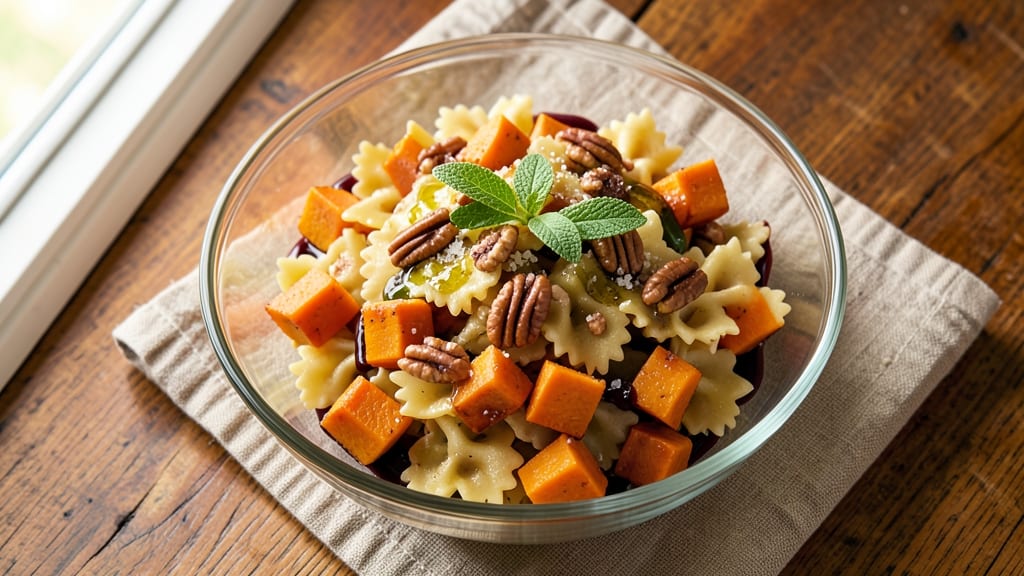
This autumn crunch pasta salad recipe transforms a simple dish into a seasonal showstopper with warm butternut squash and toasted pecans. The perfect balance of sweet, savory, and crunchy textures makes it ideal for holiday gatherings or cozy weeknight dinners.
I developed this recipe after realizing how much my family loved the combination of roasted squash and nutty crunch in a pasta salad—it’s become a fall favorite that never disappoints.
The secret lies in roasting the butternut squash until tender and caramelized, then tossing it with al dente pasta, fresh herbs, and a tangy dressing. Toasted pecans add a satisfying crunch that holds up perfectly, even when the salad sits for hours.
This dish is hearty enough to serve as a main course but light enough for a side—making it incredibly versatile for any autumn meal.
What you’ll end up with is a vibrant, flavorful pasta salad that’s warm in the center and crisp at the edges. The roasted squash adds natural sweetness, the pecans bring rich, buttery depth, and the dressing ties everything together with a bright, herby finish.
It’s the kind of dish that feels special but comes together with simple, seasonal ingredients you likely already have on hand.
Best of all, this recipe adapts easily to dietary needs—swap the pasta for gluten-free or use dairy-free dressing. Serve it at room temperature or chilled, and watch it disappear at your next gathering. Here’s how to make it perfectly every time.
Ingredients for autumn crunch pasta salad
Six ingredients bring this autumn pasta salad to life—warm, crunchy, and full of seasonal flavor.
| Ingredient | Amount | Notes |
|---|---|---|
| Medium Butternut Squash 🎃 | 2 lbs | Peeled, cubed, seeds removed |
| Pecans 🥜 | 1 ½ cups | Raw, shelled, toasted |
| Farfalle Pasta 🍝 | 12 oz | Al dente cooked, room temp |
| Extra-Virgin Olive Oil 🫒 | ½ cup | For roasting squash |
| Balsamic Vinegar 🍷 | ¼ cup | For dressing |
| Fresh Sage Leaves 🌿 | ¼ cup | Chopped, stems removed |
| Fresh Rosemary 🌿 | ⅛ cup | Finely chopped, stems removed |
| Dijon Mustard 🌶️ | 1 tbsp | For dressing |
| Honey 🍯 | 2 tbsp | For dressing |
| Salt 🧂 | 1 ½ tsp | Kosher or sea salt |
| Black Pepper 🌶️ | ½ tsp | Freshly ground |
| Parmesan Cheese 🧀 | ½ cup | Freshly grated |
| Red Wine Vinegar 🍷 | 1 tbsp | For dressing |
| Garlic Cloves 🧄 | 2 cloves | Minced for dressing |
The butternut squash is the star—look for small to medium squash with a firm, heavy feel. Trader Joe's and Whole Foods usually have pre-cut options, but cutting your own saves money. Roast until caramelized and tender—about 35-40 minutes at 400°F. Pecans? Costco sells them in bulk for the best price, but any raw pecans will work. Toast them until golden and fragrant—about 8-10 minutes—for maximum flavor. Fresh herbs are non-negotiable here; the bright, piney notes of rosemary and sage cut through the richness of the squash and pecans.
No butternut squash? Delicata or acorn squash works in a pinch—just halve, scoop out seeds, and roast. Subbing pecans? Walnuts or candied almonds add crunch, but pecans' buttery richness is ideal. Short on fresh herbs? Dried sage at half the amount gets you close, but fresh is worth the extra minute. For the dressing, balsamic glaze from Trader Joe's adds depth without extra effort. If you're making this ahead, roast the squash and toast the pecans first—they keep well for days in the fridge.
Roasted squash and toasted pecans stay fresh for 4-5 days in the fridge, but the dressing should be made fresh. The pasta is best eaten the day it's tossed, but the salad holds up beautifully for 2 days if stored separately. I always make a double batch—one for dinner, one for lunch the next day. For extra crunch, add pecans right before serving. If you're serving a crowd, prep components ahead and assemble last-minute—this salad tastes even better after flavors meld overnight.
Why You'll Love This Recipe
- One-Pot Wonder: I swear by this trick—just roast the squash and pecans together, then toss everything in one bowl. No fancy equipment, no stress, and honestly? The smell alone makes my kitchen feel like fall.
- Sweet-Savory Magic: That butternut squash caramelizes into something almost honey-like, while the balsamic and olive oil cut through with tangy brightness. Between us, the pecans add a crunch that makes every bite feel like a little reward.
- Picnic or Potluck Hero: I’ve packed this cold in a jar for tailgates, brought it to a friend’s holiday party, and even served it at my kid’s soccer game. It holds up perfectly—no soggy pasta or wilted greens here.
- Budget-Friendly Feast: Butternut squash is cheaper than you think, and pecans stretch farther than you’d expect. I’ve made this for six people for under $15, and everyone leaves happy—no sad leftovers staring at me from the fridge.
Step-by-step instructions for warm butternut squash pasta salad
Here's how to create a cozy, textured pasta salad that balances warm squash with crisp pecans.
Roast the Butternut Squash Until Caramelized
Preheat your oven to 400°F and line a baking sheet with parchment paper. Toss the peeled and cubed 2 lbs medium butternut squash with 2 tablespoons of the extra-virgin olive oil, ½ teaspoon of the salt, and ¼ teaspoon of the black pepper. Spread the squash in a single layer, leaving space between cubes for even cooking.
Roast for 25-30 minutes until the edges are deep golden brown and the squash yields slightly when pressed with a fork. You'll smell that sweet, caramelized aroma—this is your cue it's ready. Let the squash cool slightly before handling, as it'll be hot after coming straight from the oven.
Toast the Pecans and Cook the Farfalle
While the squash roasts, heat a dry skillet over medium heat. Add the 1.5 cups pecans and toast them, stirring frequently, for 5-7 minutes until they're fragrant and light golden brown. Remove from heat immediately—they'll continue to darken and can burn quickly. Let them cool on a plate, then roughly chop half of them for texture contrast.
In a separate pot, cook the 12 oz farfalle pasta in salted boiling water until al dente, about 1 minute less than package instructions. Drain, rinse briefly under cold water to stop cooking, and transfer to a large bowl. Toss with 1 tablespoon of the remaining extra-virgin olive oil to prevent sticking.
Whisk Together the Herbed Honey Dressing
In a small bowl, combine the 2 tbsp honey, 1 tbsp Dijon mustard, 2 cloves minced garlic, 1 tbsp red wine vinegar, and ¼ cup balsamic vinegar. Whisk until smooth, then gradually add the ½ cup extra-virgin olive oil while whisking continuously. The dressing should emulsify into a silky, golden liquid.
Stir in the ¼ cup chopped fresh sage leaves and ⅛ cup finely chopped fresh rosemary, reserving a few leaves for garnish. Taste and adjust seasoning with the remaining 1 teaspoon salt and ¼ teaspoon black pepper. This dressing is the heart of the salad—its sweet, tangy balance ties everything together.
Assemble and Toss the Salad
Add the warm roasted squash, toasted pecans (both whole and chopped), and the herbed honey dressing to the bowl with the pasta. Using a large spoon or your hands, gently fold everything together until the squash is evenly distributed and the pasta is coated in the dressing. Let the salad sit for 5 minutes to allow the flavors to meld.
Before serving, sprinkle the salad with the ½ cup freshly grated Parmesan cheese and the reserved fresh sage leaves. The cheese adds a salty, umami punch that cuts through the sweetness of the squash and pecans, while the fresh herbs add a bright, aromatic finish. Serve warm or at room temperature for the best texture contrast.
Pro Tips For Making Autumn Crunch Pasta Salad
- Roast Squash Until Tender: Butternut squash needs to be fork-tender, not just soft—aim for 25-30 minutes at 400°F (205°C), flipping halfway. I learned this the hard way when mine came out mushy; now I check with a fork at 20 minutes.
- Toast Pecans Low and Slow: Pecans burn faster than you think—watch them like a hawk at 325°F (165°C) for 5-6 minutes, shaking the pan every 60 seconds. Over-toasted nuts taste bitter, and you don’t want that in your salad.
- Undercook Farfalle Slightly: Pasta continues cooking in the dressing, so pull it out 1-2 minutes before package instructions say. Al dente is key—no one wants a soggy salad.
- Balance Dressing Ratios: Start with 2 tablespoons balsamic vinegar per ¼ cup olive oil, then taste. Too much vinegar makes it sharp; too little oil leaves it flat. Adjust gradually—this isn’t a science, but close.
Essential equipment for perfect results
Roasting Pan Essentials
For roasting the butternut squash, I swear by a half-sheet baking pan—it gives enough space for even roasting without crowding. Look for one with rimmed edges to prevent drips, like the OXO Good Grips pan.
Line it with parchment paper for easy cleanup, especially since caramelized squash sticks like glue. If you’re short on space, a wire cooling rack on top of the baking sheet helps crisp the edges even more. 🔥
Pasta Cooking Gear
Cooking farfalle perfectly requires a large, deep pot with at least 8 quarts capacity—like the Cuisinart MultiClad Pro—so the pasta has room to move and won’t stick. Use a fine-mesh strainer (I love OXO’s colander) to drain water quickly, then rinse under cold water to stop cooking.
For al dente pasta, set a timer 1 minute before the package suggests and test often. A wooden spoon helps toss the pasta gently after draining to prevent breaking.
Skillet for Toasting Pecans
A 10-inch cast-iron skillet is ideal for toasting pecans—it retains heat evenly and develops a natural crust. Preheat it over medium heat for 2-3 minutes before adding the nuts to ensure even browning. If you don’t have cast iron, a nonstick stainless steel skillet (like All-Clad) works too.
Stir constantly with a spatula to avoid burning—pecans go from golden to bitter in seconds. A fine-mesh sieve helps cool them quickly after toasting.
Mixing and Serving Tools
Assembling the salad requires a large mixing bowl (I use a stainless steel Cambro for durability) to hold all components without spills. A rubber spatula helps fold everything together gently, while a small whisk (like West Bend’s compact design) keeps the dressing emulsified.
For serving, a slate board or wooden platter elevates the dish—just sprinkle the Parmesan and fresh herbs right before plating. A microplane ensures the cheese is finely grated for even distribution.
Dressing Whisk and Storage
For the herbed honey dressing, a small glass jar with a tight seal (like Le Parfait) makes whisking easy and doubles as storage. If you’re prepping ahead, store the dressing separately in an airtight container—it keeps for up to 5 days in the fridge.
A fine-mesh strainer over the jar catches any herb bits before pouring. For extra flavor, infuse the olive oil with garlic cloves for 10 minutes before whisking—it adds depth without overpowering. ✨
Nutrition facts
Frequently asked questions
Can I make this pasta salad ahead of time?
This salad actually tastes better when made ahead. Roast the squash and toast the pecans first—they keep well for 4-5 days in the fridge. Store the dressing separately in an airtight container. When ready to serve, toss everything together with fresh herbs and Parmesan. The flavors meld beautifully overnight!
What if I don't have butternut squash?
No problem! Swap for acorn or delicata squash—both work perfectly. For a different seasonal twist, try roasted sweet potatoes or caramelized onions. Just adjust the roasting time: squash needs 35-40 minutes while sweet potatoes are ready in 25-30 minutes. The key is tender, caramelized veggies.
How do I prevent the salad from getting soggy?
Keep the dressing separate until the last minute and avoid overmixing. Toasted pecans should be added just before serving to maintain their crunch. If storing overnight, keep components separate in airtight containers. For extra insurance, pat any added greens (like spinach) completely dry before mixing. Cold pasta also helps maintain texture!
Can I make this vegetarian or vegan?
Easily! For vegetarian, use regular Parmesan. For vegan, substitute with nutritional yeast and a plant-based cheese alternative. The herbed honey dressing can be made vegan by using maple syrup instead of honey. All other components are naturally plant-based. The toasted pecans and roasted squash provide plenty of satisfying texture without animal products.
What's the best pasta shape for this recipe?
Farfalle works perfectly because its shape holds the dressing and ingredients well, but you can use any short pasta like penne, rotini, or fusilli. Avoid long pasta shapes that might tangle. For a gluten-free option, try chickpea or brown rice pasta—just check cooking times as they may vary slightly from traditional wheat pasta.