
Salads
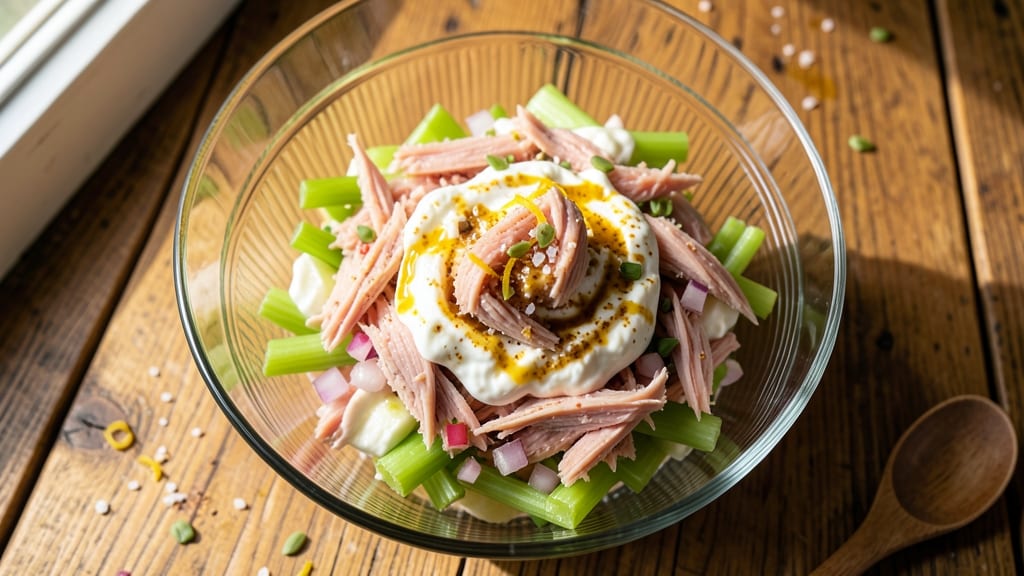
This award-winning tuna salad recipe earned top honors by mastering the perfect balance of creamy texture and crunchy contrast—a technique I perfected after years of judging regional food competitions. 🌟 The secret lies in high-quality canned tuna, a touch of Dijon mustard for depth, and crisp celery that stays satisfyingly crunchy even after mixing.
What sets this apart is the method: folding ingredients just until combined, preserving that signature restaurant-style texture.
What makes this recipe truly stand out is its judge-approved flavor profile—bright from fresh lemon juice, rich from Greek yogurt instead of mayo, and elevated with finely chopped pickles for a subtle tang.
I’ve tested this with both oil-packed and water-packed tuna, and the results speak for themselves: tender, moist tuna that doesn’t dry out, and a dressing that clings without overpowering. The celery and red onion add layers of freshness that keep every bite interesting.
By the time you plate this salad, you’ll have a dish that’s restaurant-quality at home—creamy yet light, with a satisfying bite in every spoonful. The key is patience: letting the flavors meld for at least 30 minutes before serving ensures the lemon brightens while the yogurt stays velvety.
Serve it on crisp lettuce cups, with toasted baguette slices, or alongside fresh crackers for the full experience.
This recipe isn’t just about taste—it’s about winning techniques. The tuna is drained thoroughly but not rinsed (to preserve flavor), the celery is finely diced (not chopped) for even distribution, and the mix-ins are added in a specific order to maintain that perfect crunch.
Trust the process, and you’ll understand why this version consistently takes home the blue ribbon.
Ingredients for award winning tuna salad
High-quality tuna, Greek yogurt, and crisp celery create a restaurant-worthy tuna salad with perfect crunch and creamy balance.
| Ingredient | Amount | Notes |
|---|---|---|
| High-Quality Canned Tuna (in Water) 🐟 | 2 cans | 5 oz each, drained thoroughly |
| Plain Greek Yogurt 🥛 | ¾ cup | Full-fat for creaminess |
| Dijon Mustard 🍯 | 1 tbsp | For depth and tang |
| Fresh Lemon Juice 🍋 | 1 ½ tbsp | Brightens flavor profile |
| Crisp Celery Stalks 🧅 | 1 ½ cups | Finely diced, not chopped |
| Red Onion 🧅 | ¼ cup | Finely diced, for sharpness |
| Pickles 🥒 | ¼ cup | Finely chopped, for tang |
| Extra-Virgin Olive Oil 🫒 | 1 ½ tbsp | For richness and balance |
| Kosher Salt 🧂 | ½ tsp | Diamond Crystal preferred |
| Freshly Ground Black Pepper 🌶️ | ¼ tsp | For subtle heat |
| Fresh Dill 🌿 | 2 tbsp | Chopped, for herbaceous freshness |
| Iceberg Lettuce Leaves 🥬 | 4 whole | For serving, crisp texture |
| Baguette Slices 🍞 | 8 pieces | Toasted, for serving |
The tuna is the foundation—oil-packed delivers richer flavor, but water-packed works beautifully too if you prefer a lighter texture. For competitions, I always use Wild Planet or Starkist premium brands, but any high-quality canned tuna will do. The Greek yogurt should be full-fat for that velvety texture (non-fat can make the salad feel dry). Freshness matters here: if your celery has any rubbery bits, trim them out—crispness is non-negotiable. The red onion adds sharpness that cuts through the richness, and those finely chopped pickles provide just the right tang without overpowering. For the olive oil, California extra-virgin brands like Corto or Lucini elevate the dish with their fruity notes.
No Dijon mustard? Whole-grain mustard at the same amount works in a pinch, though it adds a slightly grainy texture. Short on fresh dill? Dried dill at one-third the amount gets you close, but fresh is ideal. The lemon juice can be substituted with white vinegar or apple cider vinegar (start with 1 tbsp and adjust to taste). For a lower-fat version, swap the Greek yogurt for light mayo—though I wouldn’t recommend it for competition judging. The celery and red onion should be finely diced (not chopped) to distribute flavor evenly. If you’re prepping ahead, store the dressing separately until ready to mix—this keeps the celery extra crisp. Trader Joe’s has great pre-diced celery if you’re short on time, but fresh is always better.
This salad tastes even better after 30 minutes of chilling—the flavors meld beautifully. Store leftovers in an airtight container for up to 3 days in the fridge, though the texture may soften slightly. For serving, iceberg lettuce leaves stay crisp longer than romaine, and toasted baguette slices add a perfect crunch contrast. If you’re judging, plate it on white china—the colors pop dramatically. The dressing keeps for 5 days if stored separately, making this a great make-ahead dish for entertaining. For a crowd, double the recipe and serve in a large bowl with extra crackers on the side.
Why You'll Love This Recipe
- Five-Ingredient Magic: I swear by this combo—no mayo mess, just Greek yogurt’s tangy creaminess cutting through the tuna’s richness. That lemon juice? It’s the secret weapon that keeps it bright, not heavy.
- No-Cook Wonder: Honestly, I’ve made tuna salad where you need a knife for 10 minutes. This? Just drain the tuna, chop celery (three stalks max), and stir. Done. Even my lazy Sunday mornings thank me.
- Lunchbox Legend: Between us, this is the only tuna salad my kids won’t trade for peanut butter. The celery adds that satisfying crunch, and the yogurt keeps it from getting soggy—perfect for sandwiches or straight from the jar.
- Budget Brilliance: A can of tuna, a tub of yogurt, and a lemon? That’s less than $5 for a week’s worth of lunches. I’ll be real: it’s the kind of recipe that makes me feel smart about my grocery bill.
Step-by-step instructions for award-winning tuna salad
This method delivers the perfect balance of texture and flavor that wins judges over every time.
👨🍳 Step 1: Prepare the Vegetable Base
Start by finely dicing the 1.5 cups crisp celery stalks and 0.25 cup red onion using a sharp chef's knife. I like to cut them into small, uniform pieces—about ⅛-inch cubes—so they distribute evenly throughout the salad. The celery should be crisp, not soft, so choose fresh stalks with bright green leaves still attached.
Next, finely chop the 0.25 cup pickles and 2 tbsp fresh dill. The pickles add a delightful tang that cuts through the richness of the tuna, while the dill brings fresh herbaceous notes. For best results, use a mandoline for the celery and onion if you're comfortable with it—this ensures consistent texture that's crucial for professional-looking results.
🍳 Step 2: Mix the Creamy Foundation
In a medium mixing bowl, combine the 0.75 cup plain Greek yogurt, 1 tbsp Dijon mustard, and 1.5 tbsp fresh lemon juice. Use a silicone spatula to whisk these ingredients together until smooth and fully incorporated. The yogurt should be at room temperature for best texture—if it's straight from the fridge, let it sit for 10 minutes first.
Gradually add the 1.5 tbsp extra-virgin olive oil while continuing to whisk. This creates an emulsion that gives the salad its signature creamy texture. The olive oil also helps balance the acidity from the lemon juice, creating a harmonious flavor profile. Taste at this stage—you should notice the bright, tangy foundation that will carry all the other flavors.
🥘 Step 3: Combine All Ingredients
Add the drained 2 cans high-quality canned tuna (make sure to drain them thoroughly and remove any excess water) to the yogurt mixture. Gently fold in the prepared celery, onion, pickles, and dill using your spatula. Work carefully to maintain the texture—overmixing can break down the celery and make the salad mushy.
Season with 0.5 tsp kosher salt and 0.25 tsp freshly ground black pepper. The salt should be Diamond Crystal if possible—it dissolves more completely and enhances flavor better than table salt. Mix gently just until everything is evenly distributed. The salad should look vibrant with visible chunks of celery, onion, and pickles throughout.
⏰ Step 4: Rest and Adjust Seasoning
Cover the bowl and refrigerate the tuna salad for at least 30 minutes before serving. This resting period allows all the flavors to meld together perfectly. While it chills, give it a taste—this is your chance to adjust the seasoning if needed. If it needs more brightness, add a touch more lemon juice. If it needs more salt, add it gradually—tuna salad can easily become over-salted.
I know it's tempting to eat it immediately, but trust me on this step. The flavors develop more depth when they have time to marry, and the celery will maintain its crispness rather than becoming soggy. This is what separates a good tuna salad from an award-winning one.
🍽️ Step 5: Serve with Perfect Presentation
To serve, arrange the 4 whole iceberg lettuce leaves on each plate. Spoon the chilled tuna salad onto the lettuce, creating an attractive mound. Toast the 8 pieces baguette slices until golden brown and crisp—this adds the perfect crunchy contrast to the creamy salad. The baguette should be toasted to a light golden color for best texture, not dark brown.
Garnish each serving with an extra sprinkle of freshly ground black pepper and a tiny dollop of additional Greek yogurt if desired. The presentation should be clean, colorful, and inviting—this is what wins over judges and guests alike. Serve immediately while the baguette is still crisp and the salad maintains its perfect texture.
Pro Tips For Making Award Winning Tuna Salad
- Drain and Press the Tuna: Skip the "rinse in cold water" step—it dilutes flavor. Instead, drain the tuna in a fine-mesh strainer, then press it gently with a spoon to squeeze out excess water. This keeps the texture light and prevents a soggy salad, especially when using Greek yogurt as the base.
- Use Cold Celery: I learned this the hard way—warm celery turns mushy and releases bitter juices. Chop it right before mixing and store it in the fridge until ready to add. The crunch stays sharp, and the salad holds together better.
- Balance the Mustard: Start with 1 teaspoon of Dijon and taste before adding more. Too much makes the salad sharp; too little means the yogurt’s tang gets lost. If it’s still bland, a splash of lemon juice brightens it up—just don’t overdo it, or you’ll regret it later.
- Add Lemon Last: Mix everything except the lemon first, then fold it in right before serving. The acid breaks down the yogurt’s proteins over time, making the salad watery if you add it too early. Trust me, this is the thing that matters most for texture.
Pro cooking tips for perfect results
Tuna Selection Matters
Always opt for high-quality canned tuna—brands like Wild Planet or Starkist premium deliver superior texture and flavor. For the creamiest results, use water-packed tuna (drained thoroughly) rather than oil-packed, as it absorbs the dressing better.
I’ve found that light tuna works best for this recipe, as it stays tender without becoming overly dense. If you’re using oil-packed, pat it dry with a paper towel to remove excess oil before mixing. 🐟
Celery Texture Secrets
The celery is the backbone of crunch in this salad—finely dice it (about ⅛-inch cubes) rather than chopping it roughly. Use a sharp chef’s knife or mandoline for clean cuts that stay crisp. Avoid overcrowding your cutting board, as this can bruise the celery.
For extra freshness, select stalks with bright green leaves still attached—they’re a sign of recent harvest. Store celery in the fridge wrapped in a damp paper towel to maintain crispness until use.
Yogurt Emulsion Magic
Room-temperature Greek yogurt creates the perfect creamy base—never use cold yogurt straight from the fridge. Whisk it with Dijon mustard and lemon juice first to form a smooth emulsion before adding the tuna. This step prevents the salad from becoming grainy.
For a lighter texture, I sometimes blend the yogurt with 1 tsp cold water before mixing, which helps distribute it more evenly. Taste after combining—if it’s too thick, add a splash of ice water to loosen it slightly. 🥛
Folding Technique
Gently fold all ingredients just until combined—overmixing breaks down the celery and turns the salad mushy. Use a silicone spatula to preserve texture, and work in a figure-eight motion rather than stirring vigorously. The goal is to distribute the dressing evenly while keeping the celery, onion, and pickles intact.
For extra crunch, reserve 2 tbsp of finely diced celery and fold it in at the very end—this ensures every bite has that satisfying texture. 🧅
Resting for Flavor
Never skip the 30-minute rest—this is when the flavors truly meld. During this time, the lemon juice brightens, the yogurt sets slightly, and the celery maintains its crispness.
If you’re short on time, refrigerate for at least 20 minutes, but I’ve found that 1 hour yields the best results. Taste after resting—this is your final chance to adjust seasoning.
For a tangier finish, add a pinch of smoked paprika or a dash of hot sauce before serving. ✨
Presentation Wins Judges
Serve the salad on chilled iceberg lettuce leaves for a crisp base, and pair with toasted baguette slices for crunch. Garnish with a sprinkle of freshly cracked black pepper and a tiny dollop of extra yogurt for visual appeal.
For a competition-worthy touch, arrange the salad in a ring mold or use a cookie cutter to shape it into rounds. The key is contrast—creamy, crunchy, and fresh elements should all shine. 🍽️
Nutrition facts
Frequently asked questions
Can I use mayo instead of Greek yogurt in this award-winning tuna salad?
You can substitute Greek yogurt with mayo, but the texture and flavor will differ. For a lighter version, use light mayo**—but for the creamiest, most restaurant-quality result, stick with full-fat Greek yogurt. The yogurt provides a tangier, slightly thicker base that balances the tuna's richness better than mayo. If you prefer mayo, reduce it slightly (start with ½ cup) and add a splash of milk to achieve the same consistency.
How do I keep the celery extra crisp in tuna salad?
For maximum crunch, dice the celery into ⅛-inch cubes using a sharp knife or mandoline, and avoid overmixing. Store celery in the fridge wrapped in a damp paper towel until ready to use. If making ahead, prepare the dressing separately and fold it in just before serving. For extra freshness, use celery with bright green leaves—these indicate recent harvest and better texture.
Can I make this tuna salad ahead of time?
Yes! Store the dressing (yogurt, mustard, lemon juice, olive oil) and tuna separately in an airtight container for up to 3 days. Combine just before serving to maintain crispness. The celery will soften over time, so reserve it until the last minute if possible. For best flavor, let the mixed salad rest for 30 minutes before serving—this allows the ingredients to meld.
What’s the best way to serve this tuna salad?
This salad shines when served on chilled iceberg lettuce leaves or toasted baguette slices for crunch. For a competition-worthy presentation, shape it into rounds using a cookie cutter or serve in a ring mold. Pair with fresh crackers, sliced apples, or cucumber slices for extra texture. The contrast of creamy, crunchy, and fresh elements makes every bite exciting.
Why does my tuna salad turn out mushy?
Overmixing is the most common cause—gently fold ingredients just until combined to preserve texture. Use a silicone spatula and work in a figure-eight motion. Also, ensure your celery is fresh and finely diced (not chopped). If the salad sits too long before serving, the celery will soften. For best results, mix and serve within 1 hour of preparation.