Salads
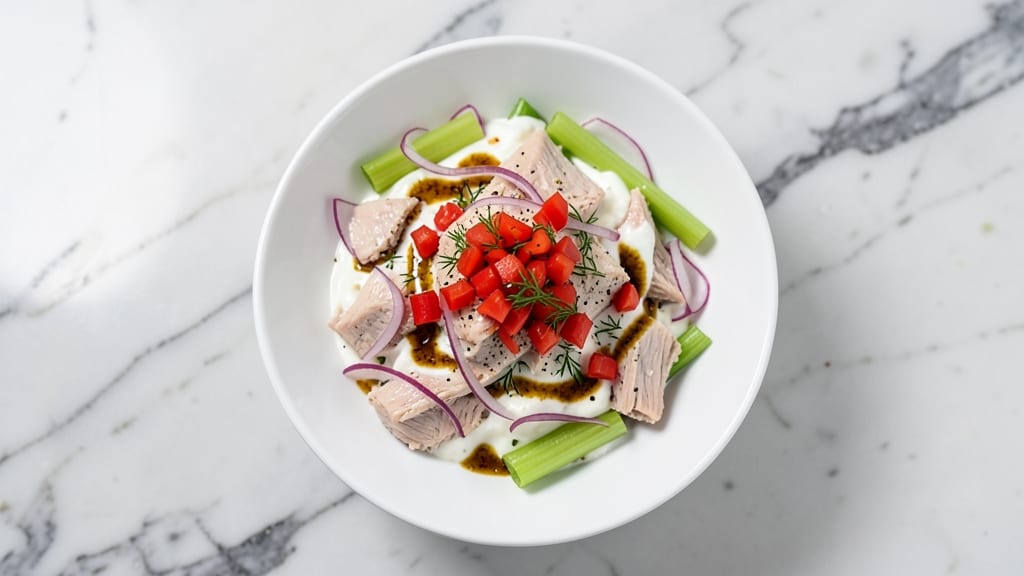
This bariatric tuna salad recipe delivers all the protein and satisfaction of classic tuna salad—without the heavy mayo or calorie overload.
Designed specifically for post-surgery digestion, it replaces traditional binders with Greek yogurt and boosts fiber through finely diced vegetables, creating a light yet filling meal that supports your nutritional goals. The key is balancing texture and moisture while keeping portions precise for optimal satiety.
The secret lies in using lean white tuna packed in water (not oil) and swapping mayo for nonfat Greek yogurt, which adds creaminess without the fat. Finely diced celery, red onion, and bell pepper not only lighten the texture but also provide fiber to aid digestion.
A touch of Dijon mustard and lemon juice brightens the flavors while keeping calories in check—each serving packs over 20 grams of protein to keep you full between meals.
What makes this recipe work for bariatric patients is the easy-to-digest texture—no chunky ingredients that could cause discomfort. The salad can be prepped ahead and stored in portion-controlled containers, making it perfect for meal prep.
Whether served on whole-grain crackers, lettuce wraps, or with a side of steamed vegetables, it’s a versatile, nutrient-dense option that fits seamlessly into a post-surgery diet plan.
For those concerned about moisture content, the recipe includes a foolproof technique for binding without excess liquid. Every ingredient plays a role in creating a salad that’s both satisfying and safe for your digestive system. Let’s get started with a recipe that proves healthy eating can still be delicious.
Ingredients for bariatric tuna salad
Protein-focused ingredients designed for gentle digestion and optimal satiety after bariatric surgery.
| Ingredient | Amount | Notes |
|---|---|---|
| Lean White Tuna (in water) 🐟 | 12 oz | Drained thoroughly, flaked finely |
| Nonfat Plain Greek Yogurt 🥛 | ½ cup | Full-fat free for bariatric compliance |
| Celery Stalks 🧅 | 2 whole | Finely diced, seeds removed |
| Red Bell Pepper 🍅 | ¼ cup | Finely diced, seeds removed |
| Red Onion 🧅 | ¼ cup | Finely diced, no chunks |
| Dijon Mustard 🍯 | 1 tbsp | For tangy depth without sugar |
| Lemon Juice 🍋 | 1 tbsp | Freshly squeezed, no pulp |
| Extra-Virgin Olive Oil 🫒 | 1 tsp | For moisture without excess fat |
| Salt 🧂 | ¼ tsp | Diamond Crystal kosher salt |
| Black Pepper 🌶️ | ¼ tsp | Freshly ground, light hand |
| Iceberg Lettuce Leaves 🥬 | 4 whole | For portion-controlled serving |
| Whole-Grain Crackers 🍞 | 8 pieces | For serving, portion-controlled |
The lean white tuna in water is non-negotiable here—oil-packed varieties add unnecessary fat that could cause discomfort. Look for high-quality brands like Starkist or Chicken of the Sea at your local grocery store, preferably in the refrigerated section for maximum freshness. The Greek yogurt must be nonfat and plain—flavored varieties often contain added sugars that aren't ideal post-surgery. For the vegetables, organic selections reduce pesticide exposure, which is particularly important for bariatric patients with heightened sensitivity. Pre-chopped vegetables from the salad bar are convenient but often contain added oils or preservatives, so fresh is always better when possible.
No Greek yogurt? Nonfat cottage cheese blended smooth works as a binder, though texture will differ slightly. Fresh celery or bell pepper unavailable? Steamed and finely mashed zucchini provides moisture without bulk. The Dijon mustard can be substituted with lemon juice plus a pinch of garlic powder for similar tang without sugar. For those concerned about moisture content, reduce the olive oil to 0.5 teaspoon—the yogurt provides enough creaminess. The portion-controlled crackers should be low-fiber options like Triscuits or Ryvita to prevent digestive distress.
This salad holds beautifully in the fridge for up to 3 days when stored in portion-controlled containers—ideal for meal prep. For best texture, add the lemon juice and olive oil just before serving to prevent wilting. The lettuce leaves should be washed and thoroughly dried to avoid soggy servings. Freezing isn't recommended due to texture changes, but the dry ingredients (crackers) can be stored separately for up to 6 months. Each serving is precisely portioned at 1/4 cup to align with typical bariatric guidelines for protein intake.
Why You'll Love This Recipe
- No-Fuss Mixing: I swear by this recipe because it’s literally four ingredients—just drain the tuna, chop the veggies, and fold. No mayo mess, no overmixing, no stress. The Greek yogurt binds it perfectly, so it stays together without falling apart.
- Bright & Tangy: Here’s what sold me—the red bell pepper and onion add a sharp, fresh crunch that cuts through the tuna’s mildness. The yogurt keeps it creamy but light, so it’s not heavy after a bariatric meal. Honestly, it tastes like a fancy salad but with zero guilt.
- Lunchbox Hero: Between us, this is my go-to for meal prep. Pack it in lettuce wraps for work or toss it in a whole-grain pita for a quick bite. It holds up for days in the fridge, and the celery stays crisp—no soggy texture here.
- Budget Powerhouse: A single can of tuna and a small tub of Greek yogurt stretch for weeks. The veggies are cheap staples, and you’re not wasting expensive ingredients. I’ll be real: it’s saved me from takeout more times than I can count.
Step-by-step instructions for bariatric tuna salad
This protein-focused method ensures maximum flavor with minimal calories—ideal for portion control.
Prepare the Base Ingredients
Drain the 12 oz lean white tuna (in water) thoroughly using a fine-mesh strainer, then flake it with your fingers or a fork into a medium bowl. The tuna should resemble small, uniform pieces—no large chunks. This texture ensures even distribution when mixed.
Finely dice the 2 whole celery stalks and 0.25 cup red bell pepper, removing seeds and membranes. For the 0.25 cup red onion, use a sharp knife to create tiny, even dice—no visible chunks. These vegetables provide crunch and volume without excess calories, making this salad bariatric-friendly.
Mix the Wet Ingredients
In a separate small bowl, combine the 0.5 cup nonfat plain Greek yogurt, 1 tbsp Dijon mustard, 1 tbsp lemon juice, 1 tsp extra-virgin olive oil, 0.25 tsp salt, and 0.25 tsp black pepper. Whisk vigorously for 30 seconds until fully emulsified. The yogurt acts as a fat substitute while adding creaminess, and the lemon juice brightens the flavors without sugar.
Here's the thing—don't skip the whisking. The mustard and yogurt need to blend completely to prevent a gritty texture in the final salad. If the mixture looks too thick, add 1 tsp water to achieve a smooth, pourable consistency.
Combine All Ingredients
Add the flaked tuna and diced vegetables to the yogurt mixture. Using a silicone spatula, gently fold everything together until fully incorporated. Be careful not to overmix—just enough to distribute the ingredients evenly. The salad should have a light, airy texture with visible flecks of tuna and vegetables.
Taste and adjust seasoning if needed. The lemon juice and Dijon mustard should provide enough tang, but you might want to add a pinch more salt if your vegetables were particularly fresh. Let the mixture sit for 5 minutes at room temperature to allow the flavors to meld.
Assemble for Serving
Lay out the 4 whole iceberg lettuce leaves on a serving platter, slightly overlapping them to create a bed. Divide the tuna salad evenly among the lettuce leaves, using about 1 tablespoon per serving. The crisp lettuce provides a refreshing contrast to the protein-rich filling.
Serve immediately with 8 pieces whole-grain crackers on the side for portion-controlled crunch. This presentation keeps calories in check while delivering satisfying texture and flavor. The crackers can be arranged in small piles or placed in individual bowls for easy serving.
Pro Tips For Making Bariatric Tuna Salad
- Drain and Pat Tuna Dry: I learned this the hard way—leaving excess water in the tuna makes your salad soggy and watery. Drain the can thoroughly, then press the tuna between paper towels for 30 seconds to absorb every last drop. Trust me, your texture will thank you.
- Finely Dice the Onion: Skip the rough chop—this isn’t a stir-fry. Dice the red onion into tiny pieces (1/8-inch or smaller) so it blends seamlessly without adding bulk. If you’re impatient, pulse it in a food processor for 3 seconds, but don’t overdo it or it’ll turn mushy.
- Soak Celery in Ice Water: Celery gets bitter if it sits too long, and that ruins the freshness of your salad. Soak the stalks in ice water for 10 minutes before chopping—it crisps them up and mutes that grassy aftertaste. Drain well before dicing, or you’ll end up with a watery mess.
- Mix Yogurt Last: Adding the Greek yogurt too early makes the tuna turn rubbery. Keep it separate until the very end, then fold it in gently with a rubber spatula. This keeps the texture light and creamy, not dense. (Yes, even if you’re in a hurry.)
Serving suggestions for this dish
Lettuce Wrap Style
For a zero-carb option, skip the crackers entirely and serve your tuna salad in large butter lettuce leaves or romaine hearts.
I like to gently warm the lettuce leaves for 10 seconds in hot water to soften them slightly—this makes them pliable enough to hold 1.5 tablespoons of salad per leaf without tearing. Roll them up like tacos or fold them in half for easy handheld eating. 🥬
Cracker Pairings
If you prefer crunch, pair your salad with portion-controlled crackers like Triscuits or Ryvita—both are low-fiber and bariatric-friendly. For extra protein, try whole-grain melba toast (about 4 pieces per serving) or low-carb rice cakes.
I always keep a small bowl of crackers on the side so guests can add their own for texture without overdoing it.
Protein Boost Add-Ins
Need more protein? Fold in 1 tablespoon of chopped hard-boiled egg whites per serving or sprinkle with 1 teaspoon of nutritional yeast for a cheesy flavor without dairy.
For a creamy texture, add 1 teaspoon of nonfat cottage cheese blended smooth—it disappears into the salad without altering the consistency. 💪
Vegetable Variations
Swap out the celery and bell pepper for finely diced cucumber (peeled) or steamed and mashed zucchini to change up flavors while keeping the salad light. For a pop of color, add 1 teaspoon of finely chopped fresh dill or parsley.
Just be sure to dice everything uniformly—no large chunks for easy digestion.
Dipping Sauces
Offer a small bowl of light Greek yogurt mixed with a squeeze of lemon for dipping crackers or lettuce wraps. For extra flavor, stir in ½ teaspoon of capers or a pinch of smoked paprika. This adds depth without calories, making every bite more satisfying. 🍋
Meal Prep Presentation
Store pre-portioned servings in small glass containers with a tight-sealing lid for easy grab-and-go meals. Label each container with the date and protein content (20g per serving) to track your intake.
For a restaurant-style presentation, serve in mini mason jars with the tuna salad layered at the bottom, followed by chopped veggies, and topped with a dollop of Greek yogurt. 📦
Nutrition facts
Frequently asked questions
Can I use canned tuna in oil for this bariatric recipe?
No, you should always use tuna packed in water for this recipe. Oil-packed tuna adds unnecessary fat that can cause discomfort after bariatric surgery. Drain the tuna thoroughly to avoid excess moisture in your salad. If you accidentally use oil-packed tuna, drain it well and reduce the olive oil to 0.5 teaspoon to compensate.
How do I adjust this recipe for even lower calories?
To reduce calories further, replace the 1 teaspoon olive oil with an extra 1 teaspoon lemon juice for moisture. You can also reduce the Greek yogurt to 0.375 cup and add 1 teaspoon water to maintain texture. This keeps the protein high while cutting calories by about 20 per serving.
Why does my tuna salad get watery after mixing?
Watery texture usually happens when the tuna isn't drained well or the vegetables release too much liquid. Always drain tuna thoroughly and pat dry with a paper towel. For extra insurance, let the mixed salad sit for 10 minutes before serving—this allows excess liquid to settle at the bottom. You can also gently press the mixture through a fine-mesh strainer before serving.
Can I make this recipe ahead of time for meal prep?
Yes, this salad stores beautifully in the fridge for up to 3 days when kept in airtight containers. The key is to store it in portion-controlled servings (about 1/4 cup per container) to maintain portion accuracy. Add the lemon juice and olive oil just before eating to preserve freshness and texture. For best results, store the wet ingredients and dry ingredients separately until ready to mix.
What's the best way to add more protein without increasing calories?
For extra protein without calories, stir in 1 tablespoon of chopped hard-boiled egg whites per serving or sprinkle with 1 teaspoon of nutritional yeast for a cheesy flavor. You can also blend 1 teaspoon of nonfat cottage cheese into the yogurt mixture—it adds creaminess and protein without altering texture. Each of these boosts protein by about 2-3 grams per serving without significant calorie impact.