
Salads
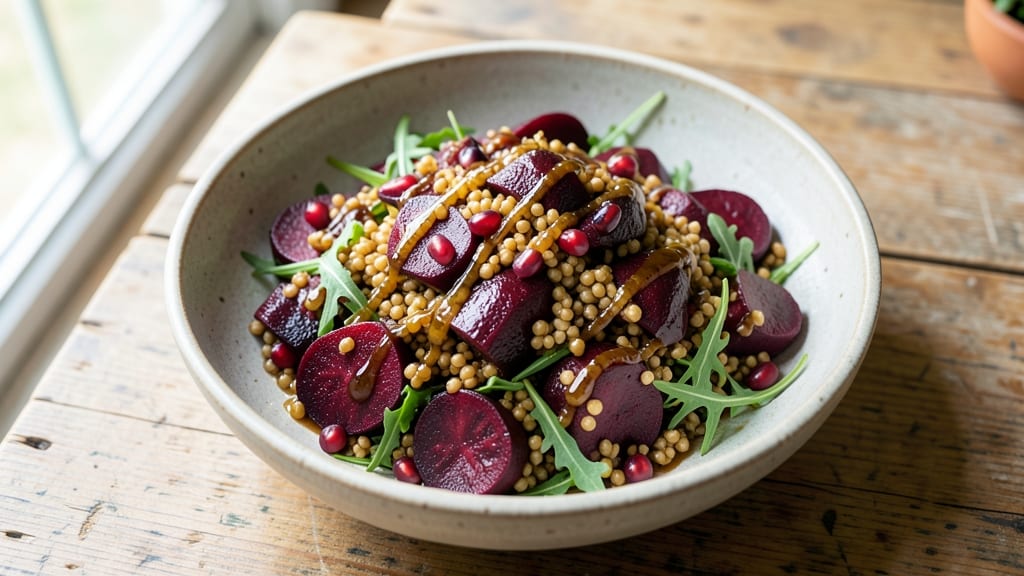
This beet farro salad recipe transforms humble ingredients into a vibrant, nutrient-packed dish that balances earthy sweetness with nutty crunch. 💛 The secret lies in perfectly roasted beets that caramelize into tender, sweet bites while toasted farro adds a satisfying chew.
I've tested countless variations, and this combination delivers restaurant-quality texture and flavor without requiring advanced techniques.
The magic happens when you roast the beets until tender with a slight caramelized edge—they should practically melt in your mouth while holding their shape. Farro, toasted to a golden brown, develops nutty depth that complements the beets' natural sweetness.
Together, they create a hearty salad that's substantial enough to stand alone but versatile enough to pair with grilled proteins or fish.
What you'll end up with is a visually stunning salad bursting with color—deep ruby beets, golden farro, and optional add-ins like toasted walnuts or fresh herbs. The dressing ties everything together with a bright, tangy profile that enhances rather than overpowers the natural flavors.
This isn't just another salad; it's a complete, satisfying meal packed with fiber, plant-based protein, and vibrant colors.
Perfect for meal prep or last-minute lunches, this salad keeps well for up to 4 days in the refrigerator. The flavors actually improve as the ingredients meld together, making it ideal for busy weekdays or special gatherings. Let's get started on creating your perfect beet farro salad!
Ingredients for beet farro salad
Earthy beets meet nutty farro in this vibrant vegan salad—simple ingredients for restaurant-quality flavor.
| Ingredient | Amount | Notes |
|---|---|---|
| Medium Beets 🍠 | 2 whole | Organic preferred, trimmed and peeled |
| Farro Groats 🌾 | 1 cup | Rinsed thoroughly before cooking |
| Extra-Virgin Olive Oil 🫒 | ½ cup | For roasting and dressing |
| Balsamic Vinegar 🍶 | 2 tbsp | Aged for deeper flavor |
| Fresh Lemon Juice 🍋 | 2 tbsp | From organic lemons |
| Maple Syrup 🍁 | 1 tbsp | Pure grade B for richness |
| Dijon Mustard 🌶️ | 1 tsp | For tangy depth |
| Salt 🧂 | 1 ½ tsp | Diamond Crystal kosher |
| Black Pepper 🌶️ | ½ tsp | Freshly cracked |
| Walnuts 🥜 | ½ cup | Toasted, roughly chopped |
| Fresh Arugula 🌿 | 4 cups | Baby leaves preferred |
| Fresh Thyme Leaves 🌿 | 1 tbsp | Chopped, for garnish |
| Garlic Cloves 🧄 | 3 cloves | Minced for dressing |
The beets are the star here. Organic ones have deeper flavor, but any firm, medium-sized beets work. Trim the greens down to 1-inch stems—those are edible too, but save them for a separate pesto. Roast them until tender with a caramelized edge; that's where the magic happens. For farro, Bob's Red Mill or Trader Joe's brands cook evenly. Rinse them thoroughly before toasting—it removes bitterness and cuts cooking time. The walnuts? Costco's bulk section has the best price, but any raw walnuts will do—just toast them until fragrant.
No farro? Barley or quinoa work in a pinch, though texture will differ. Substitute maple syrup with agave nectar if needed, but the syrup's depth is worth it. The dressing is where you can get creative—swap Dijon for whole-grain mustard if you prefer. Fresh herbs? Dried thyme at one-third the amount works, but fresh is brighter. For extra crunch, add toasted pumpkin seeds or crumbled vegan feta. The arugula should be baby leaves—it's tender and won't overpower the beets' sweetness.
Roasted beets keep 5 days in the fridge, farro reheats beautifully, and the dressing lasts 1 week sealed. Store components separately to keep everything crisp. Assemble just before serving so the arugula stays fresh. Portion into meal prep containers with a thin layer of dressing—add more when ready to eat. The flavors actually improve overnight as everything melds together. Perfect for 4 days of lunches or pack in individual jars for grab-and-go meals.
Why You'll Love This Recipe
- No Boil, No Stress: I roast the beets whole—just prick them, toss in olive oil, and let the oven do the work. No peeling, no chopping until they’re tender enough to slice, and honestly? That caramelized skin adds a depth you’d miss if you peeled them.
- Earthy Bright Pop: The balsamic and lemon juice cut through the beets’ sweetness like a knife through butter—tangy, bright, and just sharp enough to make every bite feel fresh. Between us, the farro soaks up that dressing like a sponge, so you’re basically eating flavor in every grain.
- Lunchbox Hero: Between us, this is my go-to for packed lunches—keeps for four days in the fridge, tastes better the next day, and doesn’t wilt or get soggy. Add some feta or walnuts if you’re feeling fancy, but even plain, it’s a solid, reliable meal that won’t leave you reaching for takeout.
- Cheap Crowd-Pleaser: Farro’s a budget grain, beets last forever, and you’re looking at a salad that feeds four for under $10. I’ve served it at potlucks, as a side for dinner, and even cold in summer—no one ever complains, and the leftovers? They disappear faster than I can say “second helping.”
Step-by-step instructions for beet farro salad
Here's how to create a vibrant, balanced salad with perfectly roasted beets and nutty farro.
🔥 Step 1: Roast the Beets Until Tender and Caramelized
Preheat your oven to 400°F. Wrap each of the 2 whole medium beets tightly in aluminum foil, making sure to seal all edges completely. Place them on a baking sheet and roast for 45-50 minutes until the beets are fork-tender and the skin is slightly blistered.
I like to check doneness by piercing with a knife—it should slide in easily with just slight resistance. The beets should have developed a deep, caramelized color from the roasting process. Let them cool for 10 minutes before peeling under running water to remove the skins, which should now slip off effortlessly.
🍳 Step 2: Cook the Farro Until Al Dente
While the beets roast, rinse the 1 cup farro groats thoroughly under cold water to remove any debris. In a medium saucepan, combine the farro with 3 cups water (about three times the volume of farro), the 1.5 tsp salt, and 0.5 tsp black pepper. Bring to a boil over high heat.
Once boiling, reduce heat to low and simmer uncovered for 25-30 minutes until the farro is tender but still has a slight bite. You'll know it's done when the grains are fully hydrated but still hold their shape—like al dente pasta. Drain any remaining water and spread the farro on a baking sheet to cool slightly before assembling the salad.
🥘 Step 3: Create the Sweet-Tangy Dressing
In a small bowl, whisk together the 0.5 cup extra-virgin olive oil, 2 tbsp balsamic vinegar, 2 tbsp fresh lemon juice, 1 tbsp maple syrup, and 1 tsp Dijon mustard. Start with a slow whisk to combine, then increase speed to emulsify until the dressing is smooth and glossy.
Taste and adjust seasoning—you might want to add a pinch more salt or a splash of lemon juice to balance the sweetness. The dressing should coat the back of a spoon with a silky texture. Set aside while you prepare the remaining components. This dressing is the secret to tying all the flavors together in every bite.
👨🍳 Step 4: Assemble the Salad with Perfect Balance
In a large mixing bowl, combine the cooled farro, peeled beets (cut into ½-inch cubes), 4 cups fresh arugula, and 0.5 cup toasted walnuts. Gently toss everything together with your hands or a large spoon, being careful not to bruise the arugula leaves.
Drizzle the dressing over the salad and toss again, coating everything evenly. The beets should be warm from the dressing, the farro should still have a pleasant chew, and the arugula should remain crisp. If the salad seems too dry, add 1-2 tablespoons of water to loosen it up while maintaining that perfect balance of textures.
🍽️ Step 5: Garnish and Serve Immediately
Transfer the salad to serving plates and garnish with the 1 tbsp chopped fresh thyme leaves. The thyme adds a bright, herbal note that cuts through the richness of the beets and dressing. For extra flavor, sprinkle with additional 0.5 tsp black pepper and a final drizzle of extra-virgin olive oil if desired.
Serve immediately while the beets are still warm and the dressing is fresh. This salad shines as a hearty lunch or light dinner, especially when paired with grilled proteins or crusty bread. Each bite delivers that perfect harmony of earthy beets, nutty farro, peppery arugula, and sweet-tangy dressing.
Pro Tips For Making Beet Farro Salad
- ROAST BEETS UNTIL TENDER: Medium beets take 45–60 minutes at 400°F (200°C), but they’re done when a knife slides in like butter. I used to pull them too soon—now I check at 40 minutes, then let them rest 10 minutes before peeling. Cold beets peel like a dream; warm ones turn into a sticky mess.
- TOAST FARRO CRISP: Skip the mushy farro by toasting it dry in a skillet for 3–4 minutes before boiling. The nutty aroma alone makes the salad taste more complex, and it holds up better when mixed later. Yes, it’s an extra step, but the texture is worth it.
- BALSAMIC REDUCTION SAVES DAY: Simmer ¼ cup balsamic vinegar down to 2 tablespoons before tossing it with the salad—it cuts through the earthiness of the beets and adds depth without overpowering. I learned this after dumping raw vinegar and wondering why the flavor felt flat.
- LEMON JUICE LAST: Add fresh lemon juice after everything else is mixed and chilled. The acid brightens the farro and beets instantly, but tossing it in too early makes the greens wilt faster. A squeeze right before serving keeps the salad crisp.
Storing and reheating your beet farro salad
Refrigerator Storage
Store your beet farro salad in an airtight container with a tight-fitting lid for up to 4 days in the refrigerator. I recommend using glass containers with compartments to keep the dressing separate until serving—this prevents soggy arugula. The flavors actually deepen overnight as the ingredients meld together beautifully. 💛
Freezer-Friendly Components
While the full salad doesn't freeze well (arugula gets mushy), you can freeze individual components separately. Roasted beets and cooked farro freeze perfectly for up to 3 months—just store them in single-serving portions with a sprinkle of olive oil to prevent drying.
Thaw overnight in the fridge before reassembling with fresh greens and dressing.
Reheating for Best Texture
For the best texture, I recommend reheating only the farro and beets (without arugula) in a skillet over medium heat with 1 tablespoon of water for 3-4 minutes. This keeps the grains tender while warming the beets.
Add fresh arugula and dressing just before serving to maintain crispness. The original recipe's balance of warm and cool elements makes it perfect for meal prep!
Portioning for Meal Prep
Divide your salad into 4 meal prep containers with a thin layer of dressing at the bottom. When ready to eat, add fresh arugula and a generous drizzle of dressing. I like to pack the beets and farro together in one container, then keep the greens separate until serving day.
This method keeps everything crisp and vibrant for 4 days of lunches.
Dressing Preservation
Store the dressing separately in a small glass jar with a tight lid in the fridge for up to 1 week. The olive oil helps preserve freshness, but I always taste it before using—sometimes it needs a splash of lemon juice to revive its brightness.
Keep the dressing in the fridge to prevent bacterial growth, especially since it contains fresh lemon juice.
Reviving Stale Salads
If your salad loses some crunch after a few days, don't toss it! Toss with 1 tablespoon of fresh lemon juice and a drizzle of olive oil to revive the greens.
Warm the farro and beets in a skillet for 2-3 minutes to restore their texture. This trick works wonders and gives your salad a flavor boost too. ✨
Nutrition facts
Frequently asked questions
Can I substitute farro with another grain?
If you can't find farro, try barley or quinoa for similar texture. For a nuttier flavor, use freekeh or buckwheat. Just adjust cooking times—quinoa cooks in 15 minutes while barley needs 45-50 minutes. Keep the same 3:1 grain-to-water ratio and toast before cooking for best results.
Why do my beets turn mushy when roasting?
Overcooking or underwrapping causes mushy beets. Always wrap them tightly in foil with no gaps to trap steam. Roast at 400°F for 45-50 minutes—they're done when fork-tender with slight resistance. Check at 40 minutes to avoid overcooking. For extra insurance, parboil for 10 minutes before roasting.
How can I make this salad more protein-packed?
Add ½ cup chickpeas (roasted with olive oil and salt) or ¼ cup crumbled tempeh. For animal protein, try grilled chicken breast or smoked salmon flakes. Keep portions to ½ cup per serving to maintain the salad's light balance. The walnuts already provide 4g protein per ½ cup!
Can I make this salad ahead of time?
Yes! Store components separately for 4 days: roasted beets, cooked farro, and dressing in the fridge. Keep arugula separate until serving. Assemble just before eating to maintain crispness. The flavors actually improve overnight as everything melds together beautifully.
What's the best way to reheat leftovers?
Only reheat the farro and beets (without greens) in a skillet over medium heat with 1 tbsp water for 3-4 minutes. Add fresh arugula and dressing when serving. This preserves the perfect texture contrast. For extra flavor, sprinkle with toasted nuts or fresh herbs after reheating.