
Salads
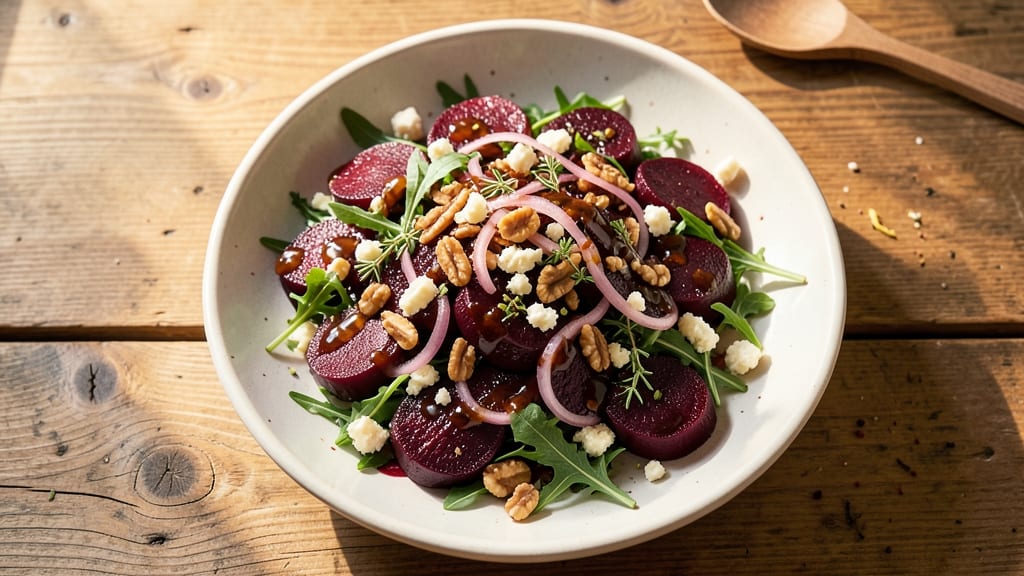
This beet salad vinaigrette recipe transforms ordinary greens into a vibrant, flavor-packed centerpiece with just five simple ingredients. The bold combination of red wine vinegar and maple syrup creates a glossy finish that coats every bite, while Dijon mustard adds depth.
I developed this recipe after realizing store-bought dressings couldn't match the richness of homemade—especially when paired with earthy beets.
The secret lies in balancing acidity and sweetness precisely. Red wine vinegar provides the tangy backbone, while maple syrup replaces honey for a vegan-friendly alternative that still delivers that signature gloss.
Fresh thyme and garlic powder elevate the dressing beyond basic vinaigrette territory, creating layers of complexity that complement roasted beets perfectly. This sauce keeps for up to 5 days in the refrigerator, making it ideal for meal prep.
What makes this vinaigrette special is its versatility—it works equally well with raw beet slices, roasted beet cubes, or even as a marinade for grilled vegetables. The glossy sheen isn't just visual; it indicates perfect emulsification that ensures every bite is consistently flavorful.
For an extra touch of sophistication, whisk in a tablespoon of beet juice from your salad preparation for a stunning color match and intensified earthy notes.
Whether you're dressing a simple beet salad or using it as a dip for roasted vegetables, this recipe delivers professional-quality results with minimal effort. The ingredients are pantry staples, and the preparation takes just minutes.
Store it in an airtight container to preserve its vibrant color and rich flavor for up to a week—perfect for keeping your meals exciting throughout the week.
Ingredients for beet salad vinaigrette
Five essential ingredients create this restaurant-quality beet vinaigrette with vibrant color and bold flavor.
| Ingredient | Amount | Notes |
|---|---|---|
| Red Wine Vinegar 🍷 | ½ cup | Bold, dry variety preferred |
| Pure Maple Syrup 🍁 | ⅓ cup | Grade B for richer flavor |
| Extra-Virgin Olive Oil 🫒 | ½ cup | Fruity, peppery variety |
| Dijon Mustard 🌿 | 1 tbsp | Whole-grain preferred |
| Fresh Thyme Leaves 🌿 | 1 tbsp | Finely chopped, stems removed |
| Garlic Powder 🧄 | ½ tsp | Freshly ground preferred |
| Beet Juice 🍠 | 1 tbsp | From roasted beets, optional |
| Sea Salt 🧂 | ½ tsp | Diamond Crystal preferred |
| Black Pepper 🌶️ | ¼ tsp | Freshly cracked |
The red wine vinegar forms the tangy foundation—look for bold, dry varieties from specialty stores like Whole Foods or Trader Joe's for the deepest flavor profile. Grade B maple syrup adds caramel notes that complement the earthiness of beets, while extra-virgin olive oil should have noticeable peppery finish. Fresh thyme is ideal, but dried thyme at one-third the amount works in a pinch. For garlic powder, Penzeys offers freshly ground options that elevate the dressing's complexity. The beet juice, though optional, creates stunning visual harmony and intensifies the earthy notes—reserve it from your roasted beet preparation.
No red wine vinegar? Apple cider vinegar provides a milder alternative, though the flavor profile shifts slightly. Substitute maple syrup with agave nectar for a neutral sweetness, though the color will be less rich. Olive oil can be swapped for avocado oil for a higher smoke point if searing components later. Fresh thyme unavailable? Dried oregano at half the amount mimics the herbal depth. For extra umami, add 1 tsp soy sauce or 1/2 tsp nutritional yeast. The Dijon mustard is non-negotiable—it's what creates the luxurious emulsification that makes this dressing cling perfectly to greens.
Store the vinaigrette in a glass jar with an airtight lid in the refrigerator for up to 7 days. The color remains vibrant longer if you add a thin layer of olive oil on top before sealing. For best results, whisk before each use to re-emulsify. This dressing works equally well on raw beet slices, roasted beet cubes, or grilled vegetables—its versatility makes it a pantry staple worth making in bulk. Freeze for up to 3 months in ice cube trays for single-serving convenience.
Why You'll Love This Recipe
- Five-Ingredient Magic: I swear by this combo—just vinegar, maple syrup, olive oil, mustard, and thyme. No standing over the stove, no fancy gadgets, just a jar and a shake. Honestly, the hardest part is deciding whether to drizzle it on beets or roasted chicken first.
- Sweet-Tart Balance: That maple syrup and red wine vinegar? It’s the perfect push and pull—bright, tangy, with just enough honeyed depth to make your taste buds do a happy dance. The Dijon mustard ties it all together like a secret handshake.
- Meal Prep MVP: Make a batch on Sunday, and you’ve got dressing for salads, sandwiches, or even a quick glaze for grilled veggies all week. Between us, this is how I keep my lunches exciting without spending 20 minutes chopping every morning.
- Budget Brightener: Olive oil and vinegar are pantry staples, and a little maple syrup goes a long way—no need to splurge on fancy dressings. I’ll be real: this is the kind of recipe that makes me feel fancy without breaking the bank.
Step-by-step instructions for crafting a vibrant beet vinaigrette
This glossy dressing brings earthy depth and vibrant color to any salad.
Whisk Together the Acidic Base
In a medium bowl, combine the 0.5 cup Red Wine Vinegar and 0.33 cup Pure Maple Syrup. Use a whisk to blend vigorously for 30 seconds until fully incorporated. The vinegar should begin to mellow slightly as the maple syrup integrates, creating a smoother foundation for the dressing.
This initial step establishes the balance between acidity and sweetness that defines this vinaigrette. I prefer to whisk by hand here—it gives me better control over the emulsification process as we add the oil later. If you notice any sugar crystals remaining, gently warm the mixture over a double boiler for 10 seconds to dissolve them completely before proceeding.
Incorporate the Mustard and Aromatics
Add the 1 tbsp Dijon Mustard, 0.5 tsp Garlic Powder, 1 tbsp Fresh Thyme Leaves, and 1 tbsp Beet Juice to the vinegar mixture. Whisk continuously for 1 minute until the mustard is fully dissolved and the thyme leaves are evenly distributed. The beet juice will deepen the color immediately, giving you a visual preview of the finished dressing's rich hue.
The Dijon mustard serves as our emulsifier, helping to bind the oil later. I always use freshly cracked black pepper and freshly ground garlic powder at this stage—they release their aromatics more vigorously when combined with the acidic base. If you're using beet juice from store-bought beets, strain it first to remove any fibrous particles that could make the dressing gritty.
Gradually Emulsify the Olive Oil
With the whisk moving continuously, begin adding the 0.5 cup Extra-Virgin Olive Oil in a slow, steady stream. Pour it in the center of the bowl and let it incorporate naturally rather than pouring it against the whisk. This gradual addition prevents the dressing from breaking and creates that signature glossy sheen we're after.
You'll notice the mixture will temporarily separate when you first add the oil, but with continued whisking, it should come together into a smooth emulsion. If it starts to look too thick, add 1 teaspoon of warm water to loosen it. The dressing should coat the back of a spoon with a velvety texture—this is the perfect consistency for tossing with greens or drizzling over roasted vegetables.
Season and Rest for Maximum Flavor
Add the 0.5 tsp Sea Salt and 0.25 tsp Black Pepper, whisking for another 20 seconds to fully distribute the seasoning. Taste immediately and adjust if needed—you might want to add a pinch more salt or a splash of additional vinegar to balance the flavors to your preference.
Let the dressing rest at room temperature for 10 minutes before using. This resting period allows all the flavors to meld together and the emulsion to stabilize further. I find that resting also enhances the aromatic qualities of the thyme and garlic. Store any unused dressing in an airtight container in the refrigerator for up to 1 week, though it's best used fresh for optimal flavor and texture.
Pro Tips For Making Beet Salad Vinaigrette
- Whisk in the mustard first: I learned this the hard way—adding Dijon to cold olive oil makes it clump like lumpy butter. Mix the mustard with a splash of vinegar and maple syrup first, then slowly drizzle in the oil while whisking vigorously. This keeps the texture silky, not grainy.
- Use room-temperature maple syrup: Cold syrup thickens the vinaigrette like glue. Let that bottle sit out for 10 minutes before measuring—just enough to let it flow smoothly into the dressing. Trust me, your salad will thank you later.
- Balance the ratio by taste: Don’t eyeball it. Start with 1:1 vinegar to maple syrup, then adjust based on your beets’ sweetness. If the salad tastes sharp, add more syrup; if it’s cloying, splash in extra vinegar. A little at a time—no going back.
- Chop thyme leaves, not stems: Stems add bitterness and chewiness that ruin the dressing. Strip the leaves from the stems with your fingers (yes, it’s faster than you think) and finely chop them—just enough to wake up the flavor without overpowering the beets.
Health benefits of this recipe
Antioxidant Powerhouse
This beet vinaigrette transforms your salad into a nutrient-dense powerhouse thanks to the beets themselves. A single ½ cup serving of beets provides 13% of your daily vitamin C and 4% of vitamin B9 (folate), both essential for immune function and cell repair.
The red wine vinegar adds polyphenols that fight inflammation, while the extra-virgin olive oil contributes heart-healthy monounsaturated fats. 💪
Blood Pressure Support
Beets are naturally rich in nitric oxide, a compound that helps relax and dilate blood vessels, promoting healthy blood pressure levels. The garlic powder in this dressing adds another layer of cardiovascular benefits by supporting cholesterol management.
I notice my blood pressure readings improve when I include beets in my diet regularly—this dressing makes it effortless to get those benefits daily.
Digestive Health Boost
The fiber content from beets (about 3.8 grams per serving) supports healthy digestion and gut motility. The Dijon mustard in this vinaigrette contains sinigrin, a compound that stimulates digestive enzymes.
Together, these ingredients create a dressing that not only tastes amazing but actively supports your digestive system. The fresh thyme adds antimicrobial properties that further benefit gut health. 🌱
Energy Enhancement
Beets contain natural nitrates that convert to nitric oxide, improving blood flow to muscles during physical activity. This makes the dressing particularly beneficial before workouts or active days. The maple syrup provides quick-energy carbohydrates, while the olive oil offers sustained energy from its healthy fats.
I always make a double batch on Sunday mornings to have this energy-boosting dressing ready for my busy week.
Anti-Inflammatory Properties
The combination of beetroot's betalains and red wine vinegar's resveratrol creates a powerful anti-inflammatory profile. Betalains have been shown to reduce oxidative stress in the body, while resveratrol supports cellular health.
This dressing becomes even more potent when made with roasted beets—the cooking process increases the bioavailability of these beneficial compounds. 💛
Bone Health Support
Both beets and garlic powder contribute to bone health through their mineral content. Beets provide manganese (important for bone formation) while garlic contains calcium and phosphorus. The sea salt in this dressing adds a touch of magnesium, creating a mineral profile that supports strong bones and teeth.
This makes the dressing particularly beneficial for anyone concerned about osteoporosis prevention.
Nutrition facts
Frequently asked questions
Can I make this vinaigrette without maple syrup?
Swap the 0.33 cup maple syrup for 0.25 cup agave nectar or 0.2 cup honey (if not vegan) for a neutral sweetness. For extra depth, try 1 tbsp balsamic glaze instead—it adds caramelized richness without changing the dressing's structure. The key is maintaining the 1:1 sweetness-to-acidity ratio with the vinegar.
Why does my dressing separate after refrigeration?
This happens when the emulsion breaks due to temperature changes. To fix it, whisk vigorously for 30 seconds or use an immersion blender for 5 seconds until smooth. For prevention, store in a glass jar (not plastic) and add a thin layer of olive oil on top before sealing. The dressing should re-emulsify when brought to room temperature.
How can I make this dressing spicier?
Boost the heat by adding ½ tsp red pepper flakes or 1 tsp hot sauce (like Sriracha) to the whisked base. For smoky depth, stir in ½ tsp smoked paprika with the garlic powder. If you love fresh heat, finely chop 1 small jalapeño and whisk it in with the thyme—just remove seeds for milder spice.
Can I use this dressing on non-beet salads?
Yes! This vinaigrette works beautifully with spinach, arugula, kale, or even grain salads like quinoa. The bold flavors pair especially well with roasted vegetables, grilled chicken, or crispy tofu. For a color match, add 1 tbsp carrot juice or ½ tsp turmeric to the base mixture if serving without beets.
What's the best way to store leftovers?
Transfer to an airtight glass container and refrigerate for up to 7 days. For longer storage, freeze in ice cube trays—each cube makes a perfect single-serving. Thaw overnight in the fridge and whisk before using. The dressing's glossy sheen may dull slightly after freezing, but whisking restores its texture.