
Salads
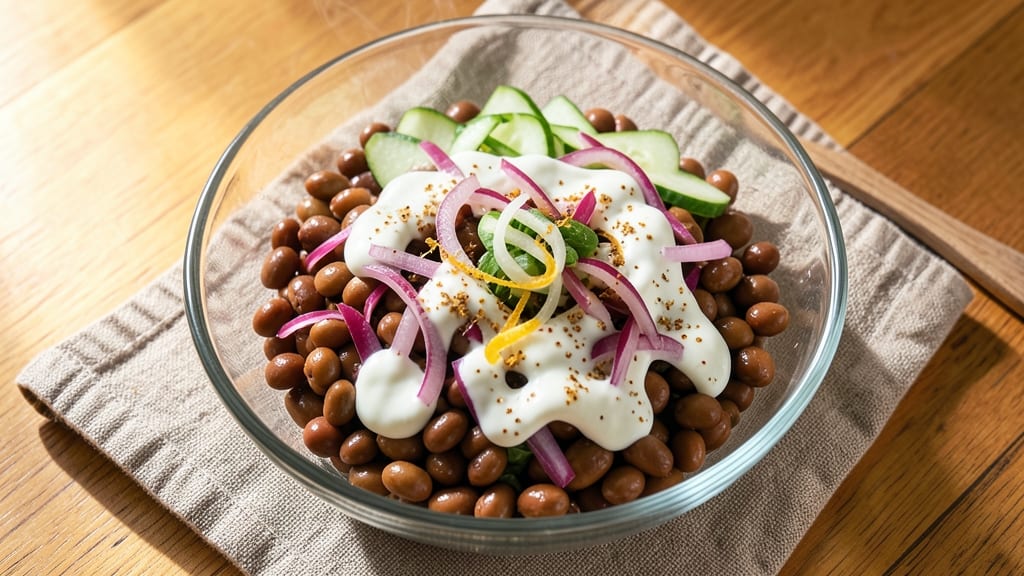
This Indian black eyed peas salad transforms humble lentils into a vibrant, flavor-packed dish that balances spiced warmth with refreshing crunch. 🌿 The secret lies in traditional tempering—blooming whole spices in hot oil to infuse every bite with aromatic depth, while cooling cucumbers and tangy yogurt create the perfect contrast.
I developed this recipe after discovering how easily black-eyed peas absorb bold flavors, making them ideal for South Indian-inspired salads that feel both rustic and refined.
The foundation begins with parboiled lentils tossed in a zesty dressing of mustard seeds, curry leaves, and coconut (or yogurt for creaminess), all finished with a touch of tamarind for brightness.
What sets this apart is the tempering technique: lightly frying cumin, chili, and asafoetida before mixing it into the salad, which adds layers of complexity without overpowering the natural earthiness of the peas.
The result is a dish that’s as satisfying as it is visually striking—perfect for meal prep or as a side that steals the show. What makes this salad truly special is its versatility.
Swap in coconut yogurt for vegan-friendly creaminess, add fresh mint for a brighter twist, or include toasted peanuts for extra crunch. The flavors develop beautifully when chilled, making it ideal for potlucks or weeknight dinners where you want something vibrant yet effortless.
Each bite delivers a harmonious blend of spicy, tangy, and cool, proving that simple ingredients can create extraordinary meals. Whether you're serving this as a standalone dish or pairing it with roti or grilled fish, the textural contrast—soft lentils, crisp cucumbers, and crunchy peanuts—ensures every mouthful is memorable.
The recipe scales easily, so you can adjust quantities for gatherings or meal prep. Let’s bring this flavorful Indian-inspired salad to your table!
Ingredients for black eyed peas salad indian
Spiced lentils meet crisp cucumbers in this vibrant Indian-inspired salad—simple ingredients with bold flavors.
| Ingredient | Amount | Notes |
|---|---|---|
| Black-Eyed Peas (Dried) 🌱 | 1 ½ cups | Parboiled according to package |
| Cucumber 🥒 | 1 ½ cups | Seedless, diced small |
| Red Onion 🧅 | ½ cup | Finely chopped |
| Plain Yogurt 🥛 | ¾ cup | Full-fat preferred |
| Coconut Milk 🥥 | ½ cup | Substitute for yogurt |
| Mustard Seeds 🌶️ | 1 tbsp | Yellow or brown |
| Curry Leaves 🌿 | 10 whole | Fresh, lightly crushed |
| Cumin Seeds 🌿 | 1 tsp | Toasted for aroma |
| Red Chili Powder 🌶️ | ½ tsp | Adjust for heat |
| Asafoetida Powder 🌶️ | ¼ tsp | Key for tempering |
| Tamarind Paste 🍋 | 1 tbsp | For tangy brightness |
| Lemon Juice 🍋 | 2 tbsp | Freshly squeezed |
| Salt 🧂 | 1 tsp | Adjust to taste |
| Roasted Peanuts 🥜 | ½ cup | Chopped for crunch |
| Fresh Mint Leaves 🌿 | ¼ cup | Chopped, optional |
| Vegetable Oil 🫒 | ¼ cup | For tempering |
The black-eyed peas are the heart of this dish—parboiling them first ensures they stay tender. Look for dried peas at Whole Foods or the bulk section of Trader Joe's for the best quality. For the tempering spices, Penzeys or your local Indian grocery will have the freshest curry leaves and asafoetida. If you can't find asafoetida (hing), garlic powder at half the amount works in a pinch, though it won't give that signature umami depth. The yogurt should be plain and full-fat—Fage or Siggi's are my go-tos, but any thick, tangy yogurt will do.
No coconut milk? Plain Greek yogurt works perfectly—just add an extra tablespoon of lemon juice to keep it bright. Fresh mint is ideal, but dried mint at one-third the amount gets you close. For the peanuts, store-bought roasted is fine, but toast your own for extra flavor—just spread them on a baking sheet and dry-toast at 350°F for 8-10 minutes. The cucumber should be seedless and crisp—English cucumbers hold up best, but Persian cucumbers work if you remove the seeds. If you're making this ahead, skip the lemon juice until serving to keep the salad fresh.
This salad tastes even better after 30 minutes in the fridge—let the flavors meld. Store leftovers in an airtight container for up to 3 days, though the peanuts may lose their crunch over time. For meal prep, portion into containers with the dressing on the side so you can toss it fresh before eating. The tempering spices keep for 6 months in a cool, dark place, so make extra—you'll want to use them again.
Why You'll Love This Recipe
- No-Soaking Needed: I swear by this trick—just rinse those dried black-eyed peas before simmering them. No overnight soak, no fuss, and they turn tender in under 30 minutes. That coconut milk in the dressing? It’s the secret to making them taste like they’ve been slow-cooked for hours.
- Creamy Cool Crunch: Between us, this salad is ridiculously satisfying—the yogurt and coconut milk make it silky smooth, while the cucumber and red onion add that perfect bite. Honestly, I’ll take this over a heavy curry any day, especially when it’s 40 degrees outside.
- Lunchbox Hero: Pack this for work or school—it holds up better than you’d think. The peas stay plump, the dressing doesn’t separate, and the kids (or your coworkers) won’t complain about it getting soggy. I’ve sent this in jars for three days straight, and it’s still fresh.
- Pantry Stash Winner: Dried peas? Check. Yogurt? Usually on hand. Onion and cucumber? Versatile staples. This recipe costs me less than $5 for four servings, and the leftovers? Even better the next day. It’s my go-to when I’m low on fresh ingredients but still want something special.
Step-by-step instructions for spiced black-eyed peas salad
Here's how to create a vibrant, tangy-sweet Indian-inspired salad with perfect texture contrast.
👨🍳 Step 1: Cook the Black-Eyed Peas to Tender Perfection
Start by rinsing the 1.5 cups dried black-eyed peas thoroughly under cold water. Place them in a pot with enough water to cover by 2 inches, then add 1 tsp salt and bring to a boil. Reduce heat to medium-low and simmer for 45-60 minutes until the peas are tender but not mushy—you should be able to crush them slightly between your fingers with gentle pressure.
Drain the peas and rinse with cold water to stop the cooking process. Let them cool completely before using. I like to spread them on a tray to cool faster and prevent any further cooking. This step is crucial because overcooked peas will turn mushy in your salad, while undercooked ones will be chalky and unpleasant.
🍳 Step 2: Prepare the Yogurt-Coconut Base
In a medium bowl, combine the 0.75 cup plain yogurt and 0.5 cup coconut milk. Whisk until smooth and creamy. This mixture forms the cooling, tangy foundation of your salad. The coconut milk adds richness that balances the earthy peas perfectly.
Next, add the 1 tbsp tamarind paste, 2 tbsp lemon juice, 0.5 tsp red chili powder, and 1 tsp salt to the yogurt mixture. Whisk vigorously until everything is well incorporated and the mixture is smooth. Taste and adjust the seasoning—you want a balance of tangy, spicy, and slightly sweet. This dressing should coat the back of a spoon and have a vibrant, slightly sticky consistency.
🥘 Step 3: Temper the Spices for Maximum Flavor
Heat 0.25 cup vegetable oil in a small pan over medium heat. Add the 1 tsp cumin seeds and 1 tbsp mustard seeds and let them sizzle for 30 seconds until they begin to pop and release their aromatic oils. This is where the magic happens—those tiny seeds will explode with flavor.
Immediately add the 10 whole curry leaves and 0.25 tsp asafoetida powder, stirring constantly for 10-15 seconds until the curry leaves turn dark green and fragrant. Pour this hot spice oil directly into the yogurt mixture while whisking continuously. The asafoetida adds a unique, savory depth that's characteristic of South Indian cooking. Let the mixture cool to room temperature before proceeding.
👨🍳 Step 4: Assemble the Salad with Crunchy Contrasts
In a large serving bowl, combine the cooled black-eyed peas, 1.5 cups diced cucumber, and 0.5 cup finely chopped red onion. Gently fold in the spiced yogurt mixture until everything is evenly coated. The peas should absorb the dressing while maintaining their shape—don't overmix or they'll turn mushy.
Add the 0.5 cup chopped roasted peanuts and 0.25 cup chopped fresh mint leaves just before serving. The peanuts provide a satisfying crunch that contrasts beautifully with the soft peas, while the mint adds a refreshing herbal note. Toss everything together gently—you want the ingredients to stay distinct but well-integrated.
⏰ Step 5: Chill and Serve for Best Texture
Cover the salad and refrigerate for at least 30 minutes before serving. This chilling time allows all the flavors to meld together while keeping the cucumber and peanuts crisp. The salad will taste even better if you let it sit for a couple of hours—this is when the tamarind's tanginess really develops.
When ready to serve, give the salad one final gentle toss and check the seasoning. If it needs more tang, add a splash of lemon juice. This salad is perfect served at room temperature or slightly chilled, making it an ideal accompaniment to grilled meats, rice dishes, or as a refreshing standalone meal. The contrast of warm spices with cool yogurt and crisp vegetables makes every bite exciting!
Pro Tips For Making Black Eyed Peas Salad Indian
- SOAK THE PEAS LONGER: I learned this the hard way—skipping the overnight soak leaves your black-eyed peas tough and uneven. Toss them in water with a pinch of salt for at least 8 hours (or up to 12), then drain and rinse before cooking. The longer they soak, the more tender and flavorful they’ll be when mixed into your salad.
- SALT THE COOKING WATER: Don’t assume the peas will absorb enough flavor just from the coconut milk later. Add a generous 1.5 teaspoons of salt to the 3 cups of water you’re boiling them in—this seasons the peas from the inside out. Taste one after 25 minutes of cooking; if it’s bland, add more salt to the water.
- DICE THE ONION SMALL: I used to cut the red onion in thick slices, thinking it’d look pretty. Wrong. For this salad, you want it to melt into the yogurt and coconut milk without any texture clashes. Aim for ¼-inch cubes—small enough to disappear but still add that sharp bite.
- WHISK THE YOGURT THIN: Stirring coconut milk into plain yogurt always feels like a guessing game. Instead, whisk in ¼ cup of water first to loosen the yogurt, then add the coconut milk slowly. This prevents clumping and gives you a silky dressing that coats the peas evenly—no lumps, no stress.
Essential equipment for this dish
Tempering Pan Essentials
Your tempering pan is the star of this recipe—it’s where the magic happens with those popping mustard seeds and fragrant curry leaves. I recommend a stainless steel sauté pan (like All-Clad Stainless) for even heat distribution, but a heavy-bottomed cast iron skillet works perfectly too.
The key is a medium-sized pan (8-10 inches) to prevent oil splatter while allowing the spices to dance freely. 🌶️
For precise temperature control, I use a small saucepan alongside my tempering pan to keep the yogurt mixture warm while the spices toast. This ensures the hot spice oil blends seamlessly without cooling too quickly.
A thermometer (like Thermoworks Thermapen) helps monitor oil temperature—ideal range is 325-350°F for safe spice toasting without burning.
Spice Storage Solutions
Whole spices like curry leaves and mustard seeds lose potency quickly, so store them in airtight glass containers (like Le Parfait spice jars) in a cool, dark place. I keep mine in the pantry, away from sunlight, for up to 6 months.
For asafoetida powder, a small amber glass jar with a tight seal preserves its aroma—this is non-negotiable since it’s the flavor anchor of your salad. 🌿
Pre-measure your spices before cooking to streamline the process. I use small weighing dishes (like OXO Good Grips) to portion out cumin seeds and red chili powder—this prevents over- or under-seasoning.
A mortar and pestle (like KitchenAid Stainless Steel) comes in handy if you need to lightly crush curry leaves for extra aroma release.
Yogurt Whisking Tools
Whisking the yogurt-coconut base requires a balloon whisk (like Cuisinart Stainless Steel) for smooth, lump-free results. The whisk’s shape incorporates air, creating a lighter texture that balances the peas’ earthiness.
For vegan versions, a hand mixer (like Kitchenaid Artisan) on low speed ensures coconut milk blends evenly with tamarind paste. 🥛
I always use a medium mixing bowl (like Pyrex Glass) for the dressing—its transparency lets me monitor color changes as spices infuse. A small ladle helps transfer the hot spice oil gradually, preventing temperature shocks that could curdle the yogurt.
Pro tip: Chill the bowl in the fridge for 5 minutes before adding hot oil to maintain stability.
Serving Essentials
Presentation matters! Serve this salad in a wide, shallow bowl (like Corelle Stoneware) to showcase the vibrant layers. For extra flair, I garnish with microgreens (like sprouted lentils) or edible flowers (like nasturtiums) for a restaurant-worthy touch.
A wooden serving spoon adds rustic charm while keeping the salad at room temperature. ✨
For meal prep, portion into glass containers with snap lids (like Rubbermaid FreshStart) to maintain crispness. Store the dressing separately and toss just before eating. A small squeeze bottle (like OXO Good Grips) makes it easy to drizzle lemon juice at the table for freshness.
The salad stays fresh for 3 days in the fridge—just give it a final toss before serving.
Nutrition facts
Frequently asked questions
Can I use canned black-eyed peas instead of dried?
Yes, but with adjustments! Use 1 (15 oz) can of drained, rinsed black-eyed peas, reserving ¼ cup of the liquid to maintain moisture. Since canned peas are pre-cooked, they’ll absorb dressing faster—reduce the yogurt-coconut mixture by 2 tablespoons to prevent a soggy texture. For best results, pat the peas dry with a paper towel before mixing.
How do I make this recipe vegan?
Swap the yogurt for ½ cup coconut yogurt or ½ cup thick coconut milk, and add 1 extra tbsp lemon juice for tang. Use vegan butter in the tempering instead of oil, and ensure all other ingredients (like tamarind paste) are plant-based. The salad will still have that creamy, cooling contrast—just more vibrant and dairy-free!
Why does my salad taste bland after chilling?
Chilling enhances flavors, but sometimes the spices need a boost! Add ½ tsp extra asafoetida powder or a pinch of black salt (kala namak) to the dressing—these deepen the umami. For heat, sprinkle ¼ tsp cayenne pepper or a few drops of hot sauce. If it’s still flat, the yogurt may need more acid—add 1 extra tbsp lemon juice.
Can I add other vegetables to this salad?
Try diced tomatoes (for juiciness), shredded carrots (for sweetness), or thinly sliced radishes (for peppery bite). For South Indian flair, add grated coconut (½ cup, toasted) or boiled baby potatoes (½ cup, cubed). Just balance textures—keep at least 1 cup cucumber for the signature crunch.
How long can I store leftovers?
Store in an airtight container for up to 3 days in the fridge. The peas and peanuts may soften slightly, but the flavors stay rich. To revive texture, toss with 1 tsp lemon juice and 1 tbsp cold water before serving. Avoid freezing—it dulls the crispness of cucumber and peanuts.