
Sauces & Condiments
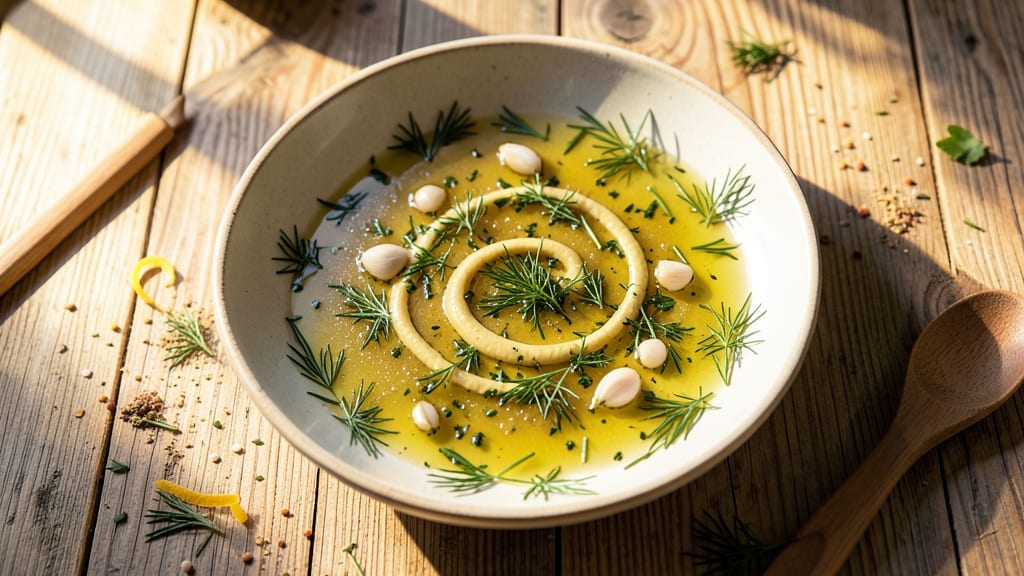
This Braggs-style salad dressing recipe delivers the same bold herb zing you love, but with a homemade twist that's fresher and more customizable.
My grandmother used to make something similar—just a few pantry staples and fresh herbs blended together—and it became our go-to for any salad, sandwich, or even drizzled over roasted vegetables. The secret lies in balancing tangy vinegar with rich olive oil and letting the herbs shine through.
What makes this dressing special is its versatility—it works equally well on crisp greens, hearty grain bowls, or as a marinade for grilled meats. The recipe comes together in just 5 minutes with no cooking required, making it perfect for weeknight meals or prep-ahead entertaining.
I’ve adjusted the classic formula to include a touch of Dijon mustard for depth, while fresh dill and parsley add that signature herbaceous brightness.
The result is a dressing that’s rich yet light, tangy without being overpowering, and packed with fresh flavor.
Unlike store-bought versions, this keeps beautifully in the fridge for up to 2 weeks, and the ingredients are simple enough that you can tweak them to suit your taste—more garlic for a punchier kick, or a splash of honey for a touch of sweetness.
It’s the kind of dressing that makes even the simplest meal feel like a restaurant-worthy dish.
Once you try this, you’ll never go back to bottled again. The best part? You can make a big batch and keep it on hand for quick meals all week. Here’s everything you need to recreate it at home—no fancy equipment required.
Ingredients for braggs salad dressing
Nine simple ingredients that blend into a dressing so fresh and bold, it'll change how you eat salads forever.
| Ingredient | Amount | Notes |
|---|---|---|
| Extra-Virgin Olive Oil 🫒 | ¾ cup | High-quality, fruity variety |
| White Wine Vinegar 🍷 | ½ cup | Dry, crisp vinegar preferred |
| Fresh Dill 🌿 | ⅓ cup | Chopped, stems removed |
| Fresh Parsley 🌿 | ⅓ cup | Chopped, packed |
| Dijon Mustard 🍯 | 1 tbsp | Mild or hot variety |
| Garlic Cloves 🧄 | 2 cloves | Peeled, minced |
| Granulated Sugar 🍯 | 1 tbsp | Or honey for sweetness |
| Kosher Salt 🧂 | 1 tsp | Diamond Crystal preferred |
| Ground Black Pepper 🌶️ | ½ tsp | Freshly ground |
The herbs are the heart of this dressing—fresh dill and parsley from the grocery store's produce section work fine, but farmers market herbs have that extra brightness. Look for stems that are still firm and leaves that smell vibrant. If you can't find fresh, dried will work (use half the amount), but trust me, the fresh stuff makes all the difference. The olive oil? Any good-quality extra-virgin will do—just avoid the cheap stuff that tastes like soap. I usually grab mine from Trader Joe's or Whole Foods because their selection is reliable, but any reputable store has solid options.
No fresh dill? Tarragon or chives can step in, though the flavor will shift slightly. Short on vinegar? Apple cider vinegar works just as well, but it'll add a subtle sweetness. The Dijon mustard is non-negotiable for that tangy depth, but if you're out, yellow mustard at half the amount will get you close. The garlic can be roasted for a milder flavor if you prefer. And if you're feeling experimental, swap the sugar for a splash of honey or maple syrup—just taste as you go. The dressing should be tangy with a hint of sweetness, not cloying.
This keeps beautifully in the fridge for up to 2 weeks if you pour it into a clean jar and cover the surface with a thin layer of olive oil. Shake well before each use. For a restaurant-style experience, serve it chilled in small bottles with a sprig of fresh herb for garnish. If you make a big batch, freeze half in ice cube trays—just thaw and shake when ready to use. The flavors actually improve over time as everything melds together, so don't hesitate to make extra.
Why You'll Love This Recipe
- Five-Ingredient Magic: I swear by this combo—just oil, vinegar, mustard, and two fresh herbs. No fancy gadgets, no measuring cups that never fit right. Honestly, I’ve made it blindfolded (okay, maybe not, but close).
- Herb-Packed Punch: That fresh dill and parsley? They turn a basic dressing into something bright and alive. The Dijon mustard adds this little tangy kick that makes it way more interesting than store-bought.
- Works Anywhere: Drizzle it on grilled fish, toss it with roasted veggies, or use it as a marinade for chicken. Between us, it’s my go-to for anything that needs a little zing—no matter the occasion.
- Fridge Ready: Make a big batch and keep it for up to a week. The flavors actually get better as it sits, and it’s way cheaper than buying dressings at the store. (Yes, even on a Tuesday night.)
Step-by-step instructions for bold herb salad dressing
This dressing comes together faster than you can say "salad night."
Whisk Together the Base Ingredients
In a medium bowl, combine the 0.75 cup extra-virgin olive oil, 0.5 cup white wine vinegar, 1 tbsp Dijon mustard, and 1 tbsp granulated sugar. Use a whisk to blend everything thoroughly for about 30 seconds—this ensures the sugar dissolves completely and the mustard emulsifies with the oil.
I like to use a glass bowl for this step so I can see the colors blend beautifully. The vinegar will start to separate slightly at first, but keep whisking until it all comes together into a smooth, pale yellow mixture. This base creates the perfect balance of tangy and sweet that makes this dressing so versatile.
Add the Fresh Herbs and Seasonings
Next, stir in the 0.33 cup chopped fresh dill, 0.33 cup chopped fresh parsley, 1 tsp kosher salt, and 0.5 tsp freshly ground black pepper. The herbs should be finely chopped—about ¼-inch pieces—so they distribute evenly throughout the dressing without making it chunky.
Here's where it gets good: the fresh herbs add that bright, vibrant flavor that makes this dressing stand out. Give everything a good stir with a wooden spoon to make sure the herbs are fully incorporated. You'll notice the mixture becomes slightly thicker and more aromatic as the herbs release their oils.
Incorporate the Minced Garlic
Finally, add the 2 cloves minced garlic to the bowl. The garlic should be finely minced—almost like a paste—so it blends seamlessly into the dressing. Stir everything together until the garlic is completely distributed and no raw cloves remain.
This is the moment that matters: the garlic adds a subtle depth of flavor that ties everything together. Taste the dressing now—it should be tangy, slightly sweet, and just a little garlicky. If it needs more salt, add a pinch at a time until it's perfectly balanced. The dressing should coat the back of a spoon smoothly without being too thick.
Let It Rest and Adjust
Cover the bowl and let the dressing sit at room temperature for 5 minutes. This resting period allows the flavors to meld together and the dressing to thicken slightly. I know it's hard to wait, but trust me—this step makes a difference in the final result.
After resting, give the dressing another good stir. If it's too thick, add 1-2 teaspoons of water at a time until it reaches your desired consistency. If it's too thin, let it sit for another 5 minutes uncovered—this allows some of the liquid to evaporate. The dressing should be thick enough to coat greens but still pour easily from a bottle.
Pro Tips For Making Braggs Salad Dressing
- STIR VIGOROUSLY AFTER RESTING: The dressing won’t emulsify properly if you mix it right away—wait 10 minutes after whisking the mustard and vinegar. I used to rush this, and the oil would just separate like a sad, greasy puddle. Let the mustard bloom first, then stir like you’re mad at it.
- CHOP HERBS FINE AND TOGETHER: Tiny dice for the dill and parsley—no big chunks hiding in your salad. I learned this the hard way when I lazily chopped them separately and ended up with a dressing that tasted like a herb salad instead of a cohesive flavor bomb. Toss them in a food processor for 5 seconds if you’re impatient.
- DON’T OVERDO THE VINEGAR: Start with 2 tablespoons of white wine vinegar and taste before adding more. Too much turns your dressing into a tangy punch instead of a bright, balanced sauce. I’ve ruined batches by doubling it “just to be safe”—trust your palate.
- USE COLD OIL FOR STABILITY: Pull the extra-virgin olive oil from the fridge for 10 minutes before measuring. Cold oil emulsifies better with the mustard and vinegar, and it won’t turn the dressing into a warm, greasy mess. (Yes, even if you’re impatient like me.)
Essential equipment for perfect results
Basic Mixing Tools
You don’t need anything fancy—just a medium mixing bowl (I use a glass bowl from my grandmother’s kitchen because it’s sturdy and easy to clean) and a whisk or wooden spoon. The whisk helps emulsify the dressing better, but a spoon works in a pinch.
I’ve made this dressing in everything from a stainless steel bowl to a mason jar with a lid—whatever you have on hand. Just make sure it’s clean! 🍽️
Measuring Cups & Spoons
Accurate measurements matter here, especially for the vinegar-to-oil ratio and herb amounts. Grab your liquid measuring cup for the vinegar and olive oil, and a standard measuring set for the dry ingredients like sugar and salt.
I keep a small set of stainless steel measuring spoons from Williams Sonoma in my drawer—they’re durable and easy to read. Pro tip: Use the spoon to pack the herbs into the cup for precise amounts.
Garlic Mincer or Knife
Fresh garlic is non-negotiable for that bold flavor, but you don’t need a fancy mincer. A sharp chef’s knife and a cutting board work perfectly—just smash the cloves with the flat side of your knife first to make them easier to mince.
If you’re feeling lazy (or don’t want to deal with raw garlic smell), a garlic press is a great shortcut. I’ve even used the blade of a butter knife in a pinch when I’m in a hurry. Just aim for finely minced—almost like a paste.
Storage Containers
For short-term use, a small glass jar with a tight-sealing lid keeps the dressing fresh in the fridge for up to 2 weeks. I love Le Parfait jars because they’re airtight and stackable.
For longer storage, transfer to freezer-safe containers or even ice cube trays—just pop out a cube as needed. If you’re gifting this dressing, mini mason jars with a sprig of fresh herb tied to the lid make for a charming present. Label everything with the date to track freshness!
Optional: Immersion Blender
If you prefer your dressing completely smooth with no herb bits, an immersion blender (like the Ninja Foodi Immersion Blender) is a game-changer. After mixing everything in the bowl, just dip the blender in and pulse for 5-10 seconds until the herbs are finely incorporated.
No straining required! This is especially handy if you’re making a big batch for a party. I only use mine for dressings—it’s not worth the cleanup for everyday tasks. 💡
Nutrition facts
Frequently asked questions
Can I make this dressing without fresh herbs?
You can substitute with ½ teaspoon dried dill and ½ teaspoon dried parsley for each ⅓ cup of fresh herbs, but the flavor won't be as vibrant. For best results, use a mix of fresh and dried—like ⅓ cup fresh parsley plus ¼ teaspoon dried dill. The fresh herbs give that signature brightness that dried just can't match.
How long does homemade Braggs-style dressing last? Store it in an airtight container in the fridge for up to 2 weeks. For longer storage, freeze in ice cube trays—thaw and shake before using. The fresh herbs keep it tasting bright, but the flavors actually deepen over time. Just
Can I use this dressing for anything besides salads?
Drizzle it over grilled chicken, roasted vegetables, or bowls with grains. It also makes an excellent marinade for fish or pork—just let it sit for 15-30 minutes before cooking. The bold herb flavors work surprisingly well in dips too, especially with crudités or pretzels.
Why did my dressing separate?
This happens when oil and vinegar aren't properly emulsified. Whisk vigorously for 30 seconds before adding herbs, or blend briefly with an immersion blender. If it separates later, just whisk or shake the container before using. For extra insurance, add ½ teaspoon of honey or corn syrup to help bind the ingredients.
What if I don't have Dijon mustard?
Use ½ tablespoon of yellow mustard instead—it won't be as tangy but will still add depth. For a different flavor profile, try 1 teaspoon of lemon juice or ½ teaspoon of onion powder to compensate. The mustard helps balance the vinegar's sharpness, so adjust to taste.