
Salads
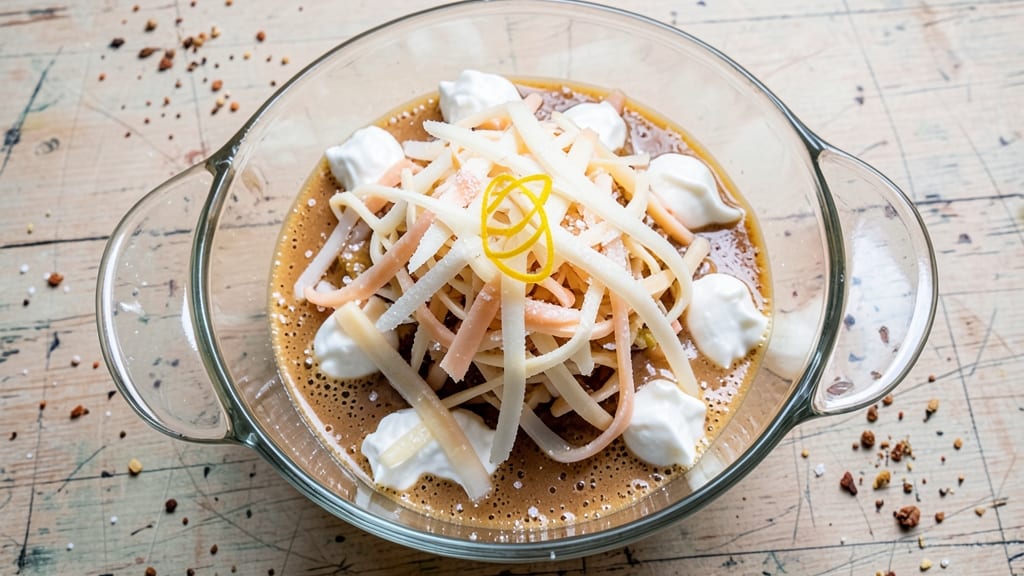
This buko salad recipe brings the creamy, chewy magic of Filipino desserts to your table with just a few simple ingredients. 🌟 The secret lies in the perfect balance of young coconut's jelly-like texture, sweetened cream cheese, and the delicate crunch of nata de coco—each element playing its part in this tropical masterpiece.
My grandmother used to make this for special occasions, and I've spent years perfecting her method to make it foolproof for home cooks.
The beauty of buko salad is in its layers—creamy coconut milk, sweetened condensed milk, and that signature chewy nata de coco all come together in a refreshing, no-bake dessert.
You'll need just 10 ingredients (plus optional toppings like leche flan or latik) and about 30 minutes of hands-on time, though the flavors develop best when chilled for a few hours.
The key is getting the texture right: tender coconut, soft nata de coco, and a velvety cream that holds everything together.
What makes this recipe special is its versatility. While traditional versions stick to classic Filipino flavors, I've included modern twists like vegan adaptations using coconut milk instead of cream cheese. The salad works as a refreshing dessert after a heavy meal or as a light snack any time of day.
The creamy, slightly sweet profile makes it universally appealing—even picky eaters can't resist.
Once you try this version, you'll understand why buko salad has become a beloved comfort food across cultures. The combination of textures—creamy, chewy, and crunchy—creates an experience that's both nostalgic and exciting.
Whether you're making it for a family gathering or a quiet afternoon treat, this recipe delivers restaurant-quality results with minimal effort. Let's get started!
Ingredients for buko salad ingredients and
Ten ingredients transform into this tropical Filipino masterpiece—creamy, chewy, and utterly addictive.
| Ingredient | Amount | Notes |
|---|---|---|
| Nata De Coco (Coconut Gel Balls) 🥥 | 14 oz | Fresh or frozen, drained well |
| Young Coconut (Buko) 🥥 | 1 cup | Fresh or canned, diced small |
| Sweetened Condensed Milk 🥛 | 1 can | 14 oz can, full-fat preferred |
| Cream Cheese 🧀 | 8 oz | Full-fat, softened to room temp |
| Coconut Milk 🥥 | 1 can | 13.5 oz can, full-fat preferred |
| Granulated Sugar 🍚 | ½ cup | White or brown, adjust to taste |
| Vanilla Extract 🌿 | 1 tsp | Pure vanilla, high-quality |
| Lemon Juice 🍋 | 1 tbsp | Freshly squeezed, bright flavor |
| Gelatin 🍬 | 1 tbsp | Unflavored, powdered preferred |
| Whipped Cream 🍦 | 1 cup | Store-bought or homemade |
| Toasted Coconut Flakes 🥥 | ¼ cup | Optional garnish, toasted lightly |
The nata de coco and buko are the stars here. Filipino markets or Asian grocery stores have the best selection—look for plump, jelly-like nata de coco that's not mushy. Trader Joe's often carries canned buko too, but fresh is ideal if you can find it. The cream cheese needs to be full-fat for that velvety texture; Philadelphia brand is my go-to. For coconut milk, Goya or Thai Kitchen cans work perfectly—they're full-fat and rich. If using frozen nata de coco, thaw it in cold water first to preserve its texture.
No nata de coco? Silken tofu cubes mimic the chewy texture surprisingly well. Short on buko? Canned pineapple chunks add sweetness and slight tartness. The gelatin is key for that signature firmness—Unflavored Knox brandfull-fat coconut cream and use agar-agar instead of gelatin. The whipped cream can be vegan too—just grab a tub from Trader Joe's or make your own with coconut cream. For extra richness, add 1 tbsp of toasted coconut milk powder to the base mixture.
This salad tastes even better after chilling for at least 4 hours—ideally overnight. Store leftovers in an airtight container in the fridge for up to 5 days. The texture changes slightly after the first day, becoming softer, but it's still delicious. For serving, I like to portion it into small glasses with a dollop of whipped cream on top. The toasted coconut flakes add a nice crunch—sprinkle them just before serving so they stay fresh. Freezes beautifully too if you want to make it ahead for a party.
Why You'll Love This Recipe
- Here’s the magic: this salad tastes just as good the next day, if there is a next day. I’ve had it cold from the fridge, at room temp, or even slightly warmed—still perfect. And because it’s mostly canned ingredients, it’s cheaper than buying pre-made desserts. Win-win.
- No Chopping Needed: I swear, this is the only dessert I make where I barely touch a knife. Just scoop the buko, shred the nata de coco, and stir—no dice, no dice, no fuss. The cream cheese softens in minutes, and suddenly you’ve got a silky-smooth base without any prep work.
- Coconut Overload (In a Good Way): That first bite? Pure tropical bliss. The buko’s chewy freshness cuts through the ultra-rich condensed milk, while the nata de coco adds that jelly-like bounce—like eating a cloud. Honestly, I’ve made it with vanilla extract and toasted coconut, but the classic combo is foolproof.
- Party in a Bowl: Between us, this is my go-to for potlucks, office birthdays, or when my kid’s soccer team needs snacks. It’s light enough to eat with a spoon but hearty enough to fill a big platter. I’ll be real: I’ve even served it in mason jars for a cute twist—no one complains about seconds.
Step-by-step instructions for buko salad: creamy nata de coco delight
Here's how to assemble this tropical masterpiece with perfect texture and balance.
👨🍳 Step 1: Bloom the Gelatin for Silky Texture
In a small bowl, sprinkle the 1 tablespoon gelatin evenly over ¼ cup cold water. Let it sit for 5 minutes while you prepare the other ingredients. You'll see the gelatin granules absorb the water and swell slightly—this creates that signature smooth, jelly-like texture we want in our salad.
I like to use powdered gelatin because it dissolves more completely than sheet gelatin. If you're using sheet gelatin, bloom it in ¼ cup water for 10 minutes instead. Keep the bloomed gelatin mixture nearby as we'll use it in the next step.
🍳 Step 2: Create the Creamy Base Mixture
In a medium mixing bowl, combine the 8 oz softened cream cheese, 1 can (14 oz) sweetened condensed milk, 1 can (13.5 oz) coconut milk, 0.5 cup granulated sugar, 1 tsp vanilla extract, and 1 tbsp lemon juice. Use a hand mixer to blend everything on medium speed for 2-3 minutes until completely smooth and creamy.
This mixture should be thick but pourable—like a rich, tropical pudding. The lemon juice brightens the flavors while balancing the sweetness. If your cream cheese is too cold, let it sit at room temperature for 10-15 minutes first to ensure it blends properly.
🥘 Step 3: Incorporate the Gelatin and Whipped Cream
Gently fold the bloomed gelatin mixture into the cream base using a spatula. This prevents creating air bubbles that could weaken the final texture. Then, in a separate bowl, fold the 1 cup whipped cream until it's light and fluffy—just until soft peaks form.
Now carefully fold the whipped cream into the cream mixture in three additions, mixing just until combined after each. We want to maintain that light, airy quality while keeping the base cohesive. The result should be a thick, glossy cream that holds its shape when spooned.
🥘 Step 4: Layer the Nata De Coco and Buko
In a large glass bowl or individual serving glasses, begin by layering half of the 14 oz nata de coco (coconut gel balls). Then add half of the 1 cup young coconut (buko). Repeat with another layer of nata de coco and buko, finishing with a final layer of nata de coco on top.
The nata de coco should be drained well—if using frozen, thaw it first and gently squeeze out excess water. The buko should be diced into small, even pieces for consistent texture. This layering creates that beautiful marbled effect when we pour the cream mixture over.
🍽️ Step 5: Assemble and Chill for Perfect Texture
Pour the cream mixture evenly over the layered nata de coco and buko, gently pressing down slightly to help it settle between the layers. Cover the bowl or glasses with plastic wrap and refrigerate for at least 4 hours, preferably overnight. This chilling time allows all the flavors to meld and the textures to set properly.
When ready to serve, garnish with 0.25 cup toasted coconut flakes for added crunch and visual appeal. The salad should have a perfect balance of chewy nata de coco, tender buko, and silky cream—each bite delivering that tropical cream cheese bliss you crave.
Pro Tips For Making Buko Salad Ingredients And
- CHILL THE BUKO: If you’re using fresh young coconut, slice it first, then stash the pieces in ice water for 10 minutes before mixing. This stops the juice from turning bitter and keeps the texture crisp—no one wants mushy buko in their salad. (I learned this the hard way after a lukewarm batch tasted like coconut water gone wrong.)
- DRAIN THE NATA WELL: Skip the soggy texture by draining the nata de coco in a colander for 5 minutes before adding it to the mix. Even if the package says "ready to eat," that extra step makes all the difference—wet nata turns your salad into a watery mess. (Yes, even if you’re impatient like me.)
- WHISK THE CONDENSED MILK: Warm the sweetened condensed milk slightly (just enough to loosen it) and whisk it vigorously with the coconut milk before folding in the other ingredients. This creates a smoother, silkier base instead of clumpy pockets of cream cheese and sugar. (Sounds weird, but it works—trust the process.)
- ADD CREAM CHEESE LAST: Mix the cream cheese in at the very end, right before serving, or it’ll melt into a gooey blob. Cut it into small cubes first, then fold gently—this keeps the texture light and the flavors bright. (I skip this when I’m lazy, but the dish is noticeably better when I don’t.)
Troubleshooting perfect results
Gelatin Gone Wrong
If your gelatin doesn't bloom properly or creates lumps, your salad will have an unpleasantly grainy texture. Always use cold water for blooming—warm water will activate the gelatin too quickly. I've learned this the hard way!
For extra insurance, strain the bloomed gelatin through a fine-mesh sieve before folding it into the cream base. This removes any stubborn granules that might survive mixing. 💡
Nata De Coco Too Watery
Excess moisture from nata de coco can dilute your cream mixture, making the salad runny. Always drain frozen nata de coco thoroughly—press it gently between paper towels to remove surface water. For fresh nata de coco, rinse it briefly in cold water and drain well.
If you're using canned buko, pat it dry with a paper towel before adding to the salad. This small step makes a world of difference in texture.
Cream Cheese Separation
If your cream cheese mixture separates or becomes grainy, it's usually because the cream cheese wasn't softened enough. Let it sit at room temperature for 20-30 minutes before mixing—this ensures it blends smoothly with the other ingredients.
For extra insurance, warm the coconut milk slightly (to 110°F) before mixing, as this helps emulsify the cream cheese better. I like to use a hand mixer on medium speed to prevent overheating the mixture.
Buko Too Hard or Tough
If your buko pieces feel tough or rubbery, they're likely overcooked or too mature. Fresh buko should be tender with a slight give when pressed. If using canned buko, look for brands that specify "young coconut" or "baby coconut"—these are the most tender varieties.
For extra tenderness, soak canned buko in warm water for 10 minutes before dicing. This helps break down any tough fibers.
Salad Too Sweet
If your buko salad tastes overwhelmingly sweet, it's usually because the condensed milk or sugar content is too high. Start by reducing the sugar by ¼ cup next time. The natural sweetness of the coconut milk and buko often carries the flavor.
For a more balanced taste, increase the lemon juice to 2 tablespoons—this adds brightness and cuts through the sweetness beautifully. Trust me, your taste buds will thank you!
Texture Too Soft After Chilling
If your salad doesn't set properly and feels too soft after chilling, your gelatin might not have been activated enough or the mixture was too warm when chilled. Always bloom the gelatin in cold water and fold it in gently to avoid activating it prematurely.
Also, make sure your cream mixture isn't too warm before chilling—it should be cool to the touch but not cold. For extra firmness, add ½ teaspoon more gelatin next time and chill for an additional 2 hours.
Nutrition facts
Frequently asked questions
Can I make buko salad without gelatin?
Yes! For a vegan version, replace the gelatin with 1 teaspoon agar-agar powder mixed with 2 tablespoons water and heated until dissolved. The texture will be slightly firmer but still delicious. Alternatively, use 1 cup coconut cream whipped to stiff peaks—it adds richness without gelatin. Just chill for 6 hours instead of 4 to set properly.
How do I find nata de coco if my local store doesn't carry it?
Check the Asian grocery section or look for it online at specialty stores like Filipino markets or Trader Joe's. If unavailable, substitute with 1 cup silken tofu cubes (drained well) or 1 cup diced mango for sweetness. For chewiness, try 1 cup diced jelly (like grape or apple)
Can I make buko salad ahead of time?
This dessert actually tastes better after chilling for 24 hours—the flavors meld beautifully. Store in an airtight container in the fridge for up to 5 days. For parties, assemble it 2 days ahead and refrigerate. The texture remains perfect, and the tropical flavors deepen over time.
Why does my buko salad look separated?
Separation usually happens when the cream cheese isn't softened enough or the mixture is too warm. Let the cream cheese sit at room temperature for 30 minutes before mixing, and chill the final salad for at least 4 hours. For extra insurance, whisk the coconut milk slightly warm (110°F) before combining—this helps emulsify the cream cheese better.
What's the best way to serve buko salad?
Serve in glass bowls or individual cups for a restaurant-style presentation. Top with whipped cream, toasted coconut flakes, or even crumbled leche flan for extra flavor. For a modern twist, layer it in clear plastic cups with colorful straws—great for kids' parties! Keep it chilled until serving to maintain the perfect texture.