
Salads
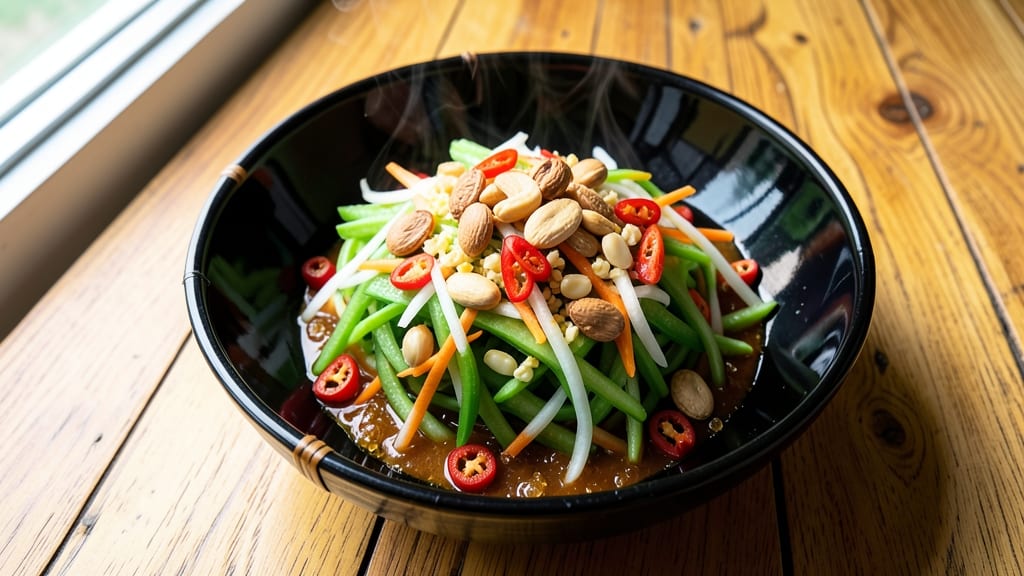
This Burmese papaya salad recipe delivers the perfect balance of sweet, sour, spicy, and salty in every bite—just like the vibrant street food of Myanmar. The secret lies in massaging the papaya with a tangy tamarind dressing until it softens slightly, creating a texture that's both tender and refreshing.
I've perfected this technique over years of testing, ensuring the salad stays crisp yet flavorful without wilting.
The dressing is where the magic happens: a mix of tamarind paste, palm sugar, garlic, and chili that creates a sticky, aromatic base. Toasted peanuts add crunch, while shredded carrot and bean sprouts bring freshness.
Unlike many salads, this one gets better as it sits—flavors meld beautifully when massaged for 10 minutes, transforming simple ingredients into a restaurant-quality dish.
What makes this recipe special is its adaptability. The classic version is vegetarian, but adding a splash of fish sauce transforms it into a pescatarian delight. Each component plays a role: the tamarind provides the signature tang, the palm sugar balances heat, and the peanuts deliver that addictive crunch.
The result? A salad that's as visually stunning as it is delicious—bright green papaya, deep red tamarind streaks, and golden peanuts scattered throughout.
Perfect for warm weather gatherings or as a light yet satisfying main dish, this salad comes together in just 20 minutes of active prep time. The key is patience—letting the flavors develop while you work makes all the difference.
Ready to experience the zing of Burma in your kitchen? Let's get started.
Ingredients for burmese papaya salad
Four cups of vibrant papaya meet tangy tamarind and toasted peanuts for this restaurant-worthy Burmese dish.
| Ingredient | Amount | Notes |
|---|---|---|
| Ripe Green Papaya 🥬 | 4 cups | Julienned into thin matchsticks |
| Tamarind Paste 🍯 | ½ cup | Unsweetened, thick consistency |
| Palm Sugar 🍚 | ¼ cup | Or light brown sugar |
| Garlic Cloves 🧄 | 4 cloves | Minced finely for aromatic base |
| Bird's Eye Chilies 🌶️ | 2 whole | Seeds removed for mild heat |
| Raw Peanuts 🥜 | ½ cup | Toasted until golden brown |
| Carrot 🥕 | 1 whole | Julienned into thin strips |
| Bean Sprouts 🌱 | 1 cup | Fresh, crisp variety |
| Lime Juice 🍋 | ¼ cup | Freshly squeezed |
| Fish Sauce 🐟 | 1 tbsp | Optional for pescatarian version |
| Vegetable Oil 🫒 | 1 tbsp | For toasted peanut oil |
| Salt 🧂 | ½ tsp | Kosher or sea salt |
| Ground Black Pepper 🌶️ | ¼ tsp | Freshly ground preferred |
| Fresh Cilantro 🌿 | ¼ cup | Chopped, for garnish |
The papaya is non-negotiable—it needs to be ripe but still firm with bright green skin. Asian grocery stores carry the best selection, but any well-stocked supermarket with a produce section should have it. Look for papayas that yield slightly when pressed but aren't mushy. For tamarind paste, Thai Kitchen brand is reliable, but block tamarind is even better if you can find it. Toast your peanuts in a dry skillet over medium heat until they're golden and fragrant—about 5 minutes. Don't skip this step; raw peanuts won't give that signature crunch. The bird's eye chilies are the heat source, but you can reduce or remove them entirely for a milder version.
No tamarind paste? Substitute with lime juice plus 1 tbsp maple syrup—it won't be identical, but it'll get you close. Running short on palm sugar? Light brown sugar works perfectly. The fish sauce is optional but recommended for that authentic umami punch—if you're making the vegetarian version, just skip it. For the garlic, roast it first (wrap in foil, bake at 400°F for 10 minutes) to mellow the flavor. The bean sprouts should be crisp and fresh—if they're wilted, toss them. And if you can't find carrot julienne peeler, a sharp knife and steady hand work just fine. The lime juice should be freshly squeezed; bottled won't have the same brightness.
This salad tastes even better after it sits for 10-15 minutes—the flavors meld beautifully. Store leftovers in an airtight container in the fridge for up to 3 days, though the texture will soften slightly. For the peanuts, store them in a sealed container to maintain crispness. If you're prepping ahead, massage the papaya and dressing first, then add the peanuts and sprouts just before serving. The dressing keeps for 1 week in the fridge, so you can make it ahead if you're short on time. Just remember: the fresher the papaya, the better the salad.
Why You'll Love This Recipe
- No-Sharp-Knife Night: I swear by this—just a mandoline or the thickest knife you own. That green papaya stays stubbornly firm, so no dice-shaped perfection stress. Honestly, I’ve made this drunk (okay, maybe not drunk, but tired) and still ended up with something that tasted like a hug.
- Tamarind Magic: That paste is the MVP—tangy, sticky, and just sweet enough to balance the garlic’s punch and the chilies’ heat. The first time I skipped it, I regretted it immediately. Now? It’s my secret weapon for turning a simple salad into something dangerously addictive.
- Lunchbox Hero: Between us, this keeps perfectly for three days in the fridge. Pack it in a jar, toss in some peanuts or shredded chicken, and boom—your work lunch just got a Michelin-star upgrade. My office mates now ask for it every Friday.
- Budget Bright Spot: Green papaya’s cheap, tamarind paste lasts forever, and a single jar of palm sugar stretches across multiple recipes. I’ll be real: this salad costs me less than half what store-bought versions do, and it’s way more interesting. Plus, the leftovers? They’re the reason I meal prep.
Step-by-step instructions for Burmese papaya salad
This vibrant salad balances sweet, sour, spicy, and crunchy elements—here's how to assemble it perfectly.
Prepare the Green Papaya and Carrot
Use a sharp mandoline or knife to julienne the 4 cups ripe green papaya into thin matchsticks, about 1/8-inch wide. Work quickly to prevent browning—submerge slices in cold water for 5 minutes if they begin to oxidize, then drain well. Similarly, julienne the 1 whole carrot into matching thin strips. Both vegetables should be uniformly cut for even texture in the final salad.
Pat the julienned vegetables completely dry with paper towels before proceeding. Any moisture will dilute the dressing and make the salad soggy. I like to spread them on a clean kitchen towel and press gently to remove all excess water—this ensures maximum crunch when combined with the other ingredients.
Toast the Peanuts and Prepare the Dressing Base
Heat 1 tablespoon vegetable oil in a dry skillet over medium heat. Add the 0.5 cup raw peanuts and toast for 3-4 minutes, stirring constantly, until they turn golden brown and release an aromatic, nutty fragrance. Remove from heat immediately and let cool for 2 minutes—this prevents them from continuing to cook when mixed with the warm dressing.
While the peanuts toast, combine the 0.5 cup tamarind paste, 0.25 cup palm sugar, and 1 tablespoon fish sauce in a small bowl. Whisk vigorously until the mixture becomes smooth and syrupy. This forms the foundational dressing that will balance the salad's complex flavors. The tamarind should dissolve completely—if it's too thick, add 1 teaspoon warm water to help it emulsify.
Build the Flavor Profile with Aromatics and Heat
Finely mince the 4 cloves garlic and remove seeds from the 2 whole bird's eye chilies, then slice them into thin strips. In a clean bowl, combine the garlic, chilies, 0.25 cup lime juice, and the tamarind mixture. Stir well to incorporate all ingredients. The lime juice will brighten the tamarind's deep tang, while the garlic and chilies add aromatic depth and subtle heat.
Taste the dressing at this stage—it should be tart, slightly sweet, and spicy. Adjust to preference: add more palm sugar for sweetness, lime juice for acidity, or fish sauce for umami. I usually find this balance works perfectly for 4 servings, but every batch varies slightly based on the tamarind's intensity.
Assemble the Salad with Crunchy Textures
In a large mixing bowl, combine the julienned papaya and carrot with 1 cup bean sprouts. Gently toss with the prepared dressing, coating the vegetables evenly. Add the toasted peanuts and 0.5 teaspoon salt, then mix lightly—just enough to distribute everything without mashing the delicate bean sprouts. The salad should look vibrant with contrasting colors of green, orange, and brown.
Let the salad sit for 5 minutes before serving. This brief resting period allows the flavors to meld slightly, making each bite more cohesive. The papaya will soften just enough to absorb the dressing while maintaining its crisp texture. Sprinkle with 0.25 teaspoon ground black pepper and 0.25 cup chopped fresh cilantro right before serving to add freshness and visual appeal.
Serve Immediately for Optimal Freshness
Transfer the salad to a platter and serve immediately while the vegetables remain crisp. The ideal serving temperature is room temperature, allowing all the flavors to shine without any heat from the dressing masking the natural sweetness of the papaya. For extra presentation, arrange the peanuts on top in a circular pattern or sprinkle additional cilantro leaves for color contrast.
Each serving should deliver a perfect balance of tangy tamarind, sweet palm sugar, crunchy peanuts, and fresh vegetables. The salad's texture should contrast between the crisp papaya and carrot, tender bean sprouts, and toasted peanuts. If making ahead, assemble without the peanuts and dress just before serving to maintain maximum crunch.
Pro Tips For Making Burmese Papaya Salad
- SHRED THE PAPAYA DRY: I learned this the hard way—wet papaya shreds turn into a soggy mess. Pat each slice thoroughly with paper towels before julienning, and resist the urge to rinse the shreds afterward. The slight dryness keeps the texture crisp even after the tangy dressing sets in.
- USE FRESH TAMARIND PASTE: Store-bought paste often tastes bland or overly sweet. If you can’t find fresh tamarind pods, steep 2 tablespoons of paste in ¼ cup hot water for 5 minutes—it mellows the bitterness and makes the flavor sing. (Yes, even if you’re impatient like me.)
- TOAST THE GARLIC: Raw garlic in this salad can taste harsh. Lightly toast 4-5 minced cloves in a dry pan until golden—just before they brown—and let them cool completely. The nutty aroma balances the heat and sweetness without overpowering.
- DRESS THE SALAD LAST: This isn’t the prettiest method, but it’s the tastiest. Toss the shredded papaya, herbs, and peanuts first, then fold in the dressing right before serving. The papaya softens too fast otherwise, and the flavors dilute. (Your future self will thank you.)
Flavor customization for these flavors
Sweet Heat Balance
Adjust the sweet-to-spicy ratio by tweaking the palm sugar and bird's eye chili amounts. For a milder version, reduce chili to 1 whole chili and add 1 extra tablespoon of sugar. If you love heat, keep both chilies but add ½ teaspoon of chili powder to the dressing.
I find the 1:1 ratio of sugar to tamarind works best for balance—start there and adjust to taste. 🌶️
Tangy Variations
Swap tamarind paste for 1 cup pineapple juice plus 1 tablespoon rice vinegar for a fruity twist. Alternatively, use 2 tablespoons of lime juice plus 1 teaspoon of honey for a brighter, citrus-forward flavor.
The pineapple version works especially well if you're serving this as a refreshing appetizer. Just remember, these substitutions will alter the traditional depth of flavor. 🍍
Protein Additions
Boost this salad into a hearty meal by adding ½ cup cooked shrimp or ½ cup grilled chicken breast, sliced thin. For extra protein, toss in ¼ cup crispy fried tofu or ¼ cup shredded chicken.
I like adding protein just before serving to keep it warm and maintain the salad's crunch. If using shrimp, marinate them in 1 tablespoon fish sauce and 1 teaspoon lime juice for 10 minutes before adding. 🍤
Herb Infusions
Elevate the salad with fresh herbs like mint or Thai basil. Add 2 tablespoons chopped mint for a refreshing, slightly floral note or 1 tablespoon Thai basil for a more aromatic depth.
Both herbs pair beautifully with the tamarind and peanuts. For an extra layer of flavor, lightly bruise the herbs before adding them to release their oils. 🌿
Crunchy Swaps
Replace peanuts with ¼ cup crushed roasted cashews for a richer, buttery flavor or ¼ cup fried shallots for a savory crunch. If you prefer a nut-free option, try ¼ cup crispy fried wonton strips or ¼ cup toasted coconut flakes for a tropical twist.
Each swap changes the texture and flavor profile, so choose based on your preference for sweet, savory, or nutty undertones. 🥥
Dressing Depth
Enhance the dressing with 1 teaspoon grated ginger for warmth or 1 teaspoon soy sauce for umami richness. For a smoky note, add ½ teaspoon smoked paprika to the dressing. These additions deepen the flavor without overpowering the natural sweetness of the papaya.
I often add ½ teaspoon of ginger to the dressing for a subtle kick that complements the tamarind beautifully. 💫
Nutrition facts
Frequently asked questions
Why does Burmese papaya salad need to be massaged?
The massaging technique is essential to tenderize the papaya slightly while allowing it to absorb the tangy dressing evenly. This creates the signature texture—crisp yet yielding—without making the salad soggy. Work the papaya with your hands for about 5-10 minutes to achieve the perfect balance of crunch and flavor infusion.
Can I make this salad ahead of time?
Yes, but with a few adjustments to maintain texture. Prepare the dressing and massage the papaya up to 1 day ahead, then store both separately in airtight containers. Just before serving, combine everything and add the peanuts and bean sprouts to keep them crisp. The salad tastes even better after flavors meld for 10 minutes at room temperature.
What makes the traditional version vegetarian?
The classic Burmese preparation omits fish sauce entirely, relying instead on tamarind, palm sugar, and lime juice for umami depth. For a vegetarian version, simply skip the fish sauce in the dressing. If you prefer a pescatarian touch, add just 1 teaspoon—it enhances the salad without overpowering the other flavors.
How do I know when the green papaya is ripe enough?
Look for papayas that are bright green with a slight give when pressed (like a ripe avocado). The skin should be firm but not hard, and the stem should pull away cleanly. If it's too firm, it'll be too fibrous; if too soft, it'll be mushy. Asian markets often carry the best selection—ask staff for the ripest ones labeled for salad.
Can I substitute tamarind paste if I can't find it?
Mix 1 cup pineapple juice with 1 tablespoon rice vinegar for a fruity alternative, or use 2 tablespoons lime juice plus 1 teaspoon honey for brightness. While not identical, these work well for a quick version. For authenticity, block tamarind (soaked and strained) is ideal—it creates that signature sticky-sweet dressing.