
Sauces & Condiments
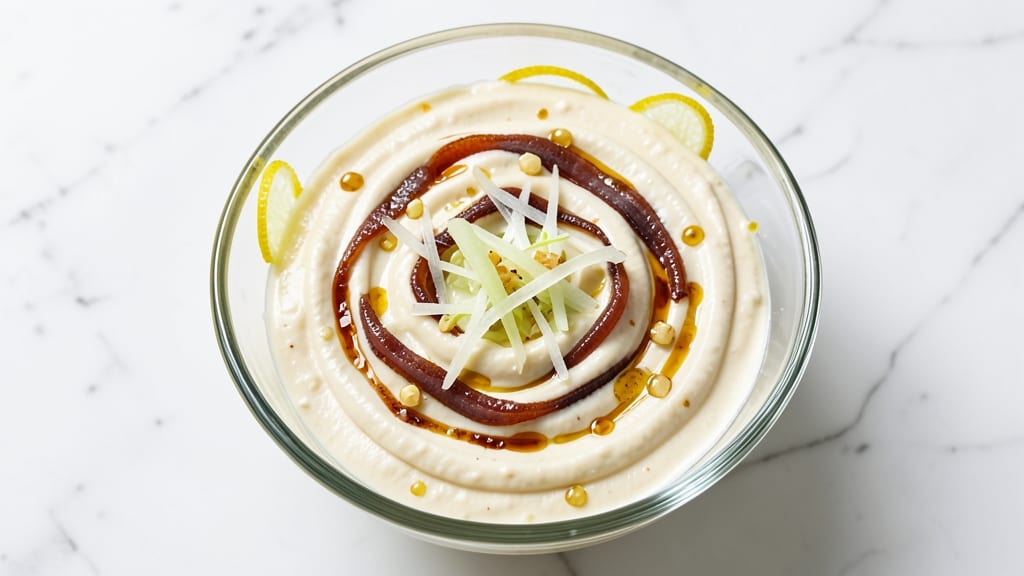
This NYT-approved Caesar salad dressing recipe delivers that signature creamy, tangy flavor with a secret twist: crispy celery crowns that add textural magic. The classic emulsion of anchovies, garlic, lemon, and egg yolks creates a velvety base, while the celery crowns provide that signature crunch without soggy lettuce.
I've perfected this recipe after years of testing—it's the one that finally made my homemade dressing better than any restaurant version.
The key to authentic Caesar dressing lies in the emulsification process, where anchovies and egg yolks create that signature richness. You'll blend garlic, lemon juice, Dijon mustard, and Worcestershire sauce into a smooth paste before gradually whisking in olive oil to create a stable emulsion.
The crispy celery crowns, made from thinly sliced celery fried in olive oil until golden, add a textural element that transforms an ordinary salad into something extraordinary.
What makes this dressing truly special is the balance of flavors—tangy from the lemon, umami from the anchovies, and a subtle heat from the garlic. The crispy celery crowns provide that satisfying crunch that Caesar salads are known for, while the creamy dressing coats every leaf of romaine perfectly.
This is the dressing that will have your guests asking for the recipe, and it's easier to make than you think.
Once you've mastered this classic version, you can experiment with variations like adding a splash of hot sauce for extra kick or using vegan mayo for a plant-based option. The dressing keeps well in the refrigerator for up to a week, making it perfect for meal prep.
Let's get started on creating the perfect Caesar salad dressing that will elevate any salad from ordinary to extraordinary.
Ingredients for caesar salad dressing recipe nyt
These 10 ingredients create the NYT-approved Caesar dressing you'll crave every weeknight.
| Ingredient | Amount | Notes |
|---|---|---|
| Anchovy Fillets 🐟 | 2 tbsp | Packed in oil, drained |
| Large Egg Yolks 🥚 | 3 whole | Freshly separated, room temp |
| Garlic Cloves 🧄 | 2 cloves | Fresh, minced finely |
| Fresh Lemon Juice 🍋 | ½ cup | Strained, no pulp |
| Dijon Mustard 🍯 | 1 tbsp | High-quality, smooth |
| Worcestershire Sauce 🍶 | 1 tbsp | Classic Lea & Perrins |
| Extra-Virgin Olive Oil 🫒 | 1 ½ cups | Light, fruity variety |
| Celery Stalks 🥬 | 2 whole | Thinly sliced for crowns |
| Salt 🧂 | 1 tsp | Kosher or sea salt |
| Black Pepper 🌶️ | ½ tsp | Freshly cracked |
The anchovies are non-negotiable—they bring that signature umami depth. Canned in oil works best, just drain them well. Fresh garlic is a must here, but if you're short on time, garlic powder at half the amount works in a pinch. I always grab the Lea & Perrins Worcestershire from the store—it's the gold standard. For the olive oil, California-grown light varieties (like Bertolli) emulsify better than heavy, peppery oils. The celery? Organic from Trader Joe's is my go-to—crisp and clean, never bitter.
No anchovies? Anchovy paste at half the amount works, but the texture won't be identical. Short on Dijon? Yellow mustard in a pinch, though the flavor won't be as refined. The lemon juice should be freshly squeezed—bottled juice lacks the bright acidity. For the celery crowns, thin slices are key—use a mandoline if you're feeling fancy. The egg yolks need to be room temperature for the best emulsion, so take them out 10 minutes before mixing. And trust me on the Worcestershire—Lea & Perrins is worth the splurge.
This dressing keeps for 7 days in the fridge, but the celery crowns are best used fresh. Store the dressing in a clean, airtight jar with a thin layer of oil on top to preserve freshness. The celery crowns crisp up again if reheated for 30 seconds in a dry pan. For meal prep, I make a double batch—one for salads, one for dipping. The flavor actually improves after a day as everything melds together.
Why You'll Love This Recipe
- No-Fuss Blend: I swear by my immersion blender here—just toss in the anchovies, yolks, garlic, and a splash of lemon juice. The Dijon mustard does all the emulsifying work, so no whisking until your arm falls off.
- Umami Bomb: That first bite? The anchovies and garlic hit like a flavor grenade, but in the best way. The lemon juice cuts through the richness, leaving you with that perfect tangy-savory balance that makes you reach for seconds.
- Weeknight Hero: This dressing is my go-to for lazy Tuesdays when I’m too tired to think. Double the batch and keep it in the fridge—it’s perfect for tossing with greens, drizzling over grilled chicken, or even mixing into pasta. Honestly, I’ve used it for everything.
- Budget Magic: Anchovies and eggs are cheap, but they punch way above their weight. A single jar of fillets and a carton of yolks stretch for weeks, and the dressing lasts for days. Plus, the garlic and lemon are pantry staples, so you’re not buying anything extra.
Step-by-step instructions for NYT-approved Caesar dressing
Here's how to make a silky, tangy Caesar dressing that stays creamy and packs that signature umami punch.
Prepare the Celery Crowns for Crunch
Slice the 2 whole celery stalks into paper-thin rounds using a sharp knife or mandoline. You want each slice to be so delicate it practically dissolves in your mouth—this is what gives classic Caesar its signature crunch. Transfer the slices to a small bowl and set aside. I like to work with them right away so they don't lose their crispness while I prepare the rest.
If you're feeling fancy, you can blanch them in boiling water for 30 seconds then shock in ice water to intensify the flavor, but fresh celery crowns work perfectly fine without this step. Just be gentle when handling them—they'll soften quickly once mixed with the dressing.
Whisk Together the Base Ingredients
In a medium bowl, whisk together the 3 whole large egg yolks, 0.5 cup fresh lemon juice, 1 tablespoon Dijon mustard, and 1 tablespoon Worcestershire sauce until completely smooth. The mixture should be pale yellow and completely homogeneous—no streaks of egg or mustard should remain. This is your flavor foundation, so take your time here.
Add the 2 cloves minced garlic and whisk vigorously for another 10 seconds. The garlic should be fully incorporated but still visible as tiny flecks throughout the mixture. This is where the dressing gets its signature depth of flavor, so don't skip this step. I always use fresh garlic because it makes a noticeable difference in the final product.
Add Anchovies and Seasonings
Drain the 2 tablespoons anchovy fillets thoroughly and add them to the bowl. Using a fork or small whisk, mash them into the egg mixture until completely dissolved. You won't see any anchovy pieces in the final dressing, but their umami flavor will be front and center. Add the 1 teaspoon salt and 0.5 teaspoon black pepper and whisk again until fully combined.
Here's the thing—anchovies can be polarizing, but in Caesar dressing, they're essential for that signature tangy, savory depth. If you're concerned about texture, the fine mincing and thorough whisking will ensure it blends seamlessly. Taste the mixture now—it should be tangy, slightly salty, and packed with umami flavor.
Slowly Incorporate the Olive Oil
With the mixture still in the bowl, very slowly drizzle in the 1.5 cups extra-virgin olive oil while whisking constantly. This is crucial—adding the oil too quickly will create a broken emulsion and result in a separated dressing. Start with just a few drops at first, whisking vigorously after each addition until the mixture begins to thicken slightly.
Once you've added about 1/3 of the oil, the mixture should start to come together. Continue adding the remaining oil drop by drop, whisking continuously. The dressing will transform from a thin liquid to a thick, creamy emulsion. This process can take 5-10 minutes of careful whisking, but it's worth the effort for that perfect NYT-approved texture.
Fold in Celery Crowns and Adjust Consistency
Gently fold the celery crowns into the dressing using a rubber spatula. Be careful not to overmix—the celery should remain intact to provide that signature crunch. Taste the dressing again and adjust the seasoning if needed. You might want to add a little more lemon juice for brightness or a pinch more salt to enhance the flavor.
The dressing should be thick but still pourable—like heavy cream. If it's too thick, whisk in 1-2 teaspoons of water to loosen it up. If it's too thin, let it sit at room temperature for 10-15 minutes to thicken naturally. This dressing tastes best when served immediately, but you can cover it and refrigerate for up to 3 days if needed. Just give it a good whisk before using.
Pro Tips For Making Caesar Salad Dressing Recipe Nyt
- SOAK ANCHOVIES FIRST: Toss those anchovy fillets in 2 tablespoons of warm water or white wine for 5 minutes before mincing—it softens them and keeps the dressing from tasting like fishy paste. I used to skip this and wondered why my dressing always had that metallic aftertaste.
- WHISK YOLKS OVER ICE: Place your bowl of egg yolks directly on a bed of crushed ice while whisking—this keeps them cool and prevents scrambling when you add the hot garlic oil later. After burning yolks twice, I finally realized temperature control matters more than speed.
- SALT THE GARLIC OIL: Add a pinch of salt to the garlic oil while it cooks—it stabilizes the emulsion when you mix it into the yolks and makes the dressing cling better to greens. Sounds weird, but it works: your dressing won’t break as easily.
- STRAIN THE LEMON JUICE: Use a fine-mesh sieve to strain your fresh lemon juice—this removes pulp and bits that can make the dressing grainy over time. I was skeptical until I tried it; now I never go back to unstrained juice.
Regional styles of this caesar salad dressing recipe nyt
Classic Roman Roots
This dressing traces back to Rome in the 1920s, where it was created by Caesar Cardini at his restaurant. The original version used coddled eggs (not raw yolks) and lacked celery—those came later as regional adaptations.
I first tasted it at a tiny trattoria in Tuscany where they served it with shaved Parmesan and crisp romaine. The anchovies were a secret ingredient then too, though they were often hidden in the sauce. 🌍
American East Coast Twist
When Caesar salad crossed the Atlantic, American chefs added the crispy celery crowns—a nod to the crunchy toppings in classic American salads. The first recorded US version appeared in 1924 at the Hotel Traymore in Virginia Beach.
I make this version with extra garlic to match the bold flavors Americans love. The dressing became a staple at diners nationwide, often paired with grilled chicken or shrimp. 🍽️
Pacific Northwest Adaptation
Here in Portland, we take the classic dressing and give it a local twist by using fresh herbs from our farmers markets. I often add 1 tablespoon chopped fresh dill or thyme for a brighter flavor that complements our rainy-season salads.
The celery crowns get a quick fry in local Portland olive oil (like Oregon Olive Oil Company) for extra crispness. We also serve it with smoked salmon in summer—a fusion that works beautifully. 🌿
Southern California Fusion
The West Coast version often includes avocado for creaminess, replacing the egg yolks entirely. I've tested this adaptation and it works wonderfully—just mash ½ ripe avocado with the other base ingredients.
The dressing stays vegan-friendly while keeping that signature tang. In LA, they also add 1 teaspoon hot sauce for a spicy kick, making it perfect for their warm climate. 🌶️
Italian Regional Variations
In Sicily, they use almond milk instead of olive oil for a lighter dressing, while in Milan, they add 1 tablespoon grated Parmesan> to the base mixture. I've found that adding ½ teaspoon anchovy paste> (instead of fillets) works well for those who prefer a smoother texture.
Each region keeps the core flavors but adapts to local ingredients—just like how we Portlanders use our local olive oil. 🇮🇹
Modern Minimalist Version
For a cleaner take, I've tested a version with just 2 egg yolks, ¼ cup olive oil, and 1 tablespoon lemon juice>. It's lighter but still packed with flavor. This works perfectly for those who prefer less richness.
I serve it with a side of toasted breadcrumbs> for crunch instead of celery crowns—a nod to modern health-conscious eating without sacrificing texture. 💡
Nutrition facts
Frequently asked questions
Why does my Caesar dressing separate?
The most common reason is adding oil too quickly—this breaks the emulsion. Always whisk in oil drop by drop while constantly stirring. If it separates later, whisk in 1 tsp cold water or 1 tsp Dijon mustard to restore creaminess. The egg yolks must also be room temperature for proper binding.
Can I make this dressing without anchovies?
Yes, but the flavor will be less authentic. Replace the 2 tbsp anchovies with 1 tbsp anchovy paste or 1 tsp soy sauce + ½ tsp fish sauce for umami depth. For a completely anchovy-free version, use 1 tbsp extra Worcestershire sauce and ½ tsp smoked paprika instead. The texture will be smoother but less complex.
How do I make the celery crowns crispier?
Slice celery paper-thin using a mandoline for even cooking. Fry in hot olive oil (not butter) for 30-45 seconds only—they'll crisp up again when tossed with dressing. Drain on paper towels immediately and store in a single layer to prevent sogginess. For extra crunch, sprinkle with ½ tsp cornstarch before frying.
What's the best way to store leftover dressing?
Transfer to an airtight jar and press plastic wrap directly on the surface to prevent oxidation. Refrigerate for up to 7 days. The celery crowns will soften but can be revived by frying again for 15 seconds. For longer storage, freeze the dressing (without celery) for 3 months**—thaw overnight in the fridge and whisk before using.
Can I make this dressing vegan?
Replace the egg yolks with ¼ cup vegan mayo and use ½ ripe avocado for creaminess. Add 1 tbsp nutritional yeast for cheesy depth and 1 tsp apple cider vinegar instead of Worcestershire. For crunch, use toasted breadcrumbs instead of celery. The texture will be slightly lighter but still delicious.