
Sauces & Condiments
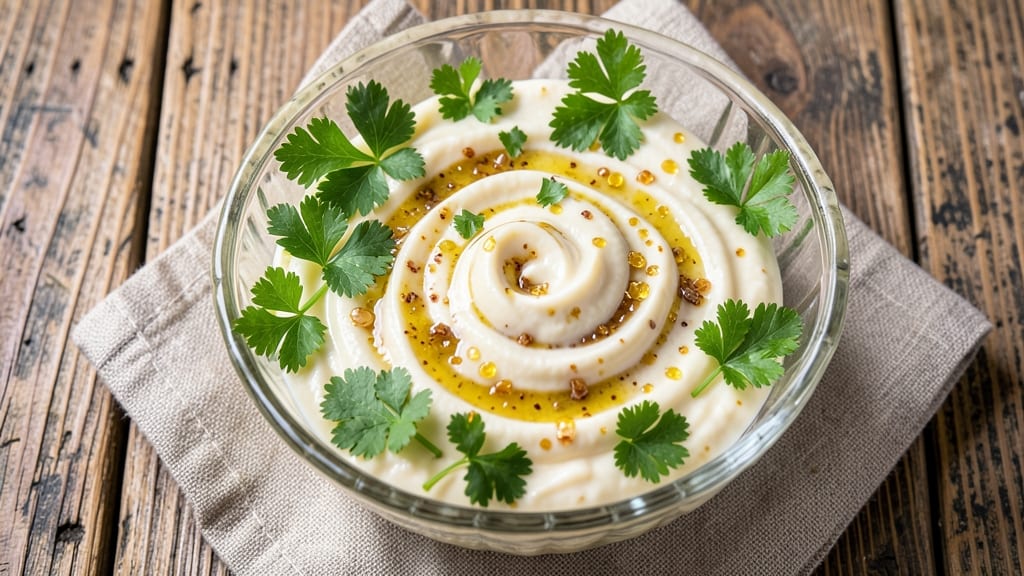
This Caesar salad vinaigrette recipe transforms your favorite salad into something extraordinary—bold, tangy, and packed with herbaceous depth, all without mayo. 💛 I developed this after years of experimenting with traditional Caesar dressings, finally cracking the code for a dressing that delivers restaurant-quality flavor with just five simple ingredients and a whisk.
The secret lies in the emulsification process—anchovies and Dijon mustard create the perfect base, while garlic and lemon juice add that signature tang. Unlike creamy versions, this vinaigrette stays light yet rich, clinging perfectly to crisp romaine and croutons.
The anchovies might sound intimidating, but they dissolve completely, adding umami depth without any fishy aftertaste.
What you'll end up with is a dressing that's vibrant, balanced, and impossible to resist—bright enough to cut through rich toppings while still delivering that classic Caesar punch. It's the kind of dressing that makes even the simplest salad feel like a gourmet experience. Ready to elevate your salads?
This recipe works equally well for classic Caesar salads, as a marinade for grilled chicken, or even as a dip for garlic bread. The measurements are precise but forgiving, making it perfect for both beginners and seasoned cooks. Let's make this dressing!
Ingredients for caesar salad vinaigrette
Five ingredients and a whisk transform ordinary salads into restaurant-worthy creations.
| Ingredient | Amount | Notes |
|---|---|---|
| Anchovy Fillets 🐟 | 4 whole | High-quality, packed in oil |
| Dijon Mustard 🧄 | 1 tbsp | Mild or strong, not spicy |
| Extra-Virgin Olive Oil 🫒 | ½ cup | Fruity, high-quality preferred |
| Fresh Garlic Cloves 🧄 | 2 cloves | Peeled, minced finely |
| Fresh Lemon Juice 🍋 | 2 tbsp | Freshly squeezed, strained |
| Fresh Parsley Leaves 🌿 | ¼ cup | Finely chopped, stems removed |
| Diamond Crystal Kosher Salt 🧂 | ½ tsp | Fine grain preferred |
| Freshly Ground Black Pepper 🌶️ | ¼ tsp | Freshly cracked preferred |
Anchovies are the umami secret—high-quality fillets packed in oil dissolve completely, adding depth without fishy notes. Grab the smallest cans at Trader Joe's or Whole Foods for maximum freshness. The Dijon mustard needs to be real—no powdered or spicy varieties. For the olive oil, California extra-virgin brands like Corto or Lucini shine here. Fresh garlic and lemon? No substitutions—they're the bright, tangy backbone of this dressing. If you're using dried parsley, double the amount and pulse it finely in a food processor.
No anchovies? Two teaspoons of soy sauce or white miso paste mimics the umami, though nothing replaces their depth. Dijon too strong? Swap for whole-grain mustard at half the amount. Olive oil shortage? Avocado oil works identically. The parsley can be swapped for fresh basil or chives if you're out, but parsley's peppery bite is classic. For a nut-free version, simply omit any nut-based substitutions. This dressing emulsifies perfectly with just these ingredients—no eggs or mayo needed for that creamy texture.
Store any leftovers in a small glass jar with a tight seal, submerged in extra olive oil to preserve freshness. Keeps for 5-7 days in the fridge, though it's usually gone in a day. Freezes beautifully for up to 3 months—thaw at room temperature before using. I always double the batch: one for salads, one for garlic bread dipping. The emulsion thickens slightly when chilled, so whisk again before using.
Why You'll Love This Recipe
- No-Fuss Mixing: I swear by this vinaigrette because it’s just a matter of mashing anchovies with mustard, then whisking in oil and lemon—no blender, no straining, no stress. Five minutes tops, and you’re done.
- Umami Bomb: That first bite? The anchovies and Dijon hit like a flavor grenade—salty, tangy, with garlic cutting through it all. It’s the kind of dressing that makes you forget store-bought ever existed.
- Weeknight & Date Night: Drizzle this over grilled chicken for a fancy-but-easy dinner, or toss it with romaine for a salad that feels special without the fuss. Honestly, it’s my go-to for anything that needs a little wow.
- Budget Magic: A few anchovies and a lemon go a long way—this dressing costs pennies but tastes like a restaurant. Plus, it keeps for days in the fridge, so I’m not scrambling to make new batches. Win.
Step-by-step instructions for Caesar salad vinaigrette
This herb-infused dressing delivers bold, tangy flavor without a trace of mayo.
🍳 Step 1: Bloom the Anchovies and Mustard
In a small bowl, combine the 4 whole anchovy fillets and 1 tablespoon Dijon mustard. Using a fork, mash the anchovies into a paste, breaking them down completely. This step is crucial—it dissolves the saltiness and creates a smooth base for your dressing. Let the mixture sit for 2-3 minutes while you prepare the remaining ingredients. You'll notice the anchovies soften and meld with the mustard, forming a rich, umami foundation.
Here's the thing—don't skip the blooming time. Rushing this step can leave you with a grainy texture in your final dressing. The anchovies should become nearly invisible in the mustard mixture, creating a silky consistency that blends seamlessly with the oil later.
👨🍳 Step 2: Incorporate Garlic and Lemon
Add the 2 cloves minced fresh garlic and 2 tablespoons fresh lemon juice to the anchovy-mustard mixture. Stir vigorously with a small whisk or fork until fully combined. The garlic should disappear completely—no visible flecks remain. This ensures a smooth dressing without bitter garlic aftertaste. The lemon juice brightens the flavor profile immediately, cutting through the richness of the anchovies.
I like to taste at this stage to gauge the balance. You should detect the briny anchovies, slight garlic bite, and sharp lemon tang. If it's too strong, we'll temper it with the olive oil in the next step. If it's too mild, we'll adjust the seasoning later. This is your flavor checkpoint before committing to the oil.
🥘 Step 3: Emulsify with Olive Oil Gradually
With the bowl resting on a stable surface, slowly drizzle in the ½ cup extra-virgin olive oil while whisking continuously. Start with a few drops at a time, increasing to a thin stream as you whisk vigorously. This gradual approach creates a stable emulsion—the oil and water-based ingredients will combine into a silky dressing rather than separating. Whisk for 2-3 minutes until the mixture thickens noticeably and coats the back of a spoon.
The key here is patience. I've seen people pour in all the oil at once, only to end up with a broken dressing. The slow incorporation prevents the oil from overwhelming the emulsifiers in the anchovies and mustard. You're looking for a dressing that clings together when you lift the whisk—it should hold its shape for a few seconds before dripping back down.
🔪 Step 4: Finish with Herbs and Seasoning
Add the ¼ cup finely chopped fresh parsley leaves, ½ teaspoon Diamond Crystal kosher salt, and ¼ teaspoon freshly ground black pepper to the emulsified dressing. Stir gently to combine, being careful not to break the emulsion. The parsley adds freshness and vibrant color, while the salt and pepper balance the acidity and umami. Taste and adjust seasoning if needed—you might want to add a pinch more salt or a splash of lemon juice to perfect the balance.
This is where the dressing comes together as a cohesive whole. The parsley should be evenly distributed, not clumped. The seasoning should complement rather than overpower the other flavors. Here's the moment that matters: the dressing should taste bright, tangy, and herbaceous with just a hint of salty depth from the anchovies. If it's too thick, add 1 teaspoon water at a time until you reach your desired consistency.
⏰ Step 5: Rest and Serve
Transfer the dressing to a clean jar or airtight container. Let it rest at room temperature for 15-20 minutes before using. This resting period allows the flavors to meld completely and the emulsion to stabilize. When ready to serve, give it one final stir—it should be perfectly smooth with no separation. This herb-infused vinaigrette keeps well in the refrigerator for up to 5 days, making it perfect for meal prep.
Real talk: the dressing will thicken slightly when refrigerated. If it becomes too thick when cold, simply whisk in 1-2 teaspoons of water to loosen it back to your preferred consistency. The beauty of this recipe is its versatility—use it on classic Caesar salads, as a marinade for grilled chicken, or even as a drizzle for roasted vegetables. Each use reveals a new dimension of this bold, herb-infused dressing.
Pro Tips For Making Caesar Salad Vinaigrette
- SALT THE ANCHOVIES FIRST: I learned this the hard way—skipping this step makes the dressing taste flat. Toss the anchovies with a pinch of salt and let them sit for 10 minutes before mashing, so their flavor really opens up.
- GRATE THE GARLIC: Yes, even if you’re impatient like me. Freshly grated garlic adds depth the minced version can’t match—just use the finest holes on your grater and measure it by weight (about 3 grams per clove) for consistency.
- EMULSIFY IN STAGES: Drizzle the olive oil in slowly while whisking vigorously. If the dressing breaks, add a splash of warm water or lemon juice to help it come back together—this isn’t the prettiest method, but it’s the tastiest.
- USE A LEMON ZESTER: The zest from half a lemon brightens the dressing without adding liquid. Skip the juice if you’re worried about thinning it out, but the zest makes a real difference—just rub the outer layer over the bowl before squeezing.
Regional styles of these flavors
Classic American Style
This is the dressing my grandmother used to make for her famous Caesar salad—simple, bold, and packed with that signature umami punch. She always used 4 anchovy fillets from the little cans at our local Italian market, and swore by Dijon mustard for that perfect tang.
The secret was letting the anchovies bloom fully in the mustard before adding anything else.
I remember her saying, "Patience is the difference between good and great dressing." 💛 The classic version relies on the perfect balance of garlic and lemon to cut through the richness, making it bright enough for summer salads but rich enough for hearty winter versions.
Italian-Inspired Twist
For a more Mediterranean touch, I've made this dressing with fresh basil instead of parsley and added a pinch of red pepper flakes for subtle heat. The Italians love their Caesar salad with a kick—this version works beautifully with grilled vegetables or as a marinade for swordfish.
I found this adaptation at a little trattoria in Florence where they served it with toasted sourdough croutons instead of the usual garlic bread. The key is to reduce the lemon juice slightly to 1 tablespoon and add ½ teaspoon of balsamic vinegar instead for that classic Italian tang.
French Provincial Version
Inspired by my time in Provence, this variation swaps the parsley for chives and tarragon, giving it a delicate anise-like flavor that pairs perfectly with duck confit or roasted lamb. The French version also includes 1 teaspoon of capers along with the anchovies for extra briny depth.
I found this recipe in a Parisian bistro where they served it with buttery endive leaves instead of romaine. The dressing is lighter in texture, almost like a fine vinaigrette, but still delivers that unmistakable Caesar flavor.
For this version, use ½ cup avocado oil instead of olive oil to achieve that signature French silkiness.
Modern Fusion Adaptation
This is my take on a Caesar dressing that works for both salads and Asian-inspired dishes. I add 1 teaspoon of soy sauce along with the anchovies and reduce the lemon to 1 tablespoon to create a more balanced flavor profile.
The result? A dressing that works perfectly on cucumber salads or as a glaze for grilled shrimp. I discovered this version when I wanted to make a Caesar salad for my friend who loves Thai food—she was amazed at how well the flavors translated.
The soy sauce adds a subtle umami that complements the garlic and herbs beautifully, while keeping the dressing light enough for summer eating.
Southern Comfort Style
For a Southern twist, I've added ½ teaspoon of smoked paprika and ¼ teaspoon of cayenne pepper to the base mixture, giving it a subtle smoky heat that pairs perfectly with fried chicken or cornbread.
This version is thicker and more robust, almost like a cross between a Caesar dressing and a remoulade. I developed it after a visit to a Southern kitchen where they served Caesar salads with crispy fried shallots on top.
The smoked paprika adds depth without overpowering the other flavors, while the cayenne gives it just enough kick to stand out. For this version, I also increase the olive oil to ⅔ cup to achieve that signature Southern richness.
Vegetarian-Friendly Option
Not everyone enjoys anchovies, so I created this version using 2 teaspoons of white miso paste instead, which provides that same umami depth without the fish. The miso adds a subtle sweetness that balances the garlic and lemon beautifully.
I've also added 1 teaspoon of nutritional yeast for a cheesy flavor that mimics the traditional Caesar taste. This version works perfectly for vegan Caesar salads or as a dip for veggie platters.
The texture is slightly thicker, so I recommend adding 1 extra teaspoon of water if it becomes too thick when chilled. The flavor is rich and satisfying, proving that you don't need anchovies to make a great Caesar dressing.
Nutrition facts
Frequently asked questions
Why do anchovies dissolve completely in this recipe?
The key is blooming them with Dijon mustard first. The mustard's acidity breaks down the anchovies' proteins, creating a smooth umami base that blends seamlessly with the oil. This is why we let the mixture sit for 2-3 minutes before adding anything else—it transforms those little fish into flavor without texture.
Can I make this dressing without anchovies? For a vegetarian version, replace the anchovies with 2 teaspoons of white miso paste or soy sauce plus 1 teaspoon of nutritional yeast. The miso provides umami depth while the nutritional yeast mimics the cheesy notes. Just
How do I fix a broken dressing that separates?
If your dressing separates, simply whisk in 1 teaspoon of warm water at a time while whisking vigorously. The heat helps reactivate the emulsifiers in the mustard. For stubborn separations, add ½ teaspoon of Dijon mustard and whisk again. This happens when oil is added too quickly—next time, drizzle it in slowly while whisking continuously.
What's the best way to store leftovers?
Transfer to a clean jar and press a layer of olive oil on top to preserve freshness. This dressing keeps for 5-7 days in the fridge. For longer storage, freeze for up to 3 months—thaw at room temperature before using. The oil layer prevents oxidation and keeps the herbs vibrant longer.
Can I use this dressing on other dishes besides salads?
This versatile vinaigrette works perfectly as a marinade for grilled chicken or fish, a dip for garlic bread, or even a drizzle for roasted vegetables. The herbaceous notes complement grilled meats beautifully, while the tangy brightness cuts through rich flavors like fried foods. Just adjust the oil slightly if using as a marinade—reduce to ¼ cup for best results.