
Salads
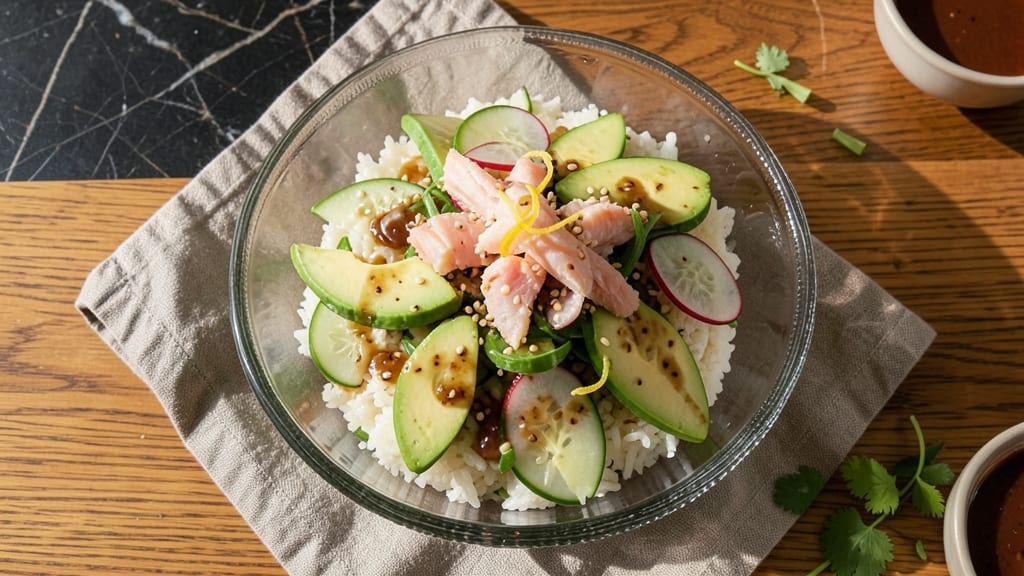
This California sushi salad recipe transforms traditional Japanese flavors into a vibrant, textured dish that’s perfect for summer gatherings or a light lunch. 🌟 The secret lies in perfectly seasoned sushi rice, crisp avocado slices, and fresh cucumber "sushi rolls" that mimic the bite of real sushi without the effort.
I’ve refined this recipe over years—balancing sweet, tangy, and umami notes to create a salad that’s as visually stunning as it is delicious.
The foundation starts with short-grain sushi rice, seasoned just right with rice vinegar, sugar, and salt for that signature sticky yet tender texture.
Fresh ingredients like avocado, crab (or imitation crab for a budget-friendly twist), and cucumber take center stage, while sesame seeds and green onions add crunch and freshness. The dressing—a fusion of soy sauce, sesame oil, and a touch of honey—ties everything together with a bright, savory-sweet balance.
What sets this dish apart is the no-cook technique for the "sushi rolls," where cucumber sticks wrapped in nori (seaweed) mimic traditional sushi without the rolling. The result? A salad that’s crisp, creamy, and satisfying, with each bite offering a mix of textures and flavors.
It’s elegant enough for dinner parties but simple enough for a weeknight meal.
Serve it chilled or at room temperature, and don’t forget the optional spicy mayo drizzle for an extra kick. This recipe is your gateway to restaurant-quality California sushi salad at home—foolproof, fresh, and full of flavor.
Ingredients for california sushi salad
Fresh sushi rice, crisp avocado, and crunchy cucumber bites create a vibrant, restaurant-quality dish.
| Ingredient | Amount | Notes |
|---|---|---|
| Short-Grain Sushi Rice 🍚 | 2 cups | Uncooked, preferably Koshihikari or Calrose |
| Rice Vinegar 🍶 | ½ cup | Seasoned preferred for subtle flavor |
| Granulated Sugar 🍯 | 2 tbsp | Or substitute with honey |
| Salt 🧂 | ½ tsp | Kosher or sea salt preferred |
| Ripe Avocados 🥑 | 2 whole | Pitted, peeled, and sliced |
| Cucumber 🥒 | 1 whole | English or Persian, thinly sliced |
| Imitation Crab Meat 🦞 | 1 cup | Or use fresh crab for premium version |
| Nori Sheets 🍣 | 4 pieces | Cut into thin strips for rolls |
| Green Onions 🧅 | 3 whole | Thinly sliced, white and green parts |
| Sesame Seeds 🌰 | 1 tbsp | Toasted for extra crunch |
| Soy Sauce 🍶 | 3 tbsp | Low-sodium preferred |
| Sesame Oil 🫒 | 1 tbsp | Toasted sesame oil for depth |
| Honey 🍯 | 1 tbsp | Light or wildflower preferred |
| Spicy Mayo 🥬 | ¼ cup | Optional for extra kick |
The sushi rice is the heart of this dish—Koshihikari or Calrose are ideal for their sticky texture. Most Asian markets carry these, or check the international aisle at Whole Foods or Trader Joe's. For rice vinegar, seasoned vinegar adds subtle sweetness, but plain works too. Toast your sesame seeds in a dry pan for 30 seconds—they’ll be fragrant and extra crunchy. The avocados should be ripe but firm; if they’re too soft, they’ll turn brown fast. Buy a day ahead and store in the fridge to extend freshness.
No imitation crab? Fresh lump crab meat elevates this dish dramatically, but it’s pricier. For a vegan option, firm tofu pressed and cubed works surprisingly well. The nori strips can be tricky—cut them lengthwise into 1-inch strips for easier handling. Short on sesame oil? Toasted sesame paste mixed with water is a decent substitute. The dressing is where the magic happens—balance the sweetness of honey with the saltiness of soy sauce. Taste as you go, and adjust to your preference. For the spicy mayo, mix mayo with sriracha or hot sauce—start with a teaspoon and add more as needed.
Prep the avocado and cucumber last—these oxidize fast. Store the rice mixture in an airtight container with plastic wrap pressed directly on the surface to prevent drying. The dressing keeps for 5 days in the fridge, but the sesame oil will lose its punch after 2 days, so make it fresh if possible. For make-ahead meals, assemble the salad 1 hour before serving—this lets the flavors meld without getting soggy. The nori strips can be prepped a day ahead and stored in the fridge, wrapped in a damp paper towel to keep them pliable.
Why You'll Love This Recipe
- I’ll be real: this salad works even if you skip the rice cooker. Just microwave the short-grain rice with a splash of water—it turns out fluffy enough for the job. The vinegar-sugar dressing (that’s just 3 ingredients, folks) gets tossed in while it’s still warm, so the rice soaks up that bright, tangy flavor like a dream.
- No Rice Cooker? No Problem: I’ll be real: this salad works even if you skip the rice cooker. Just microwave the short-grain rice with a splash of water—it turns out fluffy enough for the job. The vinegar-sugar dressing (that’s just 3 ingredients, folks) gets tossed in while it’s still warm, so the rice soaks up that bright, tangy flavor like a dream.
- Avocado Magic Happens: That ripe avocado isn’t just a garnish—it’s the star. When you slice it in while the rice is still warm, the creamy texture melts into the mix, giving every bite a luxurious, buttery contrast. Honestly, I’ve made this with overripe avocados, and it’s still ridiculous good.
- Lunchbox Hero: Between us, this is my go-to for packed lunches. The rice stays firm for hours, the avocado holds up better than you’d think (if you prep it right), and the dressing keeps it from getting soggy. Toss in some cucumber or shredded carrots, and suddenly you’ve got a salad that’s actually exciting for work.
Step-by-step instructions for California sushi salad
Assemble this vibrant salad with crisp textures and bold flavors in just minutes.
👨🍳 Step 1: Prepare the Sushi Rice Base
Rinse the 2 cups short-grain sushi rice under cold water until the water runs clear, then drain. Combine the rice with 0.5 cup rice vinegar, 2 tbsp granulated sugar, and 0.5 tsp salt in a pot. Add 2 cups water and bring to a boil over high heat. Once boiling, reduce to low heat, cover, and simmer for 15 minutes. Turn off the heat and let it steam for another 10 minutes without lifting the lid. This resting period ensures perfectly fluffy, separate grains.
Transfer the rice to a large bowl and gently fold in 1 tbsp sesame oil and 1 tbsp honey using a rice paddle or wooden spoon. Spread the rice on a tray to cool slightly—this prevents it from becoming mushy when combined with the other ingredients. The rice should be at room temperature before assembly.
🥘 Step 2: Assemble the Crunchy Vegetable Mix
Peel and slice the 2 whole ripe avocados into ¼-inch thick rounds, then arrange them on a plate. Thinly slice the 1 whole cucumber lengthwise into ⅛-inch thick strips and fan them out next to the avocado. Cut the 4 pieces nori sheets into ½-inch wide strips and scatter them around the vegetables for a seaweed crunch.
Thinly slice the 3 whole green onions and sprinkle them evenly over the vegetables. Toast the 1 tbsp sesame seeds in a dry skillet over medium heat for 1-2 minutes until golden and fragrant, then sprinkle them over the mix. The combination of creamy avocado, crisp cucumber, and toasted sesame creates the perfect textural contrast.
🍳 Step 3: Mix the Protein and Dressing
In a small bowl, combine the 1 cup imitation crab meat with 3 tbsp soy sauce and let it marinate for 5 minutes. This step enhances the crab's flavor without overpowering the delicate vegetables. In another bowl, mix the 0.25 cup spicy mayo with 1 tbsp sesame oil for the dressing—this adds a creamy, slightly spicy element that ties everything together.
Gently fold the marinated crab into the sushi rice using a spatula, being careful not to crush the grains. The rice should be evenly coated with the crab's flavor while maintaining its distinct texture. Set aside until ready to assemble.
🥘 Step 4: Layer and Serve
Spread half of the sushi rice mixture onto a serving platter. Arrange the avocado, cucumber, nori, and green onion mix on top, creating an attractive visual pattern. Drizzle half of the spicy mayo dressing over the vegetables, then repeat with the remaining rice and toppings. Sprinkle additional sesame seeds on top for extra crunch.
Serve immediately for the best texture contrast—each bite should deliver creamy avocado, crisp cucumber, fluffy rice, and the subtle kick of spicy mayo. This salad keeps well for 2 hours if stored in an airtight container, though the avocado may soften slightly over time.
Pro Tips For Making California Sushi Salad
- Cook Rice Separately: I learned this the hard way—trying to mix the dressing into warm rice makes it gummy. Cook the rice ahead, spread it on a tray to cool completely, then toss it with the dressing. The grains stay distinct and absorb flavor better.
- Slice Avocados Last: Avocados turn brown fast, and nobody wants sad, oxidized chunks in their salad. Keep them whole until serving, then slice just before mixing. If you’re prepping ahead, toss the avocado slices with a tiny splash of lemon juice to buy 10 minutes.
- Use Cold Rice Vinegar: Warm rice vinegar makes the dressing taste flat and dull. Chill the vinegar in the fridge for 15 minutes before mixing it with sugar and salt—this sharpens the acidity and balances the sweetness. Trust me, your taste buds will notice.
- Press the Rice: After mixing the dressing into the rice, press it gently into a flat layer in a container. This prevents the grains from clumping and keeps the texture light when you flip it back into a bowl later. No fancy tools needed—just a spatula and patience.
Regional styles of this dish
West Coast Fusion Roots
California sushi salad emerged in the 1970s as a playful fusion of Japanese sushi techniques and American salad culture. Chefs in coastal cities like Los Angeles and San Francisco adapted traditional sushi by using fresh, locally available ingredients like avocado and cucumber—producing a dish that was both familiar and exciting.
The key innovation was replacing raw fish with cooked or imitation crab, making it more approachable for Western palates. 🌊
Hawaiian Influence
This recipe draws inspiration from Hawaii's own sushi adaptations, particularly the use of spam or teriyaki chicken as protein bases. While we're using crab here, you could easily swap in grilled teriyaki chicken or even marinated tofu for a vegan twist.
The Hawaiian touch comes through in the balanced sweet-savory dressing, which mirrors the flavors of traditional Hawaiian dishes.
Modern Twists
Today's California sushi salads often incorporate unexpected elements like mango or pineapple for tropical sweetness, or crispy wonton strips for extra texture. For a modern update, try adding pickled ginger or wasabi peas to the mix.
The key is maintaining that perfect balance between fresh, crisp ingredients and rich, umami flavors that define this West Coast classic.
East vs. West
While traditional Japanese sushi focuses on precise rice-to-fish ratios and delicate presentation, California sushi salad embraces a more generous approach. The rice is often more abundant, and the toppings are arranged in vibrant, artistic patterns rather than following strict maki-style rolling.
This reflects California's "more is better" attitude toward food presentation—think colorful, abundant, and designed to be shared.
Regional Variations
In Southern California, you'll often find versions with avocado slices arranged in a sunburst pattern around the edges, while Northern California versions tend to be more minimalist with clean lines. Some coastal regions incorporate local seafood like smoked salmon or halibut instead of crab.
The common thread? Always keeping the ingredients fresh and the textures contrasting—creamy avocado against crisp cucumber, fluffy rice against crunchy nori.
Restaurant-Quality Tips
To elevate your homemade version, serve it in a wide, shallow platter to showcase the colorful layers. Professional chefs often use edible flowers or microgreens as garnishes for that extra restaurant touch.
I like to serve mine with chilled sake or a crisp Sauvignon Blanc—the acidity cuts through the richness beautifully. The presentation should feel effortless yet impressive, exactly what makes this dish a crowd-pleaser. ✨
Nutrition facts
Frequently asked questions
Can I make this California sushi salad without imitation crab?
For a more premium version, use 1 cup fresh lump crab meat instead. Budget-friendly swaps include grilled chicken breast (marinated in soy sauce), crispy tofu cubes (for vegan), or even smoked salmon for a luxurious touch. Just adjust the marinating time—fresh crab needs only 3-5 minutes while chicken requires 15-20 minutes.
Why does my sushi rice turn out mushy?
Mushy rice usually happens when you skip the 10-minute resting period after cooking or overmix it. Always let the rice steam covered, then gently fold in the sesame oil and honey with a wooden spoon. Avoid using metal utensils—they can break the grains. For extra insurance, spread the rice on a tray to cool slightly before assembling.
How do I prevent avocado from browning in the salad?
Slice the avocado just before assembling and immediately toss the slices with a tiny bit of lemon or lime juice. Store any prepped avocado in an airtight container with plastic wrap pressed directly against it. For longer storage (up to 24 hours), sprinkle with 1 tsp salt—it helps slow oxidation. Work quickly when plating to keep those creamy slices looking fresh.
What's the best way to store leftovers?
Keep leftovers in an airtight container for up to 2 days, but store the dressing separately. Refrigerate the avocado and cucumber components separately (they oxidize fastest) and add them fresh when serving. For reheating, warm the rice portion gently in the microwave for 30 seconds—this revives the texture without drying it out.
Can I make this salad ahead of time?
Yes, but with smart prep timing! Assemble everything except the avocado and cucumber 1 day ahead. Store the rice-crab mixture and dressing separately. When ready to serve, add the fresh avocado and cucumber just before eating. The nori strips can be prepped 2 days ahead and kept in the fridge wrapped in a damp towel to maintain flexibility.