
Salads
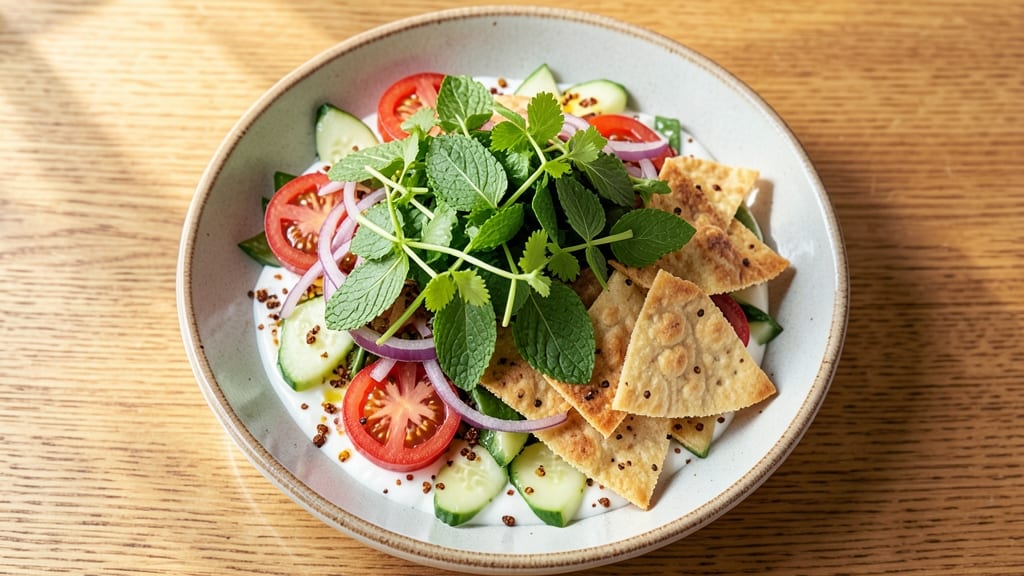
This Ottolenghi-inspired fattoush salad brings the vibrant flavors of the Levant to your table with crispy pita, fresh herbs, and a tangy sumac dressing. 💛 I first tried this recipe during a summer trip to Beirut, where every bite felt like sunshine in a bowl—now I recreate that magic at home with a few key techniques.
The secret lies in toasting the pita until it's perfectly crispy while keeping the vegetables fresh and juicy, all balanced by a bright lemon dressing.
The beauty of this dish is its versatility—it works as a light meal on its own or as a vibrant side for grilled meats.
I use a mix of fresh herbs like mint and parsley, toasted pita pieces for crunch, and a dressing of sumac, lemon, and olive oil that cuts through the richness. Ottolenghi's approach emphasizes bold flavors without overpowering, so every ingredient gets its moment to shine.
What makes this salad truly special is the texture contrast: crispy pita against tender tomatoes, cool yogurt dressing against the warmth of toasted spices. The sumac adds a tart, citrusy kick that elevates everything, while the herbs bring freshness that keeps your palate awake.
This isn't just a salad—it's a celebration of Middle Eastern flavors that's easy to prepare but feels like a restaurant-worthy dish.
For those who prefer extra protein, grilled halloumi adds a salty, creamy contrast, but the vegetarian version still packs enough texture and flavor to satisfy.
The key is balancing the components—don't skip the pita toasting, and let the dressing sit for 10 minutes before tossing to let the flavors meld. Here's how to bring this dish to life in your kitchen.
Ingredients for fattoush salad recipe ottolenghi
Fresh herbs, crispy pita, and zesty dressing—this salad brings Beirut to your table.
| Ingredient | Amount | Notes |
|---|---|---|
| Pita Bread 🍞 | 6 pieces | Store-bought or homemade, cut into triangles |
| Fresh Mint Leaves 🌿 | ½ cup | Packed, stems removed |
| Fresh Parsley Leaves 🌿 | ½ cup | Packed, stems removed |
| Medium Tomatoes 🍅 | 3 whole | Mixed colors, diced |
| Cucumber 🥒 | 1 medium | English or Persian, diced |
| Red Onion 🧅 | 1 medium | Thinly sliced |
| Radishes 🥕 | 4 whole | Thinly sliced |
| Sumac 🌶️ | 2 tbsp | Ground, for dressing |
| Extra-Virgin Olive Oil 🫒 | ½ cup | High-quality, fruity |
| Lemon Juice 🍋 | ¼ cup | Freshly squeezed |
| Plain Yogurt 🥛 | ½ cup | Greek or regular, full-fat |
| Salt 🧂 | 1 tsp | Kosher or sea salt |
| Black Pepper 🌶️ | ½ tsp | Freshly ground |
| Garlic Cloves 🧄 | 2 cloves | Minced for dressing |
The pita is non-negotiable here. Arabian Oasis or Trader Joe's have the best flatbreads for toasting—look for ones that are thin but sturdy. If you're using store-bought, check the ingredients: just flour, water, yeast, and salt. Homemade? Brush with olive oil before toasting for extra crispiness. The tomatoes and cucumbers should be bright and firm—no mealy ones. I usually grab heirloom varieties at Whole Foods for that extra burst of flavor, but regular grocery store tomatoes work too. Fresh herbs? Mint and parsley are the stars—buy them from the grocery store's produce section, but if they're wilted, skip them. The sumac? Penzeys sells it in bulk, but Middle Eastern markets often have it too. It's worth the hunt—it gives that signature tang that separates great fattoush from good.
No sumac? Lemon zest plus a pinch of salt gets you close, but it won't be the same. Short on mint? Dill or cilantro at half the amount works in a pinch. The yogurt needs to be plain—full-fat Greek yogurt (trust me on this) gives the best texture. No Greek yogurt? Regular yogurt thinned with a splash of water. The olive oil matters here too—use something fruity and peppery, not the mild stuff. For the dressing, let it sit for 10 minutes before tossing—this lets the sumac bloom and the flavors meld. Want extra crunch? Toasted pine nuts or almonds add a nice contrast, but they're optional. The radishes can be swapped for thinly sliced jicama if you prefer something sweeter.
Pita stays crispy for about 30 minutes after toasting, so assemble the salad right before serving. Store the dressing separately in the fridge for up to 3 days—it actually gets better as it sits. The herbs, though? Use them within 2 days or they'll wilt. I like to prep everything ahead except the pita toasting—toss the veggies in a big bowl, make the dressing, and keep the pita separate until the last minute. The salad keeps for 2 days in the fridge, but the pita gets soggy, so I usually make it fresh. If you're prepping ahead, toast the pita just before serving and add it to the bowl right away.
Why You'll Love This Recipe
- I’ll be real: the only cutting I do is rough-chop the cucumbers and tomatoes—no dice, no fuss. The pita gets toasted in minutes, and the herbs? Just tear them by hand. Honestly, it’s the kind of salad where you’re done before the kids even ask what’s for dinner.
- No-Chopping Trick: I’ll be real: the only cutting I do is rough-chop the cucumbers and tomatoes—no dice, no fuss. The pita gets toasted in minutes, and the herbs? Just tear them by hand. Honestly, it’s the kind of salad where you’re done before the kids even ask what’s for dinner.
- Herb-Packed Punch: That mix of fresh mint and parsley? It’s like a cool breeze in your mouth—bright, zesty, and impossible to resist. The pita adds this addictive crunch, while the tomatoes bring juicy sweetness. Between us, it’s the kind of flavor that makes you want to eat it straight from the bowl.
- Picnic-to-Party Flex: This salad works everywhere—pack it in a container for a beach day, toss it together for a last-minute BBQ side, or serve it at a potluck when you forgot to bring dessert. (Yes, even on a Tuesday night.) The crispy pita soaks up everything, so it’s always satisfying.
Step-by-step instructions for fattoush salad
Crispy pita and bright herbs come together in this vibrant Middle Eastern masterpiece.
🔥 Step 1: Crisp the Pita Triangles
Preheat your oven to 375°F and line a baking sheet with parchment paper. Cut the 6 pieces pita bread into triangles and brush both sides lightly with 2 tablespoons of the extra-virgin olive oil. Arrange them on the baking sheet in a single layer, leaving space between each triangle.
Bake for 8-10 minutes until the edges are deep golden brown and crispy. Watch them closely—they go from perfect to burnt in seconds. Remove from the oven and immediately sprinkle with ½ teaspoon salt while still hot. This salting enhances the crunch and balances flavors. Set aside on a wire rack to cool slightly—you want them crispy when you serve.
👨🍳 Step 2: Prepare the Vegetable Medley
While the pita crisps, dice the 3 whole medium tomatoes into ½-inch pieces and place them in a large mixing bowl. Add the 1 medium cucumber cut into ½-inch chunks, thinly sliced red onion, and thinly sliced radishes. Toss everything together gently—don't overmix or you'll bruise the vegetables.
Add the ½ cup fresh mint leaves and ½ cup fresh parsley leaves, reserving a few sprigs for garnish. Sprinkle with ½ teaspoon black pepper and toss again. The vegetables should be coated but still vibrant. Let them sit at room temperature for 10 minutes—this allows flavors to meld slightly before dressing.
🥘 Step 3: Make the Sumac-Lemon Dressing
In a small bowl, whisk together the 2 tablespoons sumac, ½ cup extra-virgin olive oil, and ¼ cup lemon juice until the sumac dissolves completely. The dressing should be vibrant orange-red with a fine, powdery texture. Taste and adjust seasoning with more salt if needed—sumac is tart, so balance is key.
In a separate small bowl, whisk the ½ cup plain yogurt with the 2 minced garlic cloves until smooth. This yogurt mixture will add creaminess to balance the bright, acidic dressing. Keep both mixtures separate until you're ready to combine them.
🥘 Step 4: Assemble the Salad
Just before serving, pour the sumac dressing over the vegetable mixture and toss gently. Then add the yogurt mixture and fold everything together with a large spoon. The dressing should coat the vegetables evenly without making them soggy. Taste and adjust seasoning—you want a perfect balance of tangy, creamy, and slightly spicy notes.
Add the crispy pita triangles to the bowl and toss one last time, being careful not to crush them. The contrast between the warm, crunchy pita and cool, fresh vegetables is what makes this salad magical. Divide among 4 plates and garnish with reserved mint and parsley sprigs for a pop of color.
Pro Tips For Making Fattoush Salad Recipe Ottolenghi
- CRISP THE PITA RIGHT: Toss the pita pieces in hot oil (not warm) for 30 seconds max—just until they puff and turn golden. Overcooking turns them rubbery, and undercooking means soggy bread in your salad. Work in small batches so the oil stays hot enough to do the job.
- SALT THE CUCUMBER WATER: After slicing cucumbers, sprinkle the water in your colander with ½ teaspoon salt and let it sit for 5 minutes. This pulls out excess bitterness and softens the texture without wilting them. Drain well—no one wants a watery fattoush.
- STOP CHOPPING TOO SMALL: Roughly chop the tomatoes and cucumbers—no smaller than ½-inch pieces. Ottolenghi’s version relies on texture contrast, not a fine salad mix. Tiny pieces turn to mush when tossed with the pita and dressing, and you lose that satisfying bite.
- TOSS HERBS LAST: Add mint and parsley right before serving—they bruise fast and wilt in the dressing. A handful of whole leaves at the end keeps them vibrant and lets you adjust the flavor as you go. (Yes, even if you’re impatient like me.)
Creative variations of these flavors
Spicy Halloumi Twist
For a protein-packed variation, add ½ cup grilled halloumi cubes (about 4 ounces) to the salad. I like to grill halloumi on a skillet over medium-high heat for 2-3 minutes per side until golden and slightly crispy.
The salty, creamy cheese contrasts beautifully with the tangy sumac dressing. For extra heat, brush the halloumi with 1 tsp harissa before grilling. 🌶️
Smoky Chipotle Dressing
Swap the sumac for a smoky chipotle dressing by blending 2 tbsp chipotle in adobo, ½ cup olive oil, ¼ cup lemon juice, and 1 minced garlic clove. This adds a deep, smoky warmth that pairs perfectly with the crispy pita.
I like to add 1 tsp smoked paprika to the dressing for extra depth. The result is a fusion of Middle Eastern and Mexican flavors that's absolutely addictive.
Roasted Red Pepper
Add 1 cup roasted red peppers (jarred or homemade) to the vegetable medley for a sweeter, slightly charred flavor. Roast your own by tossing 2 red peppers with 1 tbsp olive oil and roasting at 400°F for 20 minutes until blistered.
The smoky-sweet peppers add a luxurious touch that elevates the salad. I often use them as a substitute for some of the tomatoes to balance the acidity.
Herb-Focused Variations
Swap out the mint and parsley for other fresh herbs to customize the flavor profile. Try ½ cup fresh dill for a brighter, more anise-like note, or ½ cup fresh cilantro for a citrusy twist.
If using dill, reduce the lemon juice to 2 tbsp since dill has a natural lemony quality. For a Mediterranean touch, add ¼ cup fresh oregano to the dressing—it pairs beautifully with the sumac and olive oil. 🌿
Seasonal Swaps
Adjust the vegetables based on what's in season. In summer, I use cherry tomatoes and zucchini> for extra freshness. In fall, swap in shredded cabbage> and apples> for a crunchy, slightly sweet contrast.
For winter, roast the vegetables first to bring out their natural sweetness—toss the tomatoes, cucumbers, and radishes with 1 tbsp olive oil>, ½ tsp salt>, and roast at 400°F for 15 minutes> before assembling the salad.
Dairy-Free Option
Skip the yogurt entirely and use a cashew cream> instead for a dairy-free version. Blend ½ cup soaked cashews>, ¼ cup water>, and 1 tbsp lemon juice> until smooth.
This creamy base still balances the tangy dressing beautifully. For extra richness, add 1 tsp tahini> to the cashew cream. The salad remains just as vibrant and satisfying without any dairy at all. ✨
Nutrition facts
Frequently asked questions
Can I make fattoush salad ahead of time?
Prep everything except the pita—chop the vegetables, make the dressing, and store them separately in the fridge for up to 3 days. The pita should be toasted fresh and added just before serving to keep it crispy. The dressing actually improves in flavor after sitting, so making it ahead is a great idea!
What can I substitute if I can't find sumac?
Sumac is key for that signature tang, but you can use lemon zest plus a pinch of salt as a substitute. For extra zing, add ½ teaspoon dried za'atar to the dressing. The flavor won't be identical, but it'll still give that bright, citrusy kick that balances the salad.
How do I keep the pita from getting soggy?
Toast the pita until it's deep golden brown and crispy, then let it cool on a wire rack before adding it to the salad. Keep the vegetables and dressing separate until the last minute, and toss everything together gently. The secret is timing—add the pita just before serving to maintain that perfect crunch!
Can I make this salad without yogurt?
For a dairy-free version, use a cashew cream (blend ½ cup soaked cashews, ¼ cup water, and 1 tbsp lemon juice) or simply omit it entirely. The sumac dressing will still provide enough tang, and the crispy pita and fresh herbs will keep the salad satisfying.
What's the best way to store leftovers?
Store the salad (without pita) in an airtight container in the fridge for up to 2 days. Keep the dressing separate and add the pita fresh when serving. The herbs will wilt over time, so use them within 2 days for the best texture. For longer storage, freeze the dressing separately for up to 1 month.