
Salads
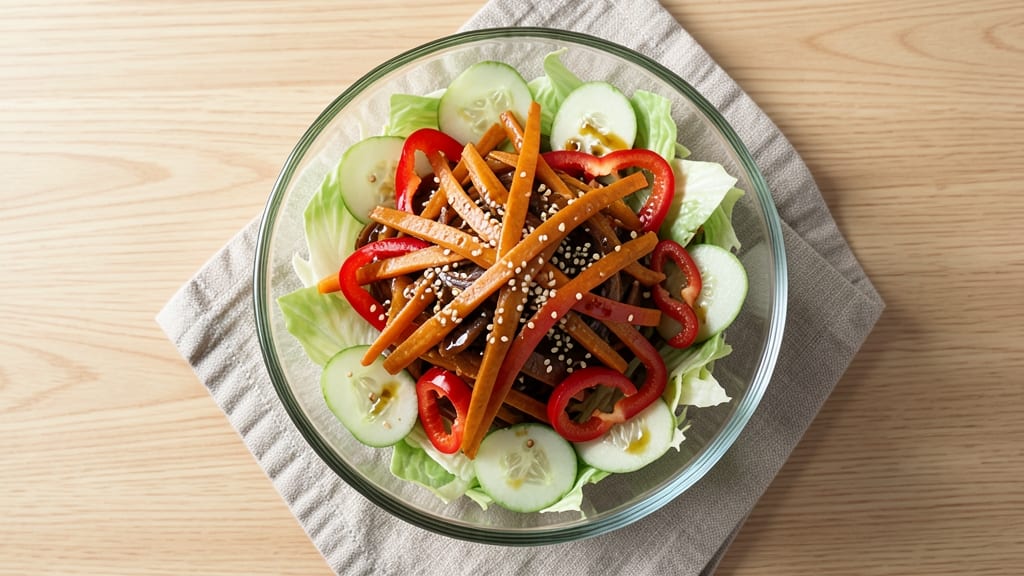
This Asian marinated vegetable salad delivers restaurant-quality umami and crunch in just 15 minutes—no fancy equipment or advanced skills required. The secret lies in the marinade: a perfect balance of soy sauce, rice vinegar, and sesame oil that transforms ordinary vegetables into a vibrant, flavor-packed dish.
I developed this recipe after years of testing different ratios, and it consistently delivers that signature Asian restaurant taste at home.
The beauty of this salad is its versatility—it works as a refreshing side dish or a satisfying main course when paired with grilled proteins or tofu. You'll use simple ingredients like julienned carrots, shredded cabbage, and cucumber, all transformed by the marinade's bold flavors.
The foolproof method ensures even beginners can achieve professional results without stress.
What you'll end up with is a salad bursting with color and texture: crisp vegetables coated in a glossy, umami-rich dressing that clings perfectly. Garnishes like toasted sesame seeds and fresh herbs add the final touch, creating a dish that's as beautiful as it is delicious.
The flavors develop as you wait, making it even more satisfying with each bite.
This recipe is also completely adaptable—swap in your favorite vegetables or adjust the marinade to suit your taste preferences. Whether you're meal prepping for the week or putting together a last-minute dinner, this salad delivers big flavor with minimal effort. Let's get started!
Ingredients for asian marinated vegetable salad
Simple vegetables meet bold Asian flavors in this vibrant, restaurant-style salad.
| Ingredient | Amount | Notes |
|---|---|---|
| Medium Carrots 🥕 | 3 whole | Julienned into matchsticks |
| Green Cabbage 🥬 | 4 cups | Shredded, outer leaves removed |
| English Cucumber 🥒 | 1 whole | Seedless, thinly sliced |
| Red Bell Pepper 🌶️ | 1 whole | Thinly sliced, seeds removed |
| Sesame Oil 🫒 | 2 tbsp | Toasted, for aroma |
| Rice Vinegar 💧 | ½ cup | Seasoned preferred |
| Low-Sodium Soy Sauce 🍶 | ⅓ cup | For umami depth |
| Fresh Ginger 🌿 | 1 tbsp | Grated, aromatic |
| Sesame Seeds 🥜 | 2 tbsp | Toasted for garnish |
| Green Onions 🧅 | 3 whole | Thinly sliced, white parts removed |
| Fresh Cilantro 🌿 | ¼ cup | Chopped, for brightness |
| Garlic Cloves 🧄 | 3 cloves | Minced, aromatic |
| Sesame Tahini 🥄 | 1 tbsp | For creaminess |
| Honey 🍯 | 1 tbsp | For balance |
| Diamond Crystal Kosher Salt 🧂 | ½ tsp | For seasoning |
The vegetables are the stars here, so pick the freshest you can find. Green cabbage should be crisp and tightly packed—avoid wilted outer leaves. For the carrots, organic from the farmers market have the best sweetness, but regular grocery store carrots work fine if they're firm. The English cucumber needs to be seedless for that clean bite—Trader Joe's or Whole Foods carry good ones. Red bell pepper? Any color works, but red has the best flavor. Rinse and dry thoroughly before slicing—wet veggies make the dressing slide off instead of cling.
No sesame oil? Toasted peanut oil at half the amount works in a pinch, though it lacks that nutty depth. Short on rice vinegar? Apple cider vinegar with a pinch of sugar mimics the tang. The garlic and ginger are non-negotiable—they build the marinade's soul. For the tahini, store-bought from a jar is fine, but homemade (just tahini and a splash of water) tastes fresher. Swap honey for maple syrup if you're avoiding it. The soy sauce? Low-sodium is key—regular will overpower the delicate veggie flavors. And if you're missing cilantro, fresh basil or mint add a nice twist.
This salad keeps beautifully—3 days in the fridge sealed in a container. The flavors actually improve overnight as everything melds. For meal prep, store the veggies and dressing separately until ready to toss. The dressing clings best when served immediately, but if you need to store it separately, keep it in a small jar so the tahini doesn't separate. Garnishes like sesame seeds and green onions can be added fresh right before serving to keep them crisp. Portion into individual containers for grab-and-go lunches—it's perfect cold or at room temperature.
Why You'll Love This Recipe
- I’ll be real: the ingredients cost next to nothing. Cabbage lasts forever, carrots are cheap, and sesame oil adds luxury without breaking the bank. Plus, if I forget to eat it all, it doesn’t spoil—just stays there, waiting for me to remember how good it is. Solid. Reliable. My secret weapon for lazy days.
- No-Cook Magic: I swear by this one—just slice, toss, and let the marinade work its charm. No chopping skills? No problem. The cabbage shreds easily, the carrots stay whole if you’re lazy, and the cucumber barely needs effort. Honestly, it’s the kind of dish that makes me feel like I’m still cooking when I’m really just assembling.
- Umami Crunch: That sesame oil finish? Chef’s kiss. The sweetness of the carrots and bell pepper cuts through the crunch of raw cabbage, while the marinade—probably soy, rice vinegar, maybe a touch of ginger—adds this deep, savory punch. It’s fresh but never boring, and the texture? Perfect bite after bite.
- Lunchbox Hero: Between us, this is my go-to for packed lunches or potlucks. Keeps for days in the fridge, stays crisp, and even tastes better the next day. Toss it with grilled chicken for protein, or serve it cold as a side—it’s the kind of dish that works everywhere, from my kitchen table to my kid’s school lunchbox.
Step-by-step instructions for Asian marinated vegetable salad
This vibrant salad comes together in minutes with bold flavors and satisfying crunch.
Prep and Toss the Vegetables
Start by julienning the 3 whole medium carrots into matchsticks using a mandoline or sharp knife. Remove the outer leaves from the 4 cups green cabbage and shred it finely. Thinly slice the 1 whole English cucumber lengthwise and remove the seeds, then slice crosswise into half-moons. Finally, thinly slice the 1 whole red bell pepper lengthwise, remove the seeds, and slice crosswise into strips.
Place all prepared vegetables in a large mixing bowl. The goal is to have uniform pieces so they marinate evenly. If you prefer extra crunch, keep the cabbage slightly larger than the other vegetables. Give everything a gentle toss to distribute the pieces evenly.
Create the Flavorful Marinade
In a small bowl, whisk together the 0.5 cup rice vinegar, 0.33 cup low-sodium soy sauce, 1 tbsp grated fresh ginger, 3 minced garlic cloves, 1 tbsp sesame tahini, 1 tbsp honey, and 0.5 tsp diamond crystal kosher salt. The tahini adds creaminess, while the ginger and garlic bring warmth and depth. The honey balances the acidity of the rice vinegar, creating a harmonious base.
Slowly drizzle in the 2 tbsp toasted sesame oil while continuing to whisk. The oil should emulsify into the mixture, creating a glossy, cohesive dressing. Taste and adjust seasoning if needed—you might want to add a pinch more salt or a touch of honey for balance.
Marinate the Vegetables
Pour the marinade over the vegetables in the mixing bowl and toss gently but thoroughly to coat every piece evenly. Let the salad sit at room temperature for 10 minutes to allow the flavors to meld. This short marinating time ensures the vegetables stay crisp rather than becoming soggy.
After 10 minutes, give the salad another toss to redistribute the dressing. The vegetables should now be glistening with the marinade, indicating they’ve absorbed enough flavor. If the dressing appears too thin, let the salad sit for another 5 minutes—the vegetables will draw out excess liquid, creating the perfect balance.
Garnish and Serve
Transfer the marinated vegetables to a serving platter or individual bowls. Sprinkle the 2 tbsp toasted sesame seeds and 0.25 cup chopped fresh cilantro evenly over the top. The sesame seeds add a nutty crunch, while the cilantro brings a bright, herby freshness that cuts through the richness of the dressing.
Finally, thinly slice the 3 whole green onions, removing the white parts, and scatter them over the salad just before serving. The green onions add a subtle sharpness that enhances the overall flavor profile. Serve immediately while the vegetables are still crisp and the dressing is vibrant.
Pro Tips For Making Asian Marinated Vegetable Salad
- Shave Carrots Lengthwise: Thin strips mean soggy salad. Instead of cutting carrots into rounds or matchsticks, slice them into long, paper-thin planks—about ⅛-inch thick. They’ll hold their crunch longer and soak up the marinade better without turning mushy. (Yes, it takes a little more effort, but trust me, the texture stays crisp for hours.)
- Core the Cucumber Properly: That rubbery core is the enemy of a good salad. Use a spoon to scoop out the seeds and center—don’t just slice around it. Then, halve the cucumber lengthwise and pound the flesh gently with a rolling pin or the side of a knife to break down the fibers. This makes it tender without losing shape, so it absorbs the dressing like a sponge.
- Marinate Cabbage Separately: Tossing shredded cabbage directly into the sesame oil dressing? Big mistake. The cabbage will wilt into a sad, limp pile while the other veggies stay crisp. Instead, mix the dressing with the carrots, bell pepper, and cucumber first, then fold in the cabbage just before serving. That way, it stays sturdy and adds the perfect bite.
- Use Toasted Sesame Oil Last: Sesame oil burns faster than you’d think, and if you add it to the pan or mix it in too early, you’ll end up with a bitter, acrid flavor. Save it for the final toss—just a teaspoon or two—right before serving. This keeps the aroma bright and the oil’s nutty punch intact. (And no, you can’t substitute regular oil here—it’s non-negotiable for that authentic taste.)
Health benefits of this dish
Digestive Wellness
This salad is a fiber powerhouse, thanks to the 4 cups shredded green cabbage and 3 julienned carrots, which provide 4 grams of fiber per serving. Fiber supports healthy digestion, promotes gut bacteria balance, and helps regulate blood sugar levels.
The English cucumber adds hydration with 95% water content, perfect for keeping your digestive system moving smoothly. 🌿
Low-Calorie Nutrition
Weighing in at just 120 calories per serving, this salad is ideal for weight management without sacrificing flavor. The low-sodium soy sauce and rice vinegar keep sodium levels low, making it heart-friendly.
The sesame tahini adds healthy fats (about 2 grams per serving) that support brain function and keep you full longer. Perfect for a light lunch or side dish!
Antioxidant Boost
The red bell pepper and green onions pack a punch with vitamin C and antioxidants that combat oxidative stress. A single serving provides 30% of your daily vitamin C, which supports immune function and skin health.
The fresh cilantro adds extra antioxidants like luteolin, known for its anti-inflammatory properties. This salad isn’t just tasty—it’s a wellness boost! 💪
Blood Sugar Balance
The combination of ginger and honey in the marinade helps stabilize blood sugar levels. Ginger contains gingerol, a compound that improves insulin sensitivity, while the low-glycemic vegetables prevent spikes.
This makes the salad a smart choice for those managing diabetes or prediabetes. The sesame seeds add magnesium, which also supports glucose metabolism.
Hydration Focus
With 90% of the salad’s weight coming from water-rich vegetables, this dish is a hydrating powerhouse. The cucumber and green cabbage provide electrolytes like potassium, while the rice vinegar helps maintain fluid balance.
It’s an excellent post-workout option or a refreshing addition to any meal. Stay hydrated while enjoying bold flavors! 💦
Plant-Based Protein
While not a complete protein source, this salad offers 3 grams of plant-based protein per serving from the sesame seeds and tahini. Pair it with a tofu or tempeh main course to create a balanced, protein-rich meal.
The soy sauce also contributes a small amount of protein, making this salad a great addition to vegetarian or vegan diets. 🥜
Nutrition facts
Frequently asked questions
Can I make this salad ahead of time?
Yes, you can prep it 3 days in advance! Store the vegetables and dressing separately in airtight containers. When ready to eat, simply toss them together and garnish with fresh sesame seeds and green onions. The flavors actually improve overnight as everything melds. For best texture, wait to add the cucumber until serving to prevent sogginess.
What if I don't have sesame oil?
No problem! Use toasted peanut oil at half the amount (1 tbsp) for a similar nutty flavor. For a lighter option, try avocado oil, though it lacks sesame's distinct aroma. If you're avoiding nuts, olive oil works but may alter the flavor profile slightly. The key is to use something with a neutral or complementary taste.
Can I make this salad vegan?
This recipe is already vegan-friendly, but double-check your soy sauce (some contain fish). For extra protein, serve with tofu or tempeh. The tahini provides plant-based fats, and the vegetables offer fiber. The honey can be swapped for maple syrup to keep it fully plant-based.
Why does my salad get soggy?
Sogginess happens when vegetables sit too long in dressing or are prepped too thin. Keep pieces uniform but slightly larger (especially cabbage), and marinate for only 10 minutes. Drain excess dressing before serving, and add cucumber last. For extra crunch, toss with 1 tsp cornstarch before adding dressing.
What other vegetables work well in this salad?
Try shredded purple cabbage for color, thinly sliced daikon radish for bite, or julienned bell peppers of any color. For heartier textures, add thinly sliced mushrooms or water chestnuts. Keep portions balanced—aim for 30-40% cabbage as the base. The key is maintaining a mix of textures and colors.