
Salads
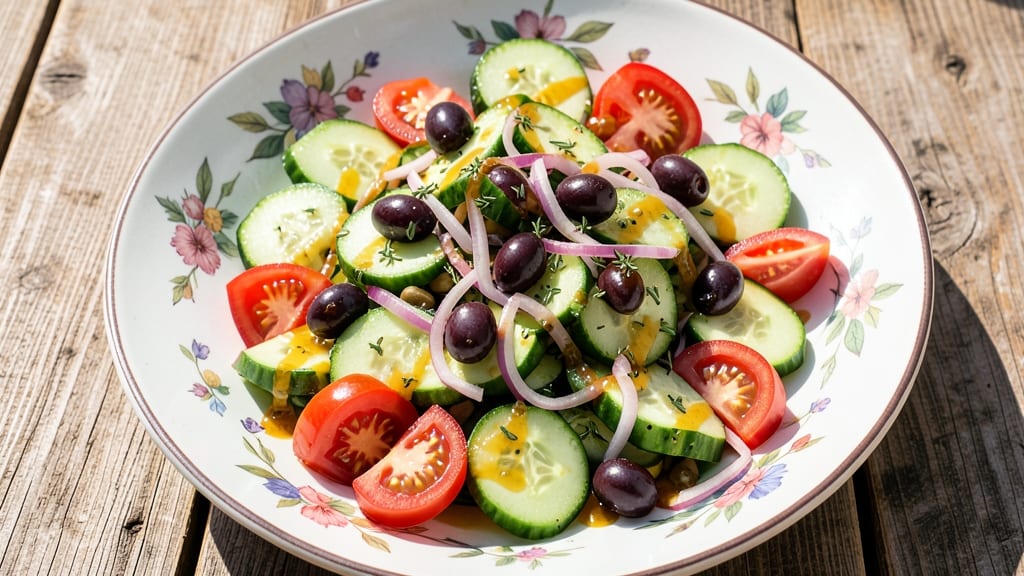
This Greek salad recipe with red wine vinegar delivers the bright, crisp, tangy flavors that make it a summer staple. The red wine vinegar adds depth that plain white vinegar can't match, balancing the fresh cucumbers, ripe tomatoes, and briny olives.
I've perfected the dressing ratio to ensure every bite is vibrant and refreshing without overpowering the vegetables.
The secret lies in assembling the salad just before serving—tossing the dressing with the vegetables at the last minute preserves their crisp texture and prevents sogginess. Traditional Greek techniques like using high-quality extra virgin olive oil and fresh herbs elevate this dish beyond a simple side.
For extra protein, add grilled chicken or feta cheese, but the classic version relies on the vegetables to shine.
What you'll end up with is a salad that's as visually stunning as it is delicious—crisp cucumbers, juicy tomatoes, briny olives, and creamy feta all coated in a tangy red wine vinaigrette.
The contrast of textures and flavors makes this more than just a side dish; it's a meal that feels light yet satisfying. This recipe comes together in just 15 minutes, making it perfect for weeknight dinners or picnic spreads.
The beauty of this Greek salad is its versatility—swap in seasonal vegetables like bell peppers or zucchini, or add fresh herbs like dill or mint for extra brightness.
Whether you're serving it as a main course or a side, this recipe delivers authentic Greek flavors with minimal effort. Let's get started!
Ingredients for greek salad recipe red wine vinegar
Bright, crisp vegetables meet tangy dressing for a salad that shines in summer heat.
| Ingredient | Amount | Notes |
|---|---|---|
| Extra Virgin Olive Oil 🫒 | ½ cup | High quality, fruity flavor |
| Red Wine Vinegar 🍷 | ¼ cup | Dry, aged variety preferred |
| Fresh Cucumber 🥒 | 2 cups | Seedless, sliced into half-moons |
| Ripe Tomatoes 🍅 | 2 cups | Heirloom or vine-ripened preferred |
| Kalata Olives 🫒 | ½ cup | Pitted, sliced in half |
| Red Onion 🧅 | ½ cup | Thinly sliced, white part only |
| Feta Cheese 🧀 | ½ cup | Crumbled, 100% sheep's milk |
| Fresh Oregano 🌿 | ¼ cup | Chopped, stems removed |
| Fresh Dill 🌿 | ¼ cup | Chopped, for garnish |
| Garlic Cloves 🧄 | 2 cloves | Minced, for dressing |
| Diamond Crystal Kosher Salt 🧂 | 1 tsp | For seasoning |
| Freshly Ground Black Pepper 🌶️ | ½ tsp | For dressing |
| Honey 🍯 | 1 tsp | For dressing balance |
The olive oil and red wine vinegar are non-negotiable here—look for extra virgin olive oil with a peppery finish and a dry, aged red wine vinegar for depth. Trader Joe's or Whole Foods carry excellent options, but any reputable grocery store will have decent choices. For the tomatoes, heirloom or vine-ripened varieties burst with flavor, but regular beefsteak tomatoes work in a pinch. Kalata olives are traditional, but any pitted green olive will do. The feta? Sheep's milk only—it's creamier and more authentic. Fresh herbs are a must, but if you're short on time, dried oregano at half the amount will work.
No red wine vinegar? Balsamic vinegar at a 1:1 ratio adds a different but still delicious depth. Subbing in white wine vinegar flattens the flavor—don't do it. The dressing ratio is key: 3 parts oil to 1 part vinegar keeps it balanced. For extra protein, add grilled chicken or chickpeas (for vegetarian). The honey in the dressing isn't sweet—it's a tiny amount to round out the acidity. If you're sensitive to sugar, skip it entirely. The olives can be chopped or left whole; chopping releases more flavor but takes an extra minute.
Prep the vegetables just before serving to keep them crisp—no soggy salad here. Store dressing components separately in the fridge for up to 1 week, then mix when ready to serve. The feta keeps for 2 weeks in its original packaging, but once opened, transfer it to an airtight container. Fresh herbs last 5 days if wrapped in damp paper towels. This salad holds up beautifully for 2 days in the fridge, though the cucumbers get softer. For best texture, assemble right before eating.
Why You'll Love This Recipe
- No-Chop Necessary: The cucumbers and tomatoes are the stars here—just slice them thick, toss with olives, and call it done. I’ve made this salad with pre-cut veggies from the store when I’m really tired, and it’s still spot-on.
- Tangy, Briny Magic: That red wine vinegar? It’s the MVP—bright, sharp, and cutting through the richness of the olives and olive oil like a summer breeze. Honestly, the first time I used it instead of lemon juice, I wondered why I’d never done it before.
- Picnic-Proof Perfection: Pack it in a jar for lunch, bring it to a BBQ, or serve it alongside grilled anything. It’s the kind of salad that doesn’t wilt or get soggy—just stays crisp and delicious, even hours later. (Yes, even on a Tuesday night.)
- Leftovers That Don’t Suck: Unlike other salads, this one actually improves overnight. The tomatoes soften just enough to soak up the dressing, and the olives get even more flavorful. I’ve had this salad for breakfast three days in a row—no shame.
Step-by-step instructions for Greek salad with red wine vinegar
Perfectly balanced texture and flavor in just minutes—crisp vegetables, briny olives, and a tangy dressing that elevates everything.
Prep and Combine the Vegetables
Start by slicing the 2 cups of fresh cucumber into half-moons, discarding any seeds or tough ends. Cut the 2 cups of ripe tomatoes into wedges, removing the cores. Thinly slice the 0.5 cup red onion, keeping only the white part for milder flavor. Halve the 0.5 cup Kalata olives lengthwise and crumble the 0.5 cup feta cheese into small chunks.
Place all prepared vegetables in a large bowl. Gently toss them together with your hands, ensuring even distribution. The cucumbers and tomatoes should be evenly mixed with the onions and olives. This step is critical—uneven distribution leads to dry spots in your salad. I like to keep the feta separate until serving to prevent sogginess.
Make the Red Wine Vinegar Dressing
In a small bowl, whisk together the 0.5 cup extra virgin olive oil, 0.25 cup red wine vinegar, 1 tsp honey, 1 tsp Diamond Crystal kosher salt, and 0.5 tsp freshly ground black pepper. The honey helps balance the acidity of the vinegar while adding subtle sweetness. Add the 2 minced garlic cloves and mix well.
Next, stir in the 0.25 cup chopped fresh oregano and 0.25 cup chopped fresh dill. The herbs should be fully incorporated, but don't overmix—the dressing should remain slightly textured. Taste and adjust seasoning if needed, adding a pinch more salt or pepper as necessary. This dressing is the heart of your salad, so take your time to get it right.
Assemble and Serve Immediately
Pour the dressing over the vegetable mixture in the bowl. Gently toss everything together just until the vegetables are lightly coated. Be careful not to overmix—you want to preserve the salad's fresh, crisp texture. The dressing should cling to the vegetables without making them soggy.
For the final touch, sprinkle the remaining 0.25 cup chopped fresh dill over the top. This adds a bright, fresh finish that complements the tangy dressing. Serve immediately while the vegetables are at their crispest. The salad will keep for about 30 minutes before the tomatoes start to soften, so enjoy it fresh.
Optional Garnish and Serving Suggestions
If desired, add a few extra Kalata olives or a sprinkle of feta cheese on top just before serving. This not only enhances the visual appeal but also adds a final burst of briny and salty flavor. The red wine vinegar dressing pairs beautifully with grilled meats, making this salad a perfect side for summer barbecues or a light lunch on its own.
For an extra touch, serve with warm pita bread or crusty bread to soak up any leftover dressing. The contrast of warm bread with the cool, crisp salad creates a satisfying balance. This Greek salad is all about freshness and simplicity—every bite should deliver that bright, tangy crunch.
Pro Tips For Making Greek Salad Recipe Red Wine Vinegar
- Drain and Pat Olives Dry: I learned this the hard way—soggy olives ruin the texture. After draining Kalata olives, lay them on a clean towel and press gently with another towel to remove excess brine. Wet olives will make your dressing pool instead of cling.
- Slice Cucumbers Thin: Thick cucumber slices turn to mush in dressing. Use a sharp knife or mandoline to cut them ⅛-inch thick, then toss immediately with a pinch of salt to draw out water. Let sit 5 minutes before adding other ingredients—this keeps them crisp.
- Balance Vinegar Ratio: Red wine vinegar can overpower if you eyeball it. For every 2 tablespoons of olive oil, use 1 tablespoon vinegar—then taste before adding the full amount. Adjust gradually; you can always add more oil later, but vinegar’s sharpness lingers.
- Add Dressing Last: Dressing breaks down cucumbers and tomatoes faster than you’d think. Keep the red wine vinegar and olive oil separate until serving, then toss just before eating. If prepping ahead, store veggies dry and dress only when ready to serve.
Make-ahead tips for leftovers
Dressing Prep Ahead
The red wine vinegar dressing is the star of this salad, and you can make it up to 1 week in advance. Store the oil, vinegar, honey, salt, and pepper in a sealed jar in the fridge.
When ready to use, whisk in the minced garlic and fresh herbs—this keeps the dressing vibrant and prevents the herbs from wilting. I like to pre-mix everything except the garlic and herbs, then add those last minute for maximum freshness. 🍷
Vegetable Prep Timeline
Prep the cucumbers, tomatoes, and onions 1 day ahead and store them in separate airtight containers in the fridge. The cucumbers will stay crisp for 24 hours, while the tomatoes soften slightly but still work well.
Keep the feta and olives in their original packaging until serving to preserve their texture. Fresh herbs should be chopped just before assembling the salad to maintain their bright flavor. ❄️
Feta Storage Hack
Feta cheese is the trickiest ingredient to store long-term. Buy it in a block form (not pre-crumbled) and store it submerged in brine or olive oil in an airtight container. This keeps it fresh for up to 2 weeks in the fridge.
When ready to use, simply drain and crumble it by hand—this prevents it from turning into a soggy mess in your salad. 🧀
Salad Assembly Timeline
For the best texture, assemble the salad right before serving. If you must prep ahead, store the vegetables and dressing separately in the fridge. When ready to eat, toss everything together and garnish with fresh dill.
The salad stays fresh for about 30 minutes before the tomatoes start to release excess liquid. This is why I always recommend serving it immediately after assembly. ✨
Portioning for Meals
Make a big batch and portion it into individual containers for easy grab-and-go lunches. Store the dressing separately, then mix when ready to eat. This works perfectly for meal prep—just toss the dressing with the prepped vegetables and herbs when you're ready to enjoy.
I use glass containers to keep everything fresh and prevent any plastic flavors from seeping in. 💡
Freezing Considerations
While Greek salad isn't ideal for freezing, you can freeze the dressing separately for up to 3 months. Thaw it in the fridge overnight, then whisk in fresh herbs before using. The vegetables, unfortunately, don't freeze well—they become mushy and lose their crisp texture.
If you're making this for a crowd, focus on prepping the dressing and storing the vegetables separately for no more than 2 days. ❄️
Nutrition facts
Frequently asked questions
Why does this recipe use red wine vinegar instead of white?
The deeper flavor of red wine vinegar adds complexity that white vinegar can't match. It pairs beautifully with the briny olives and feta, creating a more sophisticated taste. The slight sweetness from the vinegar also balances the salad's acidity without overpowering the fresh vegetables.
Can I make this salad ahead of time?
Yes, but with a few key tricks! Prep the vegetables 1 day ahead and store them separately in airtight containers. Keep the dressing components (except fresh herbs) in a jar for up to 1 week. Mix everything just before serving to maintain crispness. The feta should be added last to prevent sogginess.
What if I don't have Kalata olives?
No problem! Any pitted green olive will work—think Manzanilla or Cerignola. For extra authenticity, look for olives with a slightly bitter taste. Just slice them in half before adding to the salad, just like the recipe calls for with Kalata olives.
How can I make this salad vegetarian or vegan?
Swap the feta for vegan feta or omit it entirely. For extra protein, add chickpeas (rinsed and drained) or marinated tofu. Keep the dressing the same—it's already plant-based! The tangy red wine vinegar will still shine with these alternatives.
Can I adjust the dressing ratio for a milder taste?
If you prefer less acidity, reduce the vinegar to 2 tablespoons and add 1 extra tablespoon of olive oil. For extra brightness, increase the vinegar slightly to 3 tablespoons. Always taste as you go—the dressing should complement, not overpower, the fresh vegetables.